

Artificial Intelligence (AI) is moving fast — like, really fast. One day, it’s helping you write emails, the next day, it’s diagnosing diseases or generating photorealistic deepfakes. The world is impressed, but it’s also getting nervous.
That’s why, in 2025, governments around the globe are scrambling to put rules in place before things spiral out of control.
So… what are they actually doing? Let’s break down how different countries are tackling AI regulation — and what it means for you, me, and the future of tech.
🌍 Why Everyone’s Talking About AI Regulation Now
AI isn’t just a tech buzzword anymore. It’s behind your personalized playlists, job applications, medical scans, and even courtroom decisions in some places. Cool? Yes. Scary? Also yes.
Here’s why governments are stepping in:
-
AI can be biased (yep, even machines pick up prejudice)
-
It’s hard to explain AI decisions — even to the people who build them
-
Deepfakes and misinformation are everywhere
-
Surveillance is on the rise, and privacy is on the decline
-
Jobs are shifting, and many feel unprepared for what’s next
The challenge? Making laws that keep people safe without killing innovation. That balance is tricky — and every country is trying to find its own version of it.
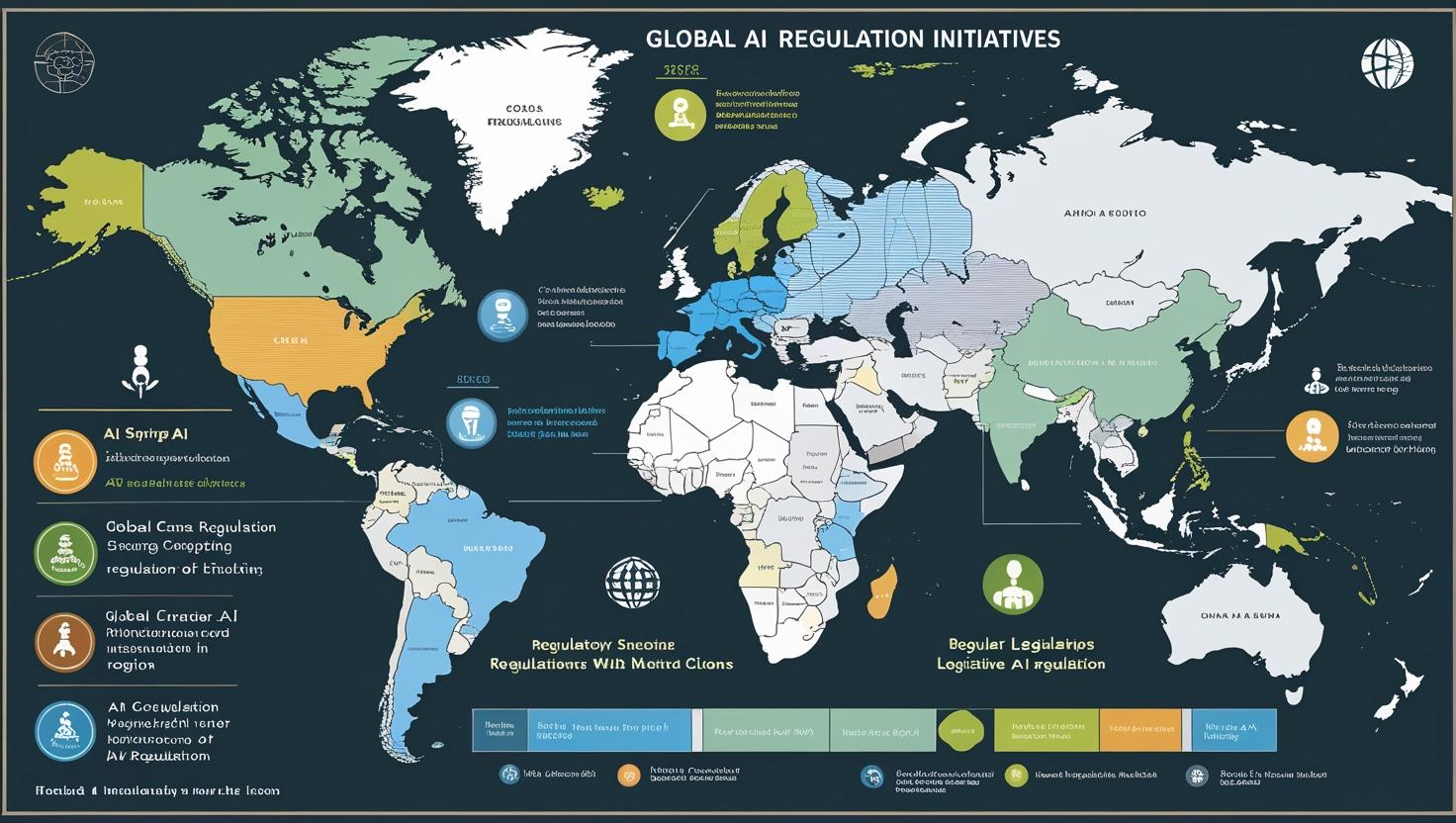
🇺🇸 United States: Light Touch, Big Tech in the Driver’s Seat
America hasn’t passed a federal AI law (yet), but it’s laid down some groundwork. The government’s approach is all about guiding, not controlling — letting companies lead, with oversight.
What they’re doing:
-
President Biden issued an AI Executive Order calling for safety, testing, and transparency
-
Agencies like the FTC are cracking down on AI products that mislead or discriminate
-
The NIST AI Risk Framework helps businesses build safer AI, but it’s optional
🧠 TL;DR: The U.S. wants to stay competitive in AI — but not let things get out of hand.
🇪🇺 European Union: First to Pass a Full-On AI Law
Leave it to the EU to go all in on rules. Their Artificial Intelligence Act is the first law of its kind and it’s a big deal.
What it covers:
-
Bans some uses of AI (like social scoring or facial recognition in public spaces)
-
Labels high-risk AI systems (like those used in hiring or healthcare)
-
Requires transparency, documentation, and human oversight
If you’re building or using AI in the EU, this law changes everything. It’s strict — but many say it sets the gold standard for ethical AI development.
🧠 TL;DR: Europe is leading on how to use AI responsibly — and not just letting it run wild.
🇨🇳 China: Control, Censorship, and Fast Growth
China wants to dominate the AI race — but on its terms.
Their laws are focused on controlling how people use AI, especially when it comes to content and public opinion. AI must support social stability and be in line with government priorities.
What’s happening:
-
Strict rules on deepfakes (everything AI-generated must be labeled) (AI Regulation)
-
Platforms must report algorithms used to personalize feeds
-
AI that threatens “public order” is banned
🧠 TL;DR: In China, AI is powerful — but only if the government is holding the keys.
🇬🇧 United Kingdom: Innovation First, Worry Later
The UK is trying to position itself as a global AI innovation hub, so it’s keeping regulation flexible — at least for now.
Instead of one law, it’s letting different agencies (like the ICO or Competition and Markets Authority) handle issues as they come up.
They’ve also set up an AI Taskforce to make sure powerful models (like ChatGPT) are safe and fair.
🧠 TL;DR: The UK’s vibe is “Let’s build awesome AI — and regulate smartly as we go.”
🇮🇳 India: Building Guidelines, Not Full Laws Yet
India is still in the early stages of formal AI regulation, but it’s very aware of the potential — especially in health, agriculture, and education.
Their focus? Making sure AI works for inclusion and development, not just profit. (AI Regulation)
What they’ve done:
-
Released Responsible AI Guidelines
-
Working on a broader Digital India Act that may include AI regulation
-
Encouraging AI for good — especially in rural and underserved areas
🧠 TL;DR: India wants to grow AI in a way that benefits everyone — not just the elite.
🌐 Other Countries Making Moves (AI Regulation)
-
Canada is pushing its AI & Data Act, which focuses on accountability and public trust
-
Japan prefers “agile regulation” — staying light but adaptive
-
Australia is exploring AI labeling and harm prevention
-
Brazil is drafting its own AI framework with input from civil society
🤝 Global Collaboration Is Heating Up
Because AI doesn’t care about borders, global cooperation is essential.
-
The G7 launched an AI Code of Conduct
-
The UN formed an AI Advisory Body to shape global policy
-
The OECD AI Principles are being adopted by more than 40 countries. (AI Regulation)
🧠 TL;DR: The world’s trying to get on the same page — before AI outpaces everyone.
🚨 What’s Next?
The next few years will bring even more changes:
-
AI licenses for developers (like licenses for doctors or pilots)
-
Mandatory safety testing before release
-
More regulation of open-source models
-
AI-specific watchdog agencies with real enforcement powers
Governments are moving — but AI is sprinting. The race is on to regulate fast without killing innovation.
💬 Final Thoughts: Can Governments Keep Up?
AI has the potential to make life better — or a whole lot weirder. What happens next depends on how wisely we regulate today.
We’re watching history unfold in real time. Some countries are acting fast, others are testing the waters, and a few are still figuring it out.
But one thing’s clear: the era of unregulated AI is ending.
The question now isn’t if AI will be regulated. It’s how soon, how fair, and who gets to decide the rules.
🔗 Stay Connected with Mehrublogs
📧 Email: mehrublogs@gmail.com
🌐 Website: www.mehrublogs.com
👍 Facebook: facebook.com/MehruBlogs
📸 Instagram: instagram.com/Mehrublogs.com_
📌 Pinterest: pinterest.com/mehrublogs


