

Pacific Ring of Fire: Why 90% of Earth’s Earthquakes Strike Here – Latest 8.8 Magnitude Quake in Russia Explaine
Discover the Pacific Ring of Fire, a seismic hotspot responsible for 90% of global earthquakes. Learn about the recent 8.8 magnitude earthquake off Russia’s Kamchatka Peninsula, its tsunami impacts, and why this region is prone to volcanic and tectonic activity.
Introduction to the Pacific Ring of Fire
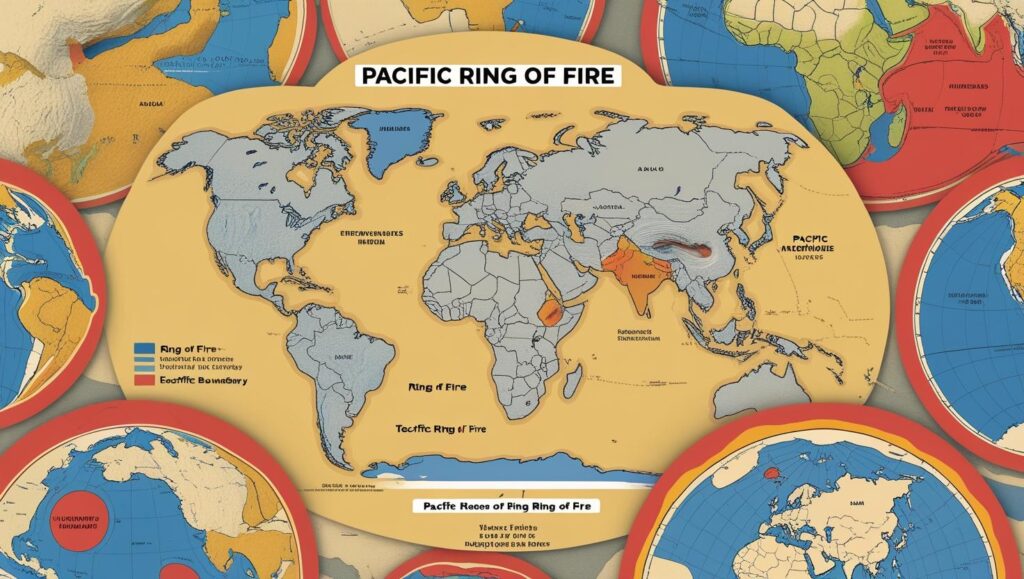
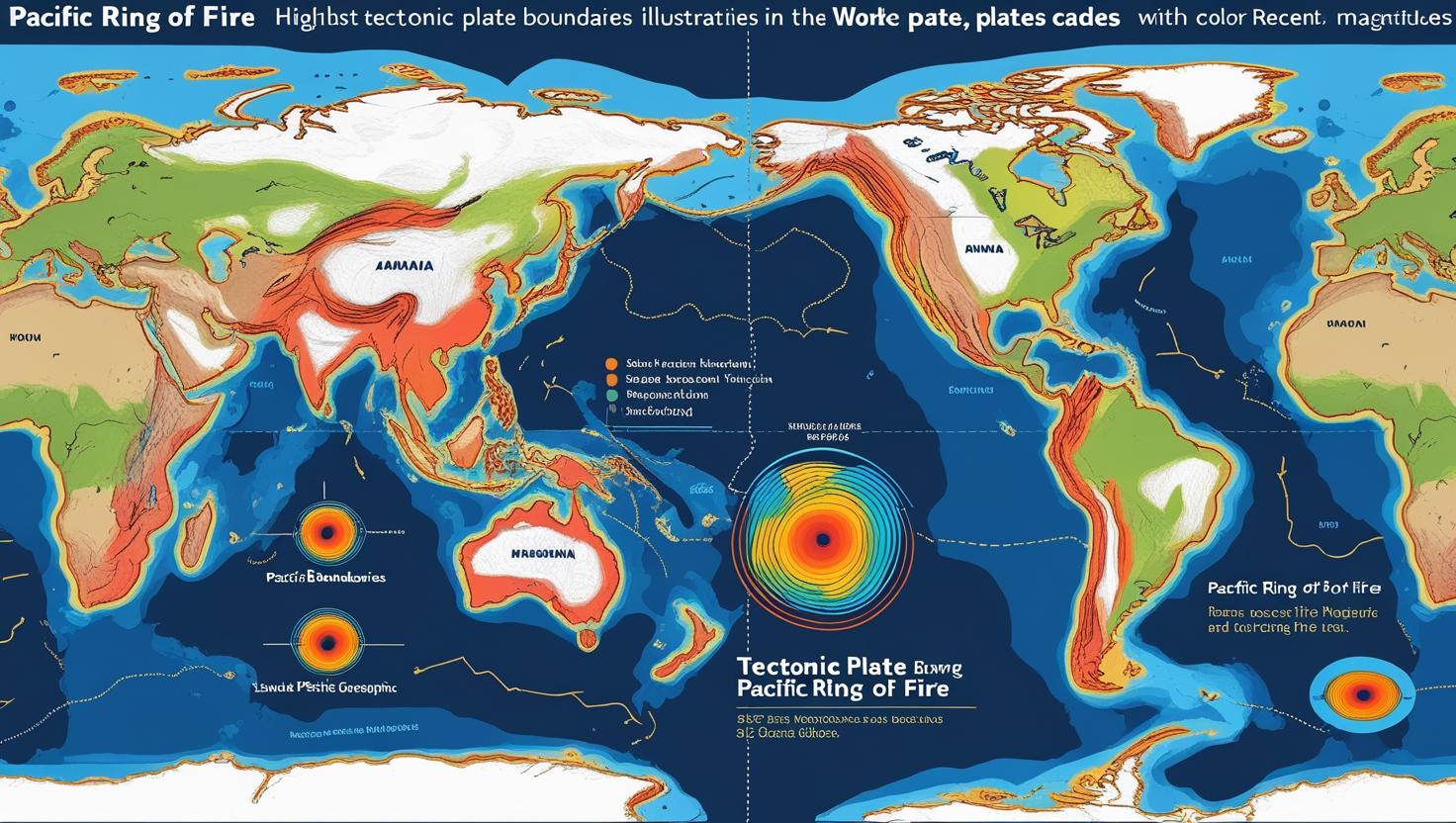
The Pacific Ring of Fire, also known as the Circum-Pacific Belt, is a vast horseshoe-shaped zone encircling the Pacific Ocean. Spanning approximately 40,000 kilometers (25,000 miles), this region is notorious for its intense seismic and volcanic activity. It forms the boundaries of several tectonic plates, where their constant movements lead to frequent earthquakes, volcanic eruptions, and tsunamis.
On August 12, 2025, the Ring of Fire made headlines again with a powerful 8.8 magnitude earthquake striking about 130 kilometers off the eastern coast of Russia’s Kamchatka Peninsula. This event triggered tsunami warnings across multiple countries, including Russia, Japan, the United States, Ecuador, Peru, Colombia, and Chile. Evacuation orders were issued in affected areas, highlighting the ongoing risks in this volatile zone.
What is the Pacific Ring of Fire?
The Ring of Fire is defined by the edges of the Pacific tectonic plate interacting with surrounding plates, such as the North American, Eurasian, Philippine, and Indo-Australian plates. These interactions include subduction zones (where one plate slides under another), transform faults (where plates grind past each other), and divergent boundaries (where plates pull apart).
Key facts about the Ring of Fire:
- Size and Scope: It covers over 40,000 square kilometers and includes the world’s largest volcanoes.
- Volcanic Hotspot: Home to about 452 volcanoes, representing over 75% of the Earth’s active and dormant volcanoes. Notable examples include Mount Fuji in Japan, Mount St. Helens in the USA, and Krakatoa in Indonesia.
- Earthquake Dominance: Approximately 90% of the world’s earthquakes and 80% of its largest quakes occur here, according to data from the U.S. Geological Survey (USGS).
- Geological Causes: The region’s activity stems from plate tectonics. When plates converge or rub against each other, they build up stress that releases as earthquakes. Subduction also melts rock, fueling volcanic eruptions.
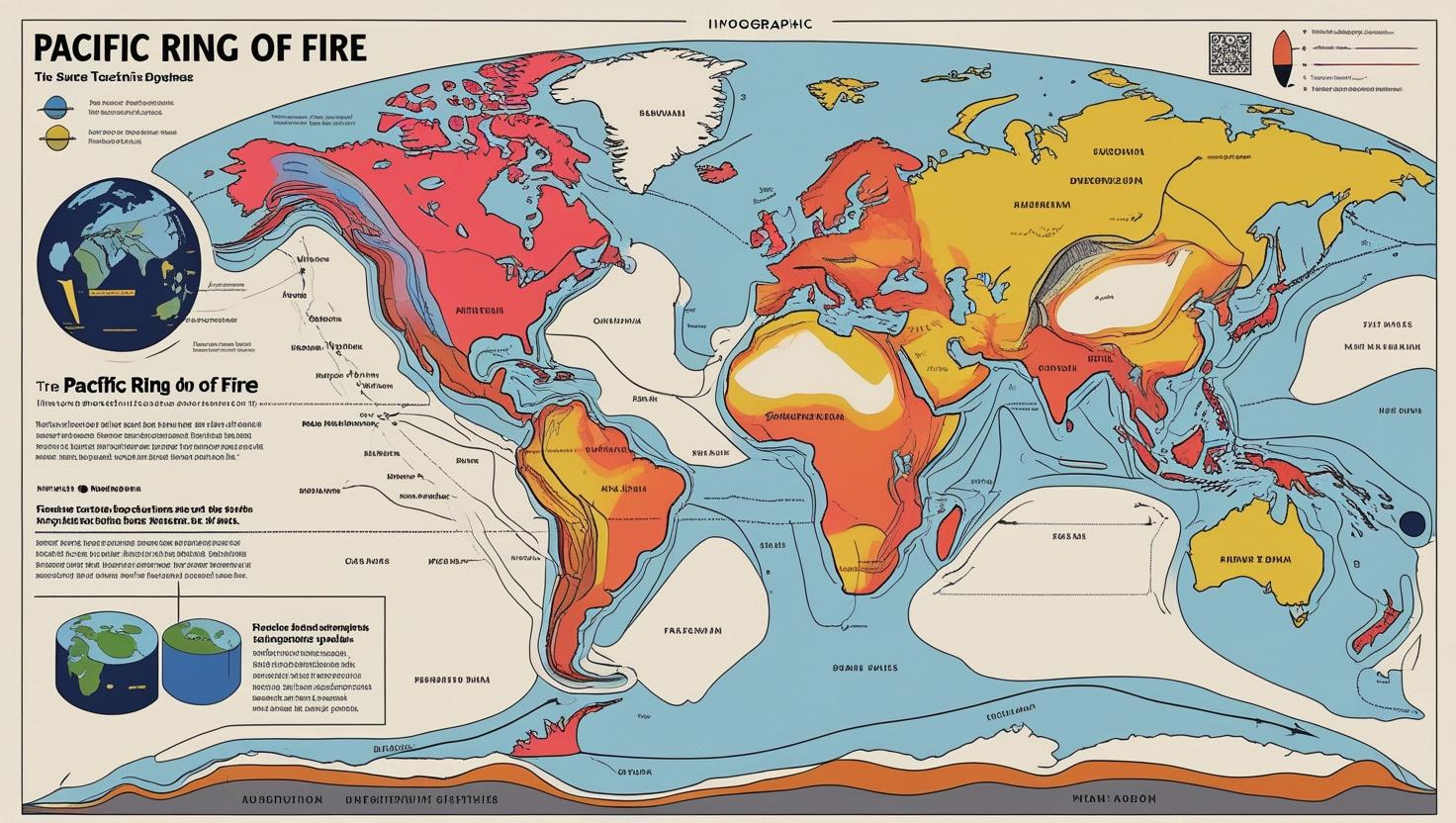
The Ring of Fire’s activity is driven by the Earth’s mantle convection currents, which slowly move the plates at rates of 2-10 cm per year. This gradual motion accumulates enormous energy, released suddenly during seismic events.
Countries and Regions Affected by the Ring of Fire
The Ring of Fire stretches across multiple continents and oceans, impacting a diverse array of nations. Starting from the western side:
- Latin America: Argentina, Bolivia, Chile, Colombia, Costa Rica, Ecuador, El Salvador, Guatemala, Honduras, Mexico, Nicaragua, Panama, and Peru.
- North America: Parts of Canada and the United States (including Alaska and the West Coast).
- Asia and Pacific Islands: It curves through the Aleutian Islands between Alaska and Kamchatka, then includes Russia, Japan, Taiwan, the Philippines, Indonesia, Malaysia, East Timor, Brunei, Singapore, Papua New Guinea, Solomon Islands, Tonga, Samoa, Tuvalu, and New Zealand’s coasts and islands.
Indonesia alone has over 130 active volcanoes due to its position on the Ring. Japan experiences around 1,500 earthquakes annually, many minor but some catastrophic, like the 2011 Tohoku earthquake (magnitude 9.0) that caused a devastating tsunami and the Fukushima nuclear disaster.
The Recent 8.8 Magnitude Earthquake in Russia
The August 12, 2025, earthquake originated at a depth of 18 kilometers, making it the sixth most powerful on record per USGS data. It generated tsunamis with waves reaching 3-4 meters along Kamchatka’s shores. Waves also hit Hawaii and the U.S. West Coast, with 1.09-meter surges recorded in Crescent City, Northern California.
According to Russian emergency minister Sergei Lebedev, initial reports indicated several injuries but no severe casualties. Seismologist Lucy Jones noted that while not expected to be destructive in the U.S., the event underscores renewed intense activity in the region.
Tsunami impacts extended to coastal cities, flooding parts of Russian towns near the epicenter. Evacuations were swift, minimizing potential loss of life.
Why Do 90% of Earthquakes Happen in the Ring of Fire?
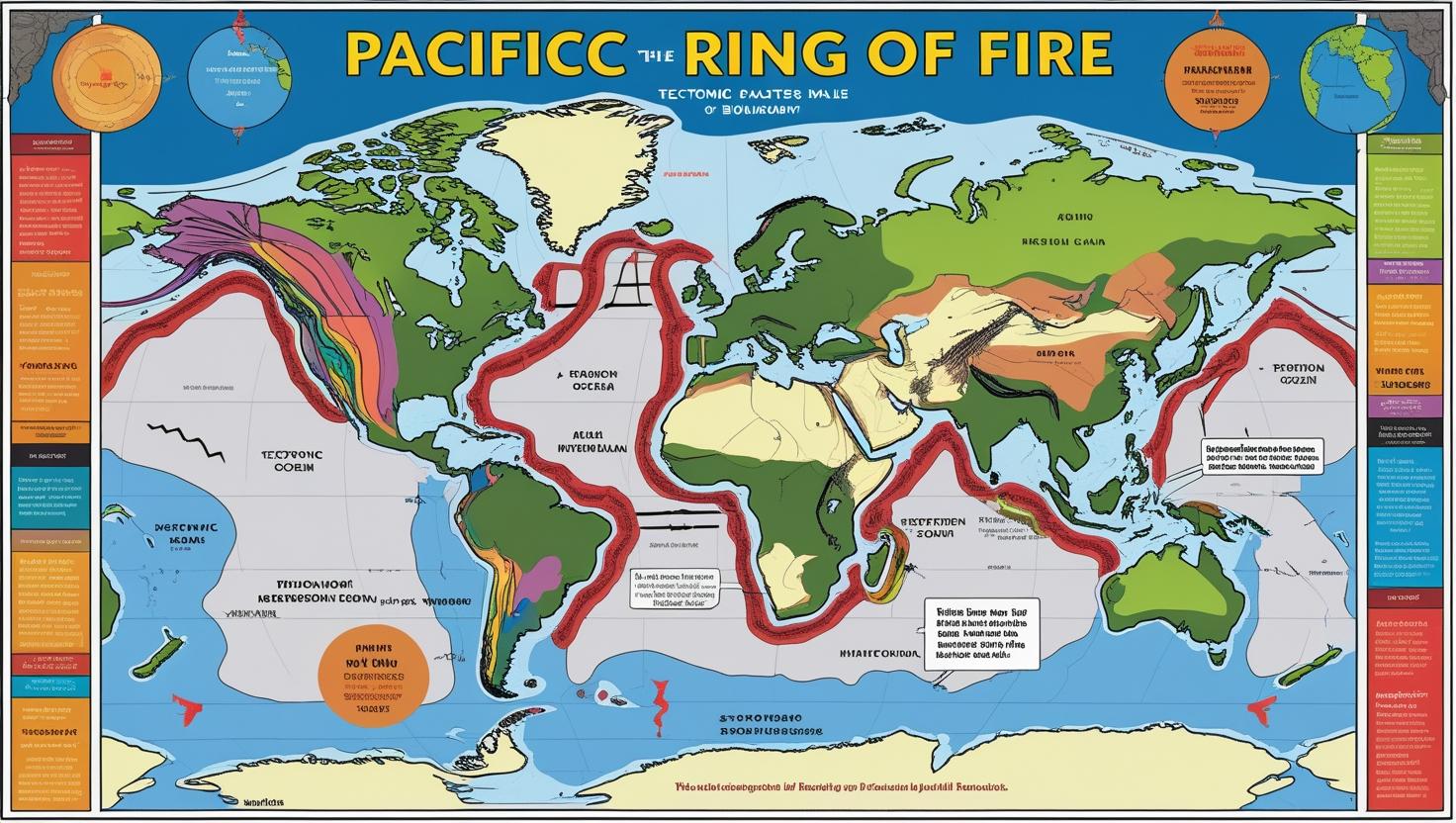
As explained by Hernando Tavera, executive president of Peru’s Geophysical Institute (IGP), the Pacific Ocean floor rests on multiple tectonic plates. Their convergence and friction create intense seismic activity, releasing built-up tension.
Additional insights:
- Plate Interactions: Subduction zones, like the one off Kamchatka, are prime earthquake triggers. The denser oceanic plate sinks into the mantle, causing deep-focus quakes.
- Volcanic Links: Earthquakes can trigger eruptions by agitating magma chambers, similar to shaking a soda bottle. Hugo Delgado from Mexico’s National Center for Disaster Prevention compares it to gas buildup in mineral water—high-magnitude quakes (over 9.0) can reactivate dormant volcanoes or even suppress activity through strong shockwaves.
- Historical Patterns: The Ring has seen mega-events like the 1960 Valdivia earthquake in Chile (magnitude 9.5, the strongest ever recorded) and the 2004 Sumatra-Andaman quake (magnitude 9.1), which triggered a deadly Indian Ocean tsunami killing over 230,000 people.
Climate change may indirectly influence activity by altering sea levels and crustal loads, though direct links are still under study. Advanced monitoring, like GPS and satellite interferometry, helps predict events, but perfect forecasting remains elusive.
Impacts on Volcanoes and Tsunamis
Earthquakes in the Ring often lead to volcanic eruptions. High gas content in magma makes volcanoes sensitive to seismic shocks—intense quakes can cause explosions or lava flows.
Tsunamis, like those from the 2025 event, form when underwater quakes displace massive water volumes. The 2025 waves demonstrate how energy propagates across the Pacific, affecting distant shores.
The Ring’s “Ring” shape is misleading—it’s more of a horseshoe, excluding Antarctica’s Pacific edge. Underwater volcanoes here, like the 2022 Hunga Tonga eruption, can generate global shockwaves and tsunamis.
Related Seismic Events and Preparedness
Recent related news:
- August 3, 2025: Earthquakes felt in Islamabad and Rawalpindi along the Rawat Fault Line.
- July 3, 2025: Over 900 quakes in Japan in two weeks, accompanied by strange ocean sounds.
- July 30, 2025: Explanation of tsunamis following Russia’s 8.8 quake.
- July 11, 2022: Detecting underwater volcanoes and eruption predictions.
Preparedness tips: Countries in the Ring invest in early warning systems, building codes, and education. For instance, Japan’s tsunami barriers and evacuation drills saved lives in 2011.
Conclusion
The Pacific Ring of Fire remains Earth’s most dynamic geological feature. The 2025 Russia earthquake serves as a reminder of its power, urging global vigilance and scientific research to mitigate future risks. Stay informed and prepared for nature’s unpredictable forces.
Pacific Ring of Fire: Why 90% of Earth’s Earthquakes Strike Here – Latest 8.8 Magnitude Quake in Russia Explained
What is the Pacific Ring of Fire? Exploring the World’s Most Seismic Zone
8.8 Magnitude Earthquake Hits Russia: Inside the Pacific Ring of Fire’s Latest Shock
Tsunami Warnings Issued After 2025 Russia Earthquake in the Ring of Fire
How Tectonic Plates Fuel the Pacific Ring of Fire’s Earthquake Activity
Understanding the Pacific Ring of Fire: Earth’s Hotspot for Quakes and Volcanoes
Russia’s 8.8 Magnitude Quake: Why the Ring of Fire is So Dangerous
2025 Tsunami Alerts: How the Pacific Ring of Fire Triggers Ocean Disasters
Why the Pacific Ring of Fire Accounts for 90% of Global Earthquakes
Earthquakes in the Ring of Fire: What Makes This Region So Active?
8.8 Magnitude Earthquake Rocks Kamchatka: A Ring of Fire Wake-Up Call
Pacific Ring of Fire Explained: Tectonic Plates and Seismic Power
Tsunami Waves Hit After Russia’s 2025 Ring of Fire Earthquake
The Science Behind the Pacific Ring of Fire’s Earthquake Dominance
2025 Russia Earthquake: How the Ring of Fire Shapes Global Disasters
Why Tectonic Plates Make the Pacific Ring of Fire a Seismic Hotspot
Pacific Ring of Fire: The Truth Behind Its Earthquake and Tsunami Risks
8.8 Magnitude Quake in Russia: Unraveling the Ring of Fire’s Power
Tsunami Warnings 2025: The Pacific Ring of Fire’s Latest Threat
How the Pacific Ring of Fire’s Tectonic Activity Triggers Earthquakes
Russia’s Kamchatka Earthquake: A Deep Dive into the Ring of Fire
Pacific Ring of Fire: Why It’s the Epicenter of Global Seismic Activity
2025 Earthquake in Russia: The Ring of Fire’s Unrelenting Force
Tectonic Plates in Motion: Understanding the Ring of Fire’s Quakes
Pacific Ring of Fire: How It Drives Earth’s Most Powerful Earthquakes
8.8 Magnitude Earthquake in Russia: Ring of Fire’s Latest Warning
Tsunami Risks in 2025: The Pacific Ring of Fire’s Deadly Impact
Why the Pacific Ring of Fire is Earth’s Most Active Seismic Zone
Earthquakes in the Ring of Fire: Causes and Consequences Explained
Russia’s 2025 Quake: How the Ring of Fire Continues to Shock
Pacific Ring of Fire: The Science of Its Tectonic Plate Movements
8.8 Magnitude Earthquake in Kamchatka: Ring of Fire’s Power Unleashed
Tsunami Warnings After Russia’s 2025 Quake: Ring of Fire Dangers
How Tectonic Plates Shape the Pacific Ring of Fire’s Seismic Events
Pacific Ring of Fire: A Guide to Its Earthquakes and Volcanoes
2025 Russia Earthquake: Inside the Pacific Ring of Fire’s Chaos
Why the Ring of Fire is Responsible for Most Global Earthquakes
Tsunami Threats in 2025: The Role of the Pacific Ring of Fire
Earthquakes in the Pacific Ring of Fire: What You Need to Know
Russia’s 8.8 Quake: How the Ring of Fire Fuels Natural Disasters
Pacific Ring of Fire: Exploring Its Tectonic and Seismic Secrets
2025 Tsunami Alerts: The Pacific Ring of Fire’s Global Impact
Why the Pacific Ring of Fire is a Hotbed for Earthquake Activity
8.8 Magnitude Earthquake in Russia: Ring of Fire’s Latest Chapter
Tectonic Plates and the Pacific Ring of Fire: A Seismic Connection
Pacific Ring of Fire: Why It’s Earth’s Most Volatile Region
Russia’s 2025 Earthquake: The Ring of Fire’s Ongoing Threat
Tsunami Warnings 2025: How the Ring of Fire Shapes Ocean Hazards
Earthquakes in the Ring of Fire: The Science Behind the Shocks
Pacific Ring of Fire: Understanding Its Role in Global Seismology
8.8 Magnitude Quake in Kamchatka: The Ring of Fire’s Fury
How the Pacific Ring of Fire’s Tectonic Activity Impacts the World
2025 Russia Quake: Why the Ring of Fire Remains Unpredictable
Pacific Ring of Fire: The Epicenter of Earth’s Seismic Power
Contact us on .
www.mehrublogs.com
mehrublogs@gmail.com
https://www.facebook.com/MehruBlogs/
https://www.instagram.com/Mehrublogs.com_/
https://www.pinterest.com/mehrublogs/


