

In a significant move ahead of the United Nations General Assembly in September 2025, the United States has revoked the visas of officials from the Palestinian Authority (PA) and the Palestine Liberation Organization (PLO). This decision, announced by the Trump administration, comes as Israeli Prime Minister Benjamin Netanyahu, despite facing an arrest warrant from the International Criminal Court (ICC) for alleged war crimes in Gaza, is expected to attend the high-level meeting in New York. The revocation of Palestinian visas has sparked debate, particularly as several Western nations, including the UK, France, Canada, and Australia, plan to recognize Palestinian statehood during the same UN session.
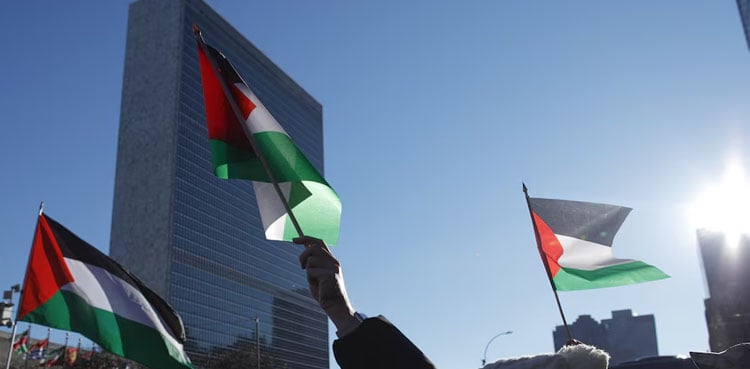
Palestinian Visas Revoked: A Strategic Move by the US
The US State Department, under Secretary of State Marco Rubio, has canceled the visas of PA and PLO officials, citing their alleged failure to comply with commitments to peace and their pursuit of what the US calls “lawfare campaigns” at international courts. The department specifically criticized the PA’s appeals to the International Court of Justice (ICJ) and the ICC, as well as their efforts to secure unilateral recognition of a Palestinian state.
According to a State Department statement, these actions have “materially contributed to Hamas’s refusal to release its hostages and the breakdown of Gaza ceasefire talks.” The revocation of Palestinian visas is seen as a punitive measure to hold the PA and PLO accountable, reflecting the Trump administration’s firm stance against what it perceives as obstacles to peace negotiations with Israel.
The US has not disclosed the specific officials affected by the visa cancellations, leaving uncertainty about whether Palestinian Authority President Mahmoud Abbas is included. Abbas, who has addressed the UN General Assembly annually for years, is expected to lead the Palestinian delegation and attend a high-level meeting on September 22, co-chaired by France and Saudi Arabia, to discuss a two-state solution. However, the revocation of Palestinian visas may prevent his participation, raising questions about compliance with the UN Headquarters Agreement, which obligates the US to allow access for foreign diplomats to UN events in New York.
Palestinian Visas and International Courts: US Criticism
The Trump administration has repeatedly criticized the ICJ and ICC for their rulings against Israel. Last year, the ICJ declared Israel’s presence in occupied Palestinian territories unlawful, calling for its immediate end. Similarly, in November 2024, the ICC issued arrest warrants for Netanyahu and former Israeli Defense Minister Yoav Gallant, accusing them of war crimes in Gaza.
The US has responded by imposing sanctions on ICC judges and prosecutors in recent months, signaling its disapproval of international legal actions targeting its ally. The revocation of Palestinian visas aligns with this broader policy, as the US accuses the PA of undermining peace by pursuing legal avenues and statehood recognition without direct negotiations with Israel.
Interestingly, while Netanyahu faces an ICC arrest warrant, he is still expected to attend the UN General Assembly in New York, highlighting a perceived inconsistency in US policy. The US has a history of denying visas to controversial figures, such as PLO leader Yasser Arafat in 1988 and Sudanese President Omar al-Bashir in 2013, both of whom were barred due to their status as wanted individuals by international courts. The current revocation of Palestinian visas, however, appears to target a broader group of officials, marking a significant escalation in US measures against the PA and PLO.
Palestinian Visas and the UN Headquarters Agreement
The State Department has clarified that permanent staff of the Palestinian Authority’s UN mission, led by Ambassador Riyad Mansour, will receive visa waivers under the UN Headquarters Agreement, allowing them to continue their operations in New York. However, the broader revocation of Palestinian visas could severely limit the presence of other PA and PLO officials at the General Assembly. This move has raised concerns about potential violations of the UN agreement, which mandates access for delegations to UN headquarters. The Palestinian presidency expressed “deep regret and astonishment” at the decision, calling it a breach of international law and urging the US to reconsider.
The revocation of Palestinian visas comes at a time when global momentum for Palestinian statehood is growing. On May 28, 2024, Spain, Norway, and Ireland formally recognized Palestine, followed by Slovenia on June 5, 2024. The UK, France, Canada, and Australia have also announced plans to recognize a Palestinian state at the upcoming General Assembly unless Israel implements a ceasefire and commits to a two-state solution.
British Prime Minister Keir Starmer emphasized that recognition would proceed if Israel fails to address the dire situation in Gaza. Similarly, French President Emmanuel Macron announced on July 24, 2025, that France would recognize Palestine during the General Assembly. Currently, 149 of the 193 UN member states recognize Palestine, underscoring the growing international support for Palestinian statehood.
Palestinian Visas and Global Reactions
The US decision to revoke Palestinian visas has sparked varied reactions. Palestinian officials, including Ambassador Mansour, are assessing the impact, with Mansour stating, “We will see exactly what it means and how it applies to any of our delegation, and we will respond accordingly.” The move is seen as an attempt to deter Abbas from issuing a “declaration of independence” during his UN speech, a possibility being considered by Palestinian leadership. Israeli Foreign Minister Gideon Sa’ar reportedly encouraged the US to block Palestinian visas during a meeting with Rubio, later thanking the Trump administration for holding the PA accountable for “rewarding terrorism” and pursuing legal actions against Israel.
The revocation of Palestinian visas also reflects broader geopolitical tensions. While the US and Israel oppose unilateral recognition of Palestinian statehood, many Western allies are moving in the opposite direction, driven by concerns over the humanitarian crisis in Gaza. The UN has warned of famine in Gaza City and a potential halving of hospital bed capacity due to Israel’s military operations, further fueling calls for Palestinian statehood. The US decision to revoke Palestinian visas, therefore, stands in stark contrast to the actions of its allies, highlighting a divide in international approaches to the Israeli-Palestinian conflict.
Implications of Revoking Palestinian Visas
The revocation of Palestinian-visas is a relatively limited measure compared to other potential US actions, such as designating the PA as a terrorist organization, which would impose crippling sanctions. However, it sends a strong message about the Trump administration’s priorities. By targeting Palestinian officials, the US aims to pressure the PA to abandon its international advocacy and align with US-led peace negotiations. The move also risks straining relations with allies like France and the UK, who are pushing for Palestinian recognition. As the General Assembly approaches, the absence of key Palestinian figures, potentially including Abbas, could shift the dynamics of discussions on the two-state solution.
In conclusion, the US revocation of Palestinian visas ahead of the UN General Assembly is a bold and controversial step, reflecting the Trump administration’s hardline stance against the PA and PLO. While permanent UN mission staff are exempt, the broader visa restrictions could limit Palestinian representation at a critical moment when global support for their statehood is growing. The decision underscores ongoing tensions between the US and international courts, as well as the divide between the US and its allies on the Israeli-Palestinian issue. As the world watches, the outcome of this move will likely shape diplomatic efforts at the UN and beyond.
This article is brought to you by Mehru Blogs. For more Visit www.mehrublogs.com.
Contact us at mehrublogs@gmail.com.


