
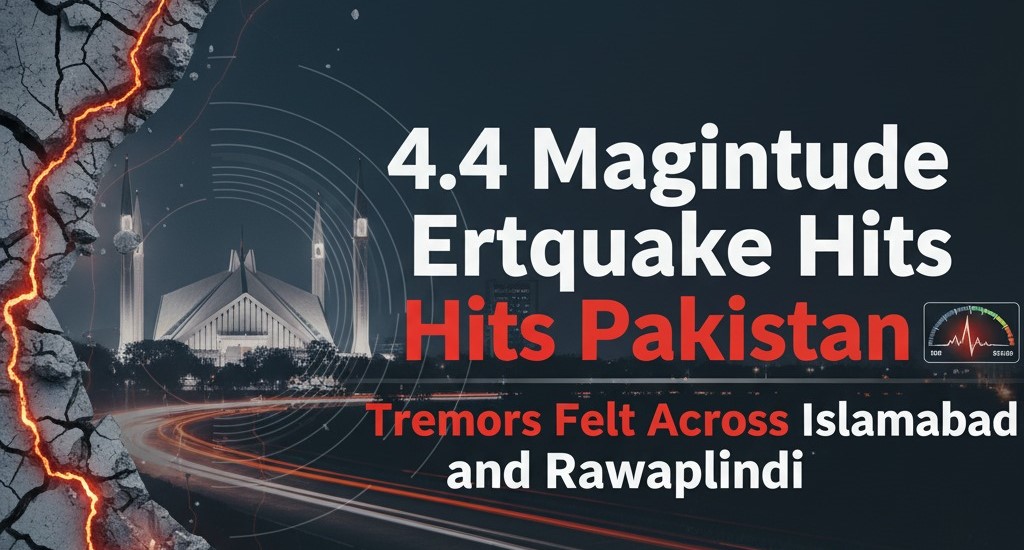

On September 4, 2025, a 4.4 magnitude earthquake struck Pakistan, sending tremors through major cities including Islamabad and Rawalpindi. The quake, which occurred at approximately 9:56 PM local time, originated near the Afghanistan-Pakistan border, with its epicenter located about 26 km from Kuz Kunar in Afghanistan. While no immediate reports of casualties or major damage have surfaced, the event has heightened awareness about seismic risks in the region. This article provides detailed insights into the earthquake, its impact, and essential safety measures for residents in Pakistan.
Details of the Earthquake
According to preliminary reports from seismic monitoring agencies and eyewitness accounts on social media, the earthquake registered a magnitude of 4.4 on the Richter scale. Here’s a breakdown of the key facts:
Epicenter and Magnitude
- Magnitude: 4.4 (4.4 magnitude earthquake)
- Epicenter: Approximately 26 km from Kuz Kunar, Afghanistan, near the border with Pakistan. The location places it in a seismically active zone along the Hindu Kush mountain range, known for frequent tectonic activity.
- Time: 9:56 PM Pakistan Standard Time (PST) on September 4, 2025.
- Depth: Initial estimates suggest a shallow depth, contributing to the widespread feeling of tremors, though exact figures are pending confirmation from the Pakistan Meteorological Department (PMD) and international agencies like the USGS.
The quake was felt across northern and central Pakistan, with varying intensities reported in different areas.
Affected Areas
- Islamabad and Rawalpindi: Strong tremors were felt in the capital and its twin city, causing panic among residents. Social media posts described buildings shaking for several seconds, prompting people to rush outdoors.
- Other Regions: Reports indicate the quake was also sensed in surrounding areas, including parts of Khyber Pakhtunkhwa (KP) and Punjab provinces. Neighboring countries like Afghanistan may have experienced similar jolts, given the epicenter’s proximity.
- Intensity: In urban centers like Islamabad, the shaking was described as “severe” but short-lived, lasting around 10-15 seconds. No structural collapses have been reported yet.
Social media platforms, particularly X (formerly Twitter), were flooded with real-time updates from users in affected areas. Posts included prayers for safety and calls for calm, with many reciting protective supplications like “Allahumma inni a’udhu bi ‘izzatik an ughtala min tahti” (O Allah, I seek refuge in Your might from being swallowed up from beneath me).
Immediate Impact and Response
As of the latest updates, there are no confirmed reports of injuries, fatalities, or significant property damage. However, the quake has prompted a swift response from authorities:
- Government and Emergency Services: The National Disaster Management Authority (NDMA) and PMD are monitoring the situation closely. Residents have been advised to stay alert for potential aftershocks, which are common in such events.
- Public Reaction: In Islamabad and Rawalpindi, people evacuated buildings as a precaution. Social media buzzed with accounts of the tremors, with users sharing experiences from Kabul in Afghanistan as well, indicating the quake’s regional reach.
- No Tsunami Risk: Given the inland epicenter, there is no threat of a tsunami, unlike coastal quakes.
Pakistan lies on the boundary of the Indian and Eurasian tectonic plates, making it prone to earthquakes. This event follows a pattern of moderate seismic activity in the region, with recent quakes including a 5.4 magnitude tremor in Islamabad and KP just days earlier on September 2, 2025.
Historical Context of Earthquakes in Pakistan
Pakistan has a history of devastating earthquakes, underscoring the importance of preparedness:
- 2005 Kashmir Earthquake: A 7.6 magnitude quake killed over 80,000 people and caused widespread destruction.
- Recent Activity: In 2025 alone, Pakistan has experienced multiple quakes, including a 4.6 magnitude event on September 1 and a 5.4 magnitude on September 2, highlighting ongoing tectonic stress.
The 4.4 magnitude quake, while moderate, serves as a reminder of the region’s vulnerability. Experts note that shallow quakes like this can cause more noticeable shaking, even if the magnitude is not extremely high.
Safety Tips for Earthquake Preparedness in Pakistan
In a seismically active country like Pakistan, being prepared can save lives. Here are essential tips:
- During the Quake: Drop, cover, and hold on. Protect your head and neck under sturdy furniture, away from windows and heavy objects.
- After the Quake: Check for injuries and hazards like gas leaks. Avoid elevators and be cautious of aftershocks.
- Build an Emergency Kit: Include water, non-perishable food, first-aid supplies, flashlights, and important documents.
- Structural Safety: Ensure your home meets earthquake-resistant standards, especially in high-risk areas like northern Pakistan.
- Stay Informed: Follow updates from PMD, NDMA, and reliable news sources. Download earthquake alert apps for real-time notifications.
- Community Preparedness: Participate in drills and educate family members, particularly in urban areas like Islamabad where high-rises amplify risks.

The Broader Implications
This earthquake highlights the need for improved infrastructure and disaster management in Pakistan. With climate change potentially influencing seismic patterns, ongoing investment in early warning systems and resilient buildings is crucial. Globally, similar events in neighboring Afghanistan underscore the shared vulnerabilities in the region.
As investigations continue, authorities urge calm and vigilance. While the 4.4 magnitude quake caused no major harm, it serves as a timely reminder to prioritize safety in an unpredictable world.
What was your experience during the tremors? Share in the comments below! For more updates on natural events and safety tips.
This article is brought to you by Mehru Blogs. For more Visit www.mehrublogs.com.
Contact us at mehrublogs@gmail.com.
Follow us on social media: Facebook | Instagram.
4.4 magnitude earthquake 4.4 magnitude earthquake 4.4 magnitude earthquake 4.4 magnitude earthquake 4.4 magnitude earthquake 4.4 magnitude earthquake 4.4 magnitude earthquake 4.4 magnitude earthquake 4.4 magnitude earthquake 4.4 magnitude earthquake 4.4 magnitude earthquake


