
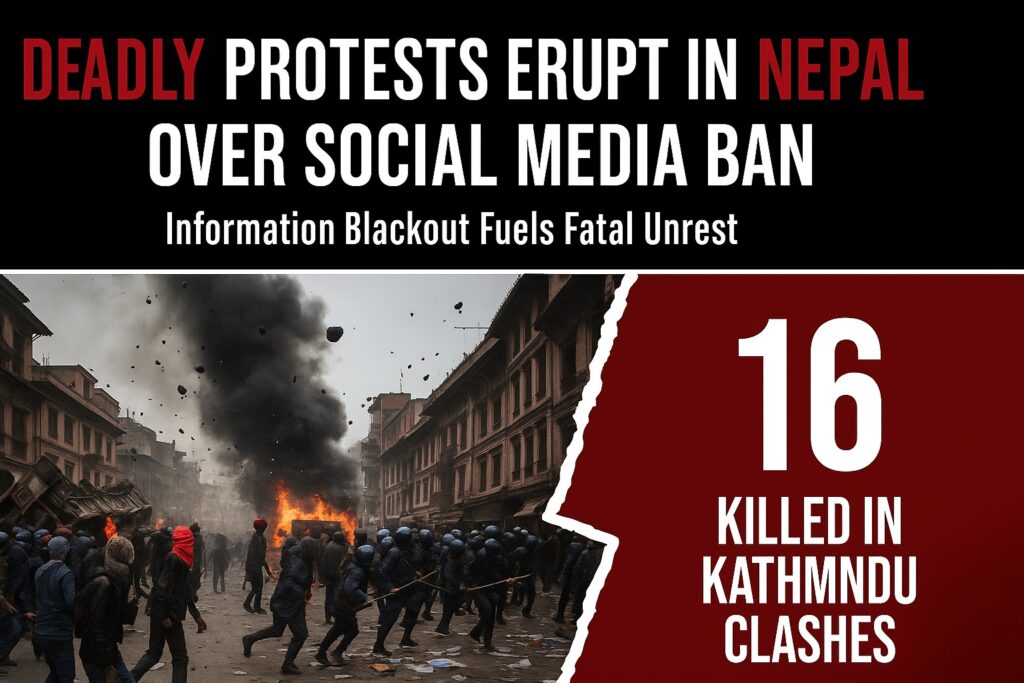

On September 8, 2025, Nepal’s capital Kathmandu turned into a battlefield as thousands of young protesters, largely from Generation Z, clashed with police over the government’s controversial ban on major social media platforms. What began as a demonstration against digital restrictions has escalated into a broader anti-corruption movement, resulting in at least 16 deaths and over 100 injuries. Curfews have been imposed, and the army deployed, marking one of the most violent uprisings in recent Nepalese history. (Protests in Nepal)
This article delves into the events in Nepal, similar restrictions in Turkey amid opposition protests, and a separate deadly shooting in Jerusalem, highlighting a troubling trend of digital censorship and escalating tensions worldwide.
Nepal’s Social Media Ban: The Spark for Unrest
Nepal’s government, under Prime Minister KP Sharma Oli, imposed a sweeping ban on 26 social media platforms on September 4, 2025, after they failed to comply with mandatory registration requirements. Platforms like Facebook, Instagram, WhatsApp, YouTube, X (formerly Twitter), Reddit, LinkedIn, and others were blocked nationwide, affecting millions of users who rely on them for communication, business, and news.
Why the Ban?
- Registration Mandate: Under the Directive on Regulating the Use of Social Media, 2023, foreign platforms must register with the Ministry of Communications and Information Technology, appoint local grievance officers, and comply with content monitoring rules. The government issued a seven-day ultimatum on August 28, which expired on September 3.
- Non-Compliant Platforms: Only five apps—TikTok, Viber, WeTalk, Nimbuzz, and Poppo Live—registered in time and remain operational. Telegram and Global Diary are under review.
- Government Justification: Officials cited the need to curb misinformation, cybercrime, hate speech, and ensure tax compliance. A Supreme Court ruling last year reinforced the requirement, but critics argue it’s a tool for authoritarian control.
The ban disrupted daily life, especially for Nepal’s 7.5% diaspora abroad who use WhatsApp for family connections, and small businesses dependent on Instagram and Facebook for e-commerce. With nearly half of Nepal’s 30 million population active online, the blackout fueled outrage.
The Protests: From Digital Anger to Street Violence
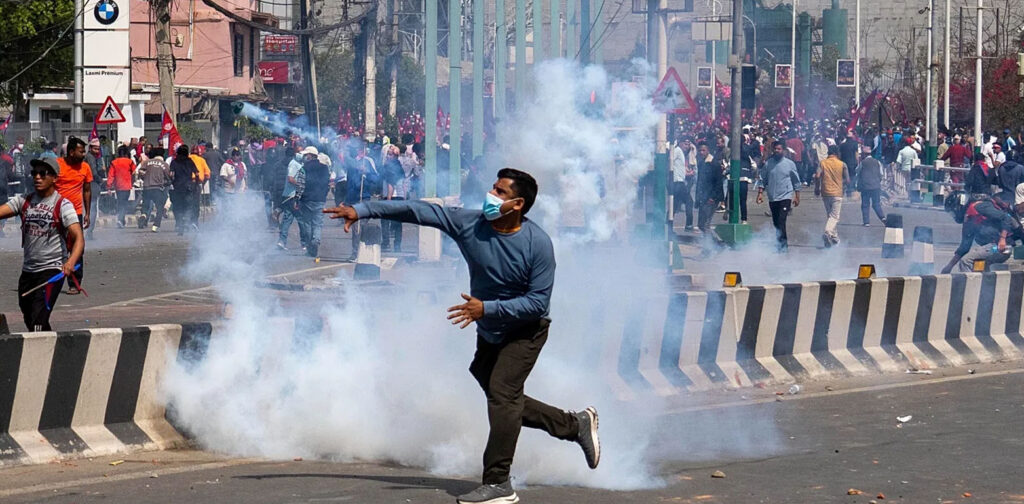
Protests erupted on September 8, organized by youth groups like Hami Nepal, starting peacefully at Maitighar Mandala in Kathmandu. Thousands marched toward Parliament, waving national flags, singing the anthem, and chanting slogans like “Shut down corruption, not social media” and “Unban social media.” The demonstrations quickly spread to Pokhara, Biratnagar, Butwal, and other cities.

Escalation and Clashes
- Parliament Siege: Protesters breached barricades and stormed Parliament premises in New Baneshwor, prompting a heavy police response. Riot police used tear gas, water cannons, rubber bullets, and live ammunition to disperse crowds.
- Casualties: At least 16 people were killed, including seven at the National Trauma Center, with many shot in the head and chest. Over 100 were injured, overwhelming hospitals like Civil Hospital and KMC. Families waited anxiously outside as blood donations surged.
- Curfew and Army Deployment: Kathmandu District Administration imposed a curfew from 12:30 PM to 10 PM, covering Parliament, the President’s residence (Shital Niwas), and other key areas. The army was deployed in sensitive zones like Baneshwor and Singha Durbar.
- Gen Z Revolution: Led by those born 1995-2010, the protests—dubbed the “Gen Z Revolution”—highlight frustrations with corruption, economic inequality, and authoritarianism. Inspired by movements in Sri Lanka (2022) and Bangladesh (2024), demonstrators accused leaders of nepotism, with viral TikTok videos exposing politicians’ lavish lifestyles amid poverty (per capita income $1,300).
Prime Minister Oli defended the ban, stating “the independence of the nation is greater than the loss of jobs for a handful,” but critics like Kathmandu Mayor Balendra Shah condemned it as a threat to democracy.
Broader Grievances: Beyond the Ban
While the social media blackout was the trigger, protests reflect deeper issues:
- Corruption and Inequality: Demonstrators decried institutionalized graft, with hashtags like #NepoKid trending before the ban.
- Economic Impact: The blackout halted digital earnings for creators and businesses, exacerbating youth unemployment.
- Press Freedom: Journalists faced violence, with the Federation of Nepalese Journalists (FNJ) decrying the ban as a “blow to free speech.” Draft bills could fine or jail those posting “against national interest.”
Rights groups like the Committee to Protect Journalists (CPJ) urged reversal, warning of a “dangerous precedent” for press freedom.
Parallels in Turkey: Social Media Restrictions Amid CHP Protests
Similar to Nepal, Turkey restricted access to social media platforms on September 7, 2025, amid opposition rallies by the Republican People’s Party (CHP). NetBlocks reported throttling of X, YouTube, Instagram, Facebook, TikTok, and WhatsApp, starting at 8:45 PM GMT, coinciding with police barricades around CHP’s Istanbul headquarters.
Context in Turkey
- CHP Protests: The restrictions followed a court order suspending CHP’s Istanbul leadership over alleged irregularities in the 2023 congress. CHP leader Ozgur Ozel called for rallies, accusing the government of a “coup” against democracy.
- Government Response: Authorities blocked access to prevent mobilization, a tactic used during the March 2025 protests after Istanbul Mayor Ekrem Imamoglu’s arrest. Over 1,879 detentions occurred then, with social media playing a key role in organizing.
- Broader Crackdown: Turkey blocked 27,304 social media accounts in early 2025 for “criminal content,” per Interior Minister Ali Yerlikaya. Critics, including Human Rights Watch, decry it as censorship to silence dissent.
These events in Nepal and Turkey highlight a global trend of governments using digital restrictions to control narratives during unrest.
Jerusalem Shooting: 6 Killed in Palestinian Attack
In a separate incident on September 8, 2025, a shooting at Ramot Junction in northern Jerusalem killed six people and injured 15, including a Spanish national. Israeli police described it as a “terrorist attack” by two Palestinian gunmen from the West Bank, who opened fire at a bus stop during morning rush hour before being “neutralized” by security forces. (Protests in Nepal)
Details of the Attack
- Victims: Three men in their 30s, two in their 50s, and one woman in her 50s. Five were in serious condition; the scene was chaotic with broken glass and unconscious victims.
- Response: Police sealed areas near Ramallah, searching for accomplices. Hamas praised it as a “heroic operation” without claiming responsibility, amid the Gaza war’s escalation.
- Context: The deadliest Jerusalem attack in two years, it follows surges in West Bank violence. Since October 2023, 49 Israelis killed by Palestinians vs. 968 Palestinians by Israelis/West Bank settlers (UN data).
Israeli Foreign Minister Gideon Saar called it a reminder of “radical Islamist terrorism,” urging global support. Palestinian groups linked it to Gaza’s crisis.
Global Implications: A Pattern of Digital Control and Violence
Nepal’s deadly protests, Turkey’s restrictions, and Jerusalem’s shooting underscore 2025’s tensions: governments curbing digital freedoms to suppress dissent, amid rising violence. In Pakistan, with its own history of social media blocks (e.g., X slowdowns in 2024), these events warn of similar risks. As Gen Z demands accountability, balancing regulation with rights is crucial.
For Pakistanis, staying informed via VPNs and advocating for transparent policies can protect digital spaces.
What do you think about these global crackdowns? Share in the comments! For more news.
This article is brought to you by Mehru Blogs. For more Visit www.mehrublogs.com.
Contact us at mehrublogs@gmail.com.
Follow us on social media: Facebook | Instagram.
Protests in Nepal Protests in Nepal Protests in Nepal Protests in Nepal Protests in Nepal Protests in Nepal Protests in Nepal Protests in Nepal Protests in Nepal Protests in Nepal Protests in Nepal Protests in Nepal Protests in Nepal Protests in Nepal


