
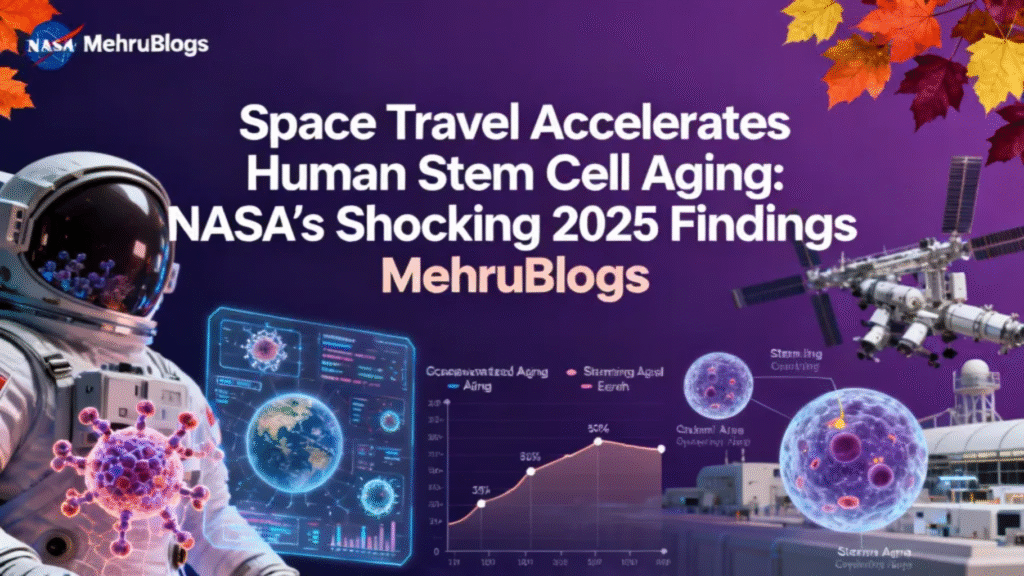

Space exploration has always captivated humanity, but new research from NASA reveals a terrifying downside: spaceflight accelerates the aging of critical human stem cells, potentially increasing risks of cancer, immune disorders, and age-related diseases. Published in Cell Stem Cell on September 3, 2025, the study—funded by NASA and conducted during four SpaceX resupply missions to the International Space Station (ISS) from December 2021 to March 2023—shows that hematopoietic stem and progenitor cells (HSPCs), essential for blood and immune system health, undergo rapid molecular changes in microgravity. (Space Travel Accelerates)
These findings, led by researchers at the University of California San Diego’s Sanford Stem Cell Institute, highlight the harsh realities of long-duration space travel. For Pakistan, with its growing interest in space science through SUPARCO, this research underscores the challenges ahead for future missions. Let’s dive into the details, causes, and implications of this groundbreaking study.

The Study: How Spaceflight Affects Stem Cells
The research involved sending HSPCs—blood-forming stem cells from bone marrow donors—aboard SpaceX Cargo Dragon missions to the ISS. These cells, vital for producing red blood cells (oxygen carriers), white blood cells (immune fighters), and platelets (for clotting), were cultured in specialized nanobioreactors for real-time monitoring during 30- to 45-day flights. Upon return, the space-exposed cells were compared to identical ground controls from the same donors.
Key Findings from the Missions
- Accelerated Aging Signs: Space-flown HSPCs showed hallmarks of rapid aging, including shortened telomeres (chromosome ends that protect DNA and shorten with age), reduced self-renewal capacity, and diminished ability to generate new blood cells. Some cells exhibited up to 10-fold faster aging compared to Earth controls.
- DNA Damage and Mutations: Exposure led to increased DNA instability, with mutations linked to clonal hematopoiesis—a condition where mutant blood cells proliferate, raising leukemia risks. Tools like AlphaMissense predicted deleterious effects from these mutations.
- Overactivity and Exhaustion: In microgravity, HSPCs became hyperactive, depleting energy reserves without time for rest or repair. This caused mitochondrial stress (energy production hubs) and inflammation, activating genes normally dormant on Earth.
- Varied Donor Responses: Not all cells reacted equally; some donors’ HSPCs showed stronger resilience, suggesting genetic factors influence vulnerability. Lead researcher Catriona Jamieson noted, “Some individuals’ cells had a better ability to counter aging effects.”
- Missions Involved: Samples from December 2021, July 2022, November 2022, and March 2023 missions were analyzed, building on NASA’s Twins Study (2015-2016), where astronaut Scott Kelly’s cells showed similar molecular shifts after 340 days in space.
The study, titled “Nanobioreactor Detection of Space-Associated Hematopoietic Stem and Progenitor Cell Aging,” used advanced bioreactors to track changes in real-time, providing unprecedented insights into space’s cellular toll.
Causes: Microgravity and Radiation’s Deadly Duo
Why do these changes occur? The study attributes them to two primary space stressors: microgravity and cosmic radiation.
Microgravity’s Impact
- Hyperactivity Without Rest: On Earth, gravity helps regulate cell dormancy. In space, HSPCs enter a “fight or flight” mode, constantly dividing without recovery periods. This exhausts their reserves, mimicking years of aging in weeks.
- Bone and Muscle Effects: Reduced gravity leads to bone density loss (up to 1-2% per month) and muscle atrophy, indirectly stressing stem cells. For HSPCs, this disrupts their bone marrow niche, impairing blood production.
Radiation Exposure
- High-Energy Particles: Earth’s magnetic field shields us from cosmic rays, but space exposes cells to unfiltered radiation—up to 1,000 times higher than on the ground. This causes DNA breaks, mutations, and telomere shortening.
- Inflammation and Stress: Radiation triggers chronic inflammation and mitochondrial dysfunction, activating genes like APOBEC3C (linked to mutations) and reducing ADAR1 expression (key for RNA editing and self-renewal).
- Individual Variability: Genetic differences mean some cells repair damage better, but overall, space radiation accelerates clonal hematopoiesis, a precursor to blood cancers.
These factors combined create a “perfect storm” for accelerated aging, as seen in the Twins Study where Scott Kelly’s telomeres lengthened temporarily but shortened post-flight.
Health Risks: From Cancer to Immune Failure
The study’s implications are profound, warning of long-term health threats for astronauts and potential parallels for Earth-bound aging.
Immediate and Long-Term Dangers
- Immune System Weakness: Damaged HSPCs reduce white blood cell production, increasing infection risks. Spaceflights already show immune dysregulation; this explains persistent post-mission vulnerabilities.
- Cancer Risk: Mutations from radiation and overactivity heighten leukemia and other blood cancers. Clonal hematopoiesis, observed in space cells, is a known cancer precursor.
- Cardiovascular and Neurological Issues: Inflamed mitochondria contribute to heart disease and brain fog. Telomere shortening links to accelerated overall aging.
- Tissue Repair Impairment: HSPCs aid wound healing and regeneration; their decline could hinder recovery from injuries or surgeries in space.
- Age-Related Diseases: Findings mirror earthly aging, suggesting space as a model for studying Alzheimer’s, osteoporosis, and immune senescence.
For missions to Mars (6-9 months each way), these effects could compound, making returnees “biologically older.”

Relevance to Pakistan and Global Space Efforts
Pakistan, through SUPARCO, is advancing in satellite tech and astronaut training, but this study highlights risks for future human spaceflight.
Pakistan’s Space Ambitions
- Current Projects: SUPARCO’s PAKSAT-MM1 and iCube-Qamar lunar mission show growing capabilities. Pakistan eyes crewed missions, possibly via China or international partnerships.
- Challenges: With limited resources, addressing radiation shielding and stem cell protection is crucial. The study could inform Pakistani research on microgravity simulations.
- Health Implications: In a country with rising cancer rates (e.g., 178,000 new cases yearly), understanding space-induced mutations aids earthly medicine, like radiation therapy for cancer patients.
- Global Collaboration: NASA partnerships could benefit Pakistan, sharing data on countermeasures like antioxidants or gene therapies to mitigate aging effects.
This research aligns with international efforts, like ESA’s studies on stem cells for Artemis missions.
Potential Solutions and Future Research
Jamieson’s team plans real-time monitoring and countermeasures:
- Shielding Tech: Advanced materials to block radiation, like NASA’s HERA habitat.
- Pharmacological Interventions: Drugs targeting inflammation or telomere protection, tested in simulated microgravity.
- Exercise and Nutrition: Counter microgravity with resistance training and anti-aging diets rich in antioxidants.
- Genetic Screening: Pre-flight tests for resilient HSPCs to select suitable astronauts.
- Earth Applications: Use space models to study aging diseases; e.g., APOBEC3C inhibitors for cancer prevention.
Over the next 120 days, NASA and collaborators will refine these, with human trials on future missions.
The Bigger Picture: Space’s Double-Edged Sword
This study builds on NASA’s Twins Study, confirming space as an accelerator of aging at the cellular level. As private ventures like SpaceX push boundaries, understanding these risks is vital for sustainable exploration. For Pakistan, it emphasizes investing in biomedical research to join the space race safely. Amid global issues like climate change and humanitarian crises, space tech (e.g., satellites for disaster monitoring) offers benefits, but human costs must be minimized.
Final Thoughts
NASA’s 2025 study on spaceflight’s impact on HSPCs reveals a horrifying truth: space ages our cells faster, threatening health on long missions. From DNA damage to immune decline, the findings demand innovative solutions for future explorers. In Pakistan, this inspires SUPARCO to prioritize health research, ensuring our space dreams don’t come at a biological cost.
What do you think about space travel’s risks? Share below! For more science updates.
This article is brought to you by Mehru Blogs. For more Visit www.mehrublogs.com.
Contact us at mehrublogs@gmail.com.
Follow us on social media: Facebook | Instagram.
Space Travel Accelerates Space Travel Accelerates Space Travel Accelerates Space Travel Accelerates Space Travel Accelerates Space Travel Accelerates Space Travel Accelerates Space Travel Accelerates Space Travel Accelerates Space Travel Accelerates Space Travel Accelerates Space Travel Accelerates Space Travel Accelerates


