

Apple Foldable iPhone Price Revealed: A $2,000 Game-Changer Set for 2026 Debut
Apple’s entry into the foldable smartphone market is no longer a distant rumor—it’s shaping up to be a reality by 2026, with the foldable iPhone price pegged at around $2,000. According to Bloomberg analyst Mark Gurman, this innovative device will feature a design reminiscent of two iPhone Air models fused together, housed in an ultra-thin titanium chassis for premium durability and sleekness. As the iPhone 18 series approaches, whispers of a foldable variant launching alongside it in October or November 2026 have tech enthusiasts buzzing. This Apple foldable iPhone isn’t just another gadget; it’s Apple’s bold response to competitors like Samsung and Google, promising seamless integration with iOS and revolutionary multitasking capabilities.

In a market where foldable phones have grown from niche curiosities to mainstream must-haves—boasting over 20 million global shipments in 2024—this development signals Apple’s intent to dominate. With production slated primarily in China, the foldable iPhone price 2026 aligns with premium expectations, but questions linger: Will it justify the cost with groundbreaking features? In this comprehensive guide, we’ll dive into the leaks, specs, comparisons, and what this means for the future of smartphones. Whether you’re an Apple loyalist eyeing an upgrade or a foldable skeptic, understanding the Apple foldable phone features could redefine your next purchase.
The Evolution of Foldable Phones: Setting the Stage for Apple’s Entry
Foldable smartphones have come a long way since Samsung’s Galaxy Fold debuted in 2019, evolving from fragile experiments to robust devices that blend portability with expansive screens. By 2025, the global foldable market is valued at $15 billion, with Samsung holding 60% share and Huawei close behind at 25%. Apple’s hesitation—despite years of patents filed since 2016—stemmed from perfectionism, but recent prototypes like the iPhone Air have paved the way.
The iPhone Air, Apple’s thinnest handset at 5.5mm, served as a testing ground for foldable tech. iFixit teardown experts praised its repairability, noting the slim profile doesn’t compromise internals. Now, the foldable iPhone builds on this, envisioning a book-style design that unfolds to a tablet-like 7-8 inch display. Gurman’s report highlights how this mirrors two Air models side-by-side, suggesting a 6.8-inch outer screen folding into a larger inner one—ideal for productivity on the go.
This timing aligns with iOS 19’s rumored foldable optimizations, including dynamic multitasking and crease-minimizing algorithms. For Apple fans, the foldable iPhone price 2026 at $2,000 positions it as a luxury item, comparable to high-end MacBooks, but with the convenience of a phone. As foldables penetrate emerging markets like India (projected 15% CAGR through 2030), Apple’s global launch could accelerate adoption, especially among professionals craving bigger canvases for apps like Final Cut Pro or Notes.
Design and Build: Titanium Chassis and Innovative Form Factor
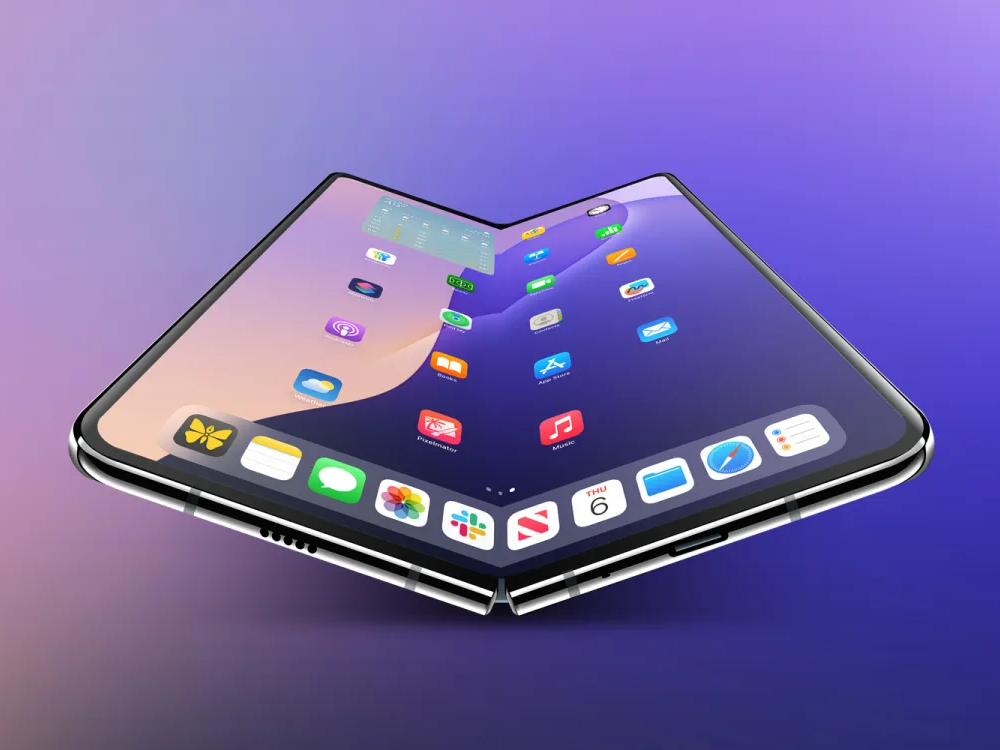
At the heart of the Apple foldable iPhone is its titanium chassis—ultra-thin yet resilient, echoing the iPhone 15 Pro’s aerospace-grade frame but engineered for repeated folding. Leaks suggest a hinge mechanism refined over prototypes, reducing the visible crease that plagues rivals. When closed, it measures around 6.5 inches tall, unfolding to nearly 13 inches diagonally, perfect for split-screen viewing or immersive media.
The titanium chassis iPhone isn’t just about aesthetics; it’s functional. Apple’s R&D focuses on water resistance (IP68 or better) and drop-proof hinges, addressing past foldable failures like screen delamination. Manufacturing in China, via partners like Foxconn, ensures scalability—Gurman notes “at least a portion” starts there, leveraging Shenzhen’s supply chain for OLED panels from Samsung Display or BOE. This could lower costs, keeping the foldable iPhone price 2026 competitive despite tariffs.
Compared to the Galaxy Z Fold6’s aluminum build, Apple’s titanium promises longevity, potentially lasting 200,000 folds. Colors? Expect classic Apple palettes—Space Black, Silver, and a new “Fold Gray”—with seamless integration of Face ID across both screens. For accessibility, software will auto-adjust UI for folded/unfolded states, making it user-friendly for all ages.
Expected Features: Power Under the Fold
While full specs remain under wraps, the Apple foldable phone features are poised to shine. Powered by the A20 Bionic chip (or successor), it could pack 16GB RAM for buttery multitasking—think editing 4K videos on the inner screen while FaceTiming on the outer. Cameras? A triple setup with 48MP main sensor, ultra-wide, and telephoto, plus a foldable-exclusive under-display front cam for crease-free selfies.
Battery life is a wildcard, but dual-cells could hit 5,000mAh, supporting MagSafe and 50W wireless charging. iOS tweaks will enable “Fold Mode,” optimizing apps like Safari for landscape reading or GarageBand for split-track recording. Integration with Apple Pencil? Rumors swirl of stylus support on the inner display, turning it into a portable iPad mini.
Sustainability plays big: Recycled titanium and e-waste reduction align with Apple’s carbon-neutral goals by 2030. For health, advanced sensors might track posture during extended use, mitigating “foldable neck” strain. At $2,000, these premium Apple foldable phone features justify the investment for creators and execs, but budget variants could emerge later.
Pricing Breakdown: Is $2,000 Worth It?
The foldable iPhone price 2026 revelation at $2,000—up from earlier $1,800 whispers—reflects Apple’s premium positioning. Storage tiers: 256GB at base, up to 1TB at $2,400. Compared to the iPhone 16 Pro Max ($1,199), it’s a leap, but akin to Samsung’s Z Fold6 ($1,800) or Google’s Pixel 9 Pro Fold ($1,799).
Why so steep? Titanium sourcing, custom hinges, and R&D costs (Apple spent $26 billion on it in 2024). Trade-ins could offset $600-800, and carrier deals might bundle it with plans. In markets like India, expect ₹1,70,000 equivalent, pressuring locals like Vivo’s X Fold3 Pro ($1,200). Analysts predict 5 million units sold in year one, boosting Apple’s 25% smartphone market share.
For value, it’s about ecosystem lock-in: AirDrop across folds, Continuity with MacBooks, and exclusive iOS apps. If history repeats—like the Vision Pro’s slow burn—this could redefine “pro” devices.
Release Timeline: Eyes on iPhone 18 and Beyond
Apple’s foldable iPhone could debut with the iPhone 18 in fall 2026, announced in September but shipping October/November. Gurman’s timeline hints at winter unveilings, aligning with holiday sales. Pre-orders? Expect frenzy, with supply chains ramping in Q2 2026.
Delays aren’t impossible—Apple scrapped early prototypes in 2023 over hinge issues—but 2026 feels solid. Post-launch, a clamshell variant (like Flip) might follow in 2027, diversifying the lineup. For now, the iPhone 18 foldable integration could steal thunder from Samsung’s Unpacked events.
Apple vs Competitors: How the Foldable Stacks Up
In the foldable arena, Apple faces stiff competition. Samsung’s Galaxy Z Fold6 excels in software polish (One UI 6.1) and S Pen support, but its $1,800 price and battery woes give Apple an edge in premium build. Google’s Pixel 9 Pro Fold shines in AI (Gemini Nano), yet its $1,799 tag and camera bumps lag Apple’s consistency.
Huawei’s Mate X5 dominates China with HarmonyOS, but U.S. sanctions limit global reach. Apple’s ace? Ecosystem synergy—no Android fragmentation, just seamless iCloud and App Store. At $2,000, it targets aspirational buyers, potentially capturing 10% market share by 2028.
Critics note foldables’ 5% failure rate; Apple’s quality control could drop that to 2%. Ultimately, the titanium chassis iPhone might not “kill” rivals but elevate standards.
Challenges and Controversies: Hurdles on the Horizon
No launch is smooth—supply chain snags in China amid U.S.-China tensions could hike prices 10%. Durability tests loom: Will the hinge withstand daily abuse? Privacy hawks worry about fold-specific tracking, though Apple’s on-device processing mitigates this.
Environmentally, titanium mining raises ethical flags, but Apple’s recycled materials pledge counters it. For consumers, the foldable iPhone price 2026 might deter masses, slowing adoption versus cheaper options like Motorola’s Razr ($700).
The Bigger Picture: Foldables in 2025 and Beyond
By 2025, foldables represent 5% of premium sales, projected to hit 15% by 2030 per IDC. Apple’s entry validates the category, spurring innovation like rollable screens. For users, it’s a productivity boon—dual screens for work, portability for life.
As AR/VR blurs lines, foldables bridge phones and tablets, fitting Apple’s “spatial computing” vision. The foldable iPhone isn’t just hardware; it’s a statement on adaptability in a changing world.
Conclusion: Will You Fold for Apple’s Future?
The Apple foldable iPhone, with its $2,000 price tag and titanium chassis, promises to fold the competition in 2026. From iPhone 18 synergies to ecosystem magic, it’s poised to captivate. As leaks solidify, one thing’s clear: Apple’s folding the future. For more tech scoops, visit www.mehrublogs.com or email mehrublogs@gmail.com.
Follow us on social media:
