

Introduction
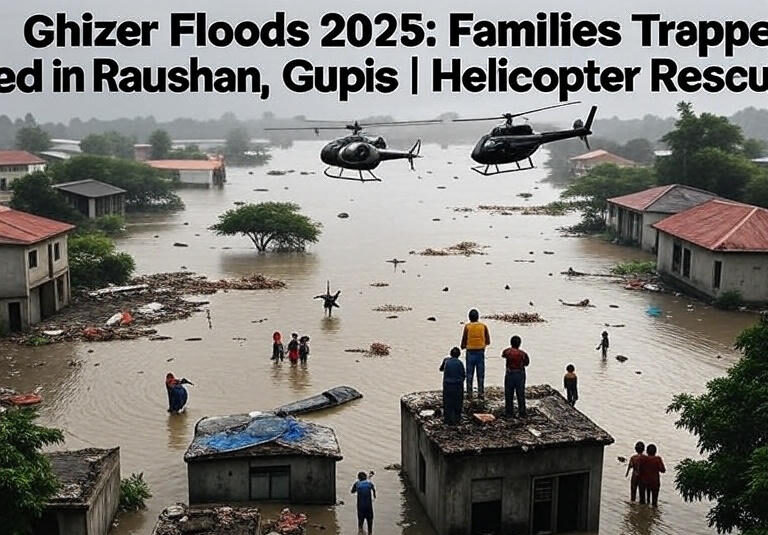
Natural disasters have long been part of the global climate crisis, but the Ghizer Floods of 2025 stand out as one of the most tragic and urgent humanitarian emergencies in northern Pakistan’s recent history. In Raushan village of Gupis valley, Ghizer district (Gilgit-Baltistan), dozens of families remain trapped after devastating floods washed away bridges, blocked roads, and left entire communities cut off from safety. Social media voices and local residents are issuing desperate calls for helicopter rescue operations to save the stranded population before the situation worsens.
This article provides an in-depth analysis of the Ghizer floods, covering the causes, immediate impact, rescue challenges, human stories, government response, climate crisis implications, and international attention—all while highlighting why urgent rescue operations are the only hope for survival.
The Location: Understanding Ghizer and Raushan
The Ghizer district is one of the most scenic but also climate-sensitive areas of Gilgit-Baltistan. Known for its breathtaking valleys, crystal-clear rivers, and snowcapped peaks, Ghizer has become a victim of its geography. Raushan, a small village in the Gupis tehsil of Ghizer, sits near riverbanks and mountain slopes, making it highly vulnerable to sudden flooding events.
-
Geographical Importance: Ghizer connects Gilgit with Chitral and Shandur, making it strategically significant.
-
Vulnerable Terrain: With rivers, glaciers, and fragile slopes, even small environmental disturbances can escalate into massive disasters.
-
Local Population: Villages like Raushan rely heavily on agriculture, livestock, and tourism. A single natural disaster can wipe out livelihoods for years.
The Floods of 2025: What Happened?
In mid-August 2025, torrential rains combined with glacial melt triggered catastrophic flooding in Ghizer.
-
Flash Flooding: Sudden torrents swept through villages, destroying roads, bridges, and farmland.
-
Isolation: Raushan village and nearby hamlets were completely cut off from main roads.
-
Destruction: Dozens of homes submerged, livestock swept away, and food supplies cut off.
-
Death Toll & Missing Persons: While official figures are still unclear, eyewitnesses report multiple casualties and dozens missing.
Families Trapped: A Humanitarian Emergency
The most heartbreaking aspect of the Ghizer floods is the families still trapped in Raushan and surrounding villages.
-
Children & Elderly: Vulnerable groups face the greatest risks of starvation, disease, and trauma.
-
No Escape Routes: Collapsed bridges mean families cannot cross rivers to reach safer areas.
-
Lack of Supplies: Reports suggest food stocks are running dangerously low, with clean drinking water almost inaccessible.
-
Fear of Landslides: Rising floodwaters are triggering landslides, putting lives at even greater risk.
Residents have repeatedly appealed online for Pakistan Army helicopters to rescue stranded families before it is too late.
Social Media Voices Amplifying the Plea
Social media has become a lifeline for Ghizer residents.
-
Hashtags such as #GhizerFloods, #Raushan, #FloodEmergency, #SaveLives have trended regionally.
-
Activists, journalists, and concerned citizens are amplifying the urgency of the situation.
-
Video clips show residents waving for help from rooftops surrounded by floodwaters.
-
Emotional posts emphasize the need for helicopters as ground routes are impossible.
This digital outcry highlights how social media is shaping disaster response by mobilizing attention at national and international levels.
Government & Army Response
As of now, local authorities and volunteers are struggling to respond. The National Disaster Management Authority (NDMA) and the Pakistan Army have been urged to take charge.
-
Volunteers: Local communities are offering shelter, food, and boats where possible.
-
Challenges: Lack of helicopters and bad weather hinder rapid rescue.
-
Expectations: Citizens demand immediate helicopter deployment as the only solution for Raushan’s isolation.
-
Political Reactions: Opposition leaders and activists are calling out government delays.
Climate Change and Glacial Flooding in Gilgit-Baltistan
The Ghizer floods are not an isolated incident—they are part of a larger pattern of climate crisis impacts in Gilgit-Baltistan.
-
Glacial Melt: Rising global temperatures are accelerating melting in Pakistan’s over 7,000 glaciers.
-
GLOFs (Glacial Lake Outburst Floods): When glacier lakes burst, massive flooding occurs downstream.
-
Changing Rainfall Patterns: Intense rainfall over short periods is creating more flash floods.
-
Global Concern: Pakistan ranks among the top 10 countries most vulnerable to climate change.
Thus, Ghizer is not only facing a natural disaster but also the consequences of a global climate emergency.
Human Stories: Voices from Raushan
Every flood statistic hides a human story. In Raushan:
-
A mother of three cried on camera: “We have nothing left—our home is gone, we cannot swim through the river. Please send helicopters.”
-
Farmers lost years of savings as fields and livestock drowned.
-
Students preparing for exams now sit stranded with no schools left standing.
-
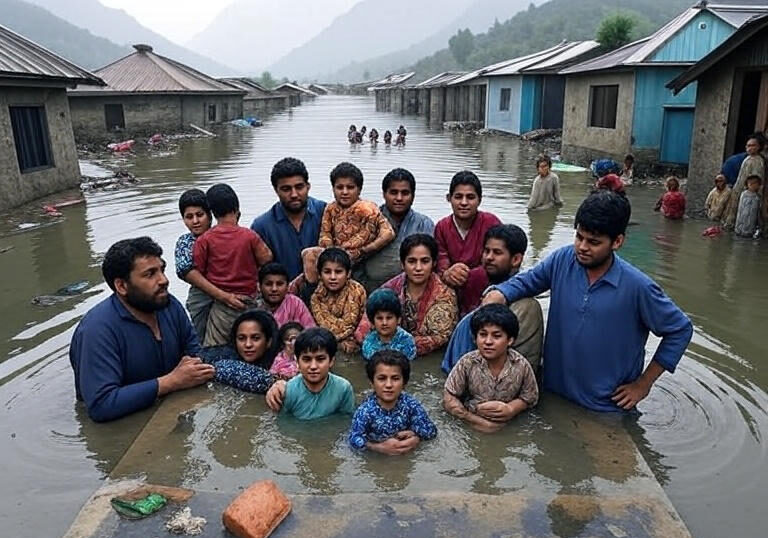
Families huddle on rooftops with fear in their eyes and hunger in their stomachs.
These voices demand the world’s attention.
International Reactions and Media Coverage
While Pakistan’s mainstream media is slowly covering the floods, international outlets and NGOs are urged to:
-
Highlight Gilgit-Baltistan’s vulnerability.
-
Push for climate adaptation funding for Pakistan.
-
Send humanitarian aid including food, tents, and medical kits.
If ignored, the Ghizer floods may become another “silent disaster” with limited outside help.
Lessons from Past Floods
Pakistan has faced repeated flood tragedies:
-
2010 Super Floods – Affected 20 million people.
-
2022 Sindh & Balochistan Floods – Submerged one-third of the country.
-
2025 Ghizer Floods – A reminder that mountain regions are equally at risk.
The key lesson: preparedness and rapid response are essential.
The Way Forward: What Must Be Done
-
Immediate Helicopter Rescue for Raushan families.
-
Food & Medical Aid to prevent deaths from hunger and disease.
-
Reconstruction of Bridges & Roads to reconnect Ghizer.
-
Climate Adaptation Plans to prepare for future disasters.
-
Stronger Community Networks for rapid local response.
Conclusion
The Ghizer Floods 2025 are more than just a natural disaster—they are a humanitarian emergency, a climate crisis warning, and a test of Pakistan’s disaster response system. Families in Raushan, Gupis, Ghizer are still waiting for rescue, their lives hanging in the balance as floodwaters rise.
The world cannot remain silent. The calls for helicopter rescue operations must be heard—before it is too late.
🔗 Social Links – Stay Connected with Mehrublogs
-
📘 Facebook: https://www.facebook.com/MehruBlogs/
-
📸 Instagram: https://www.instagram.com/MehruBlogs.com_/
-
✍️ Medium: https://medium.com/@mehrublogs/
-
📌 Pinterest: https://www.pinterest.com/mehrublogs/
-
📧 Email: mehrublogs@gmail.com
-
🌍 Website: www.mehrublogs.com
