
Introduction:
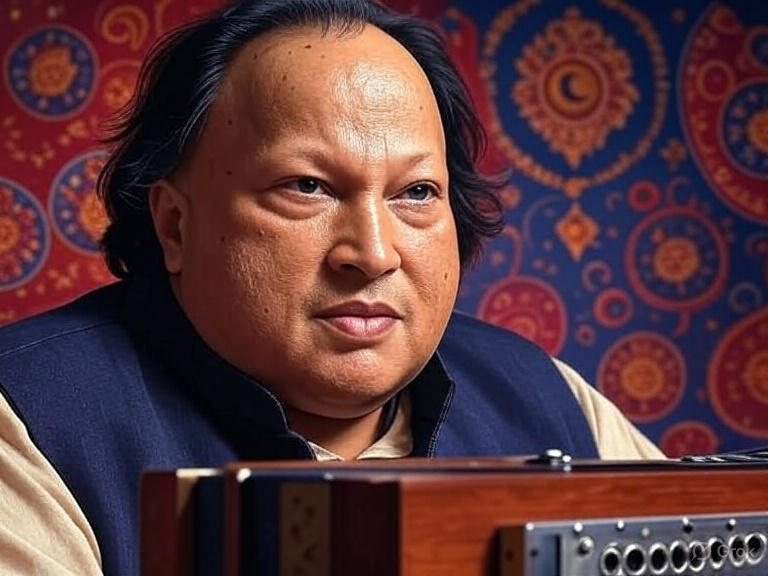
Nusrat Fateh Ali Khan is more than just a musician; he is a legend, a cultural ambassador, and a timeless voice that continues to inspire millions across the world. Known as the “Shahenshah-e-Qawwali” (King of Qawwali), Nusrat redefined the boundaries of traditional Sufi music and brought it to international platforms. His powerful voice, mastery of improvisation, and ability to merge spirituality with melody made him one of the most celebrated artists in the history of music.
From his humble beginnings in Faisalabad, Pakistan, to performing on some of the world’s biggest stages, Nusrat Fateh Ali Khan’s journey is not just a story of success, but a tale of dedication, spirituality, and passion. Even decades after his passing, his music remains alive, proving that legends never truly die.
This article explores Nusrat’s life, career, music, international recognition, legacy, and why his influence continues to shape both Eastern and Western music today. (Nusrat Fateh Ali Khan)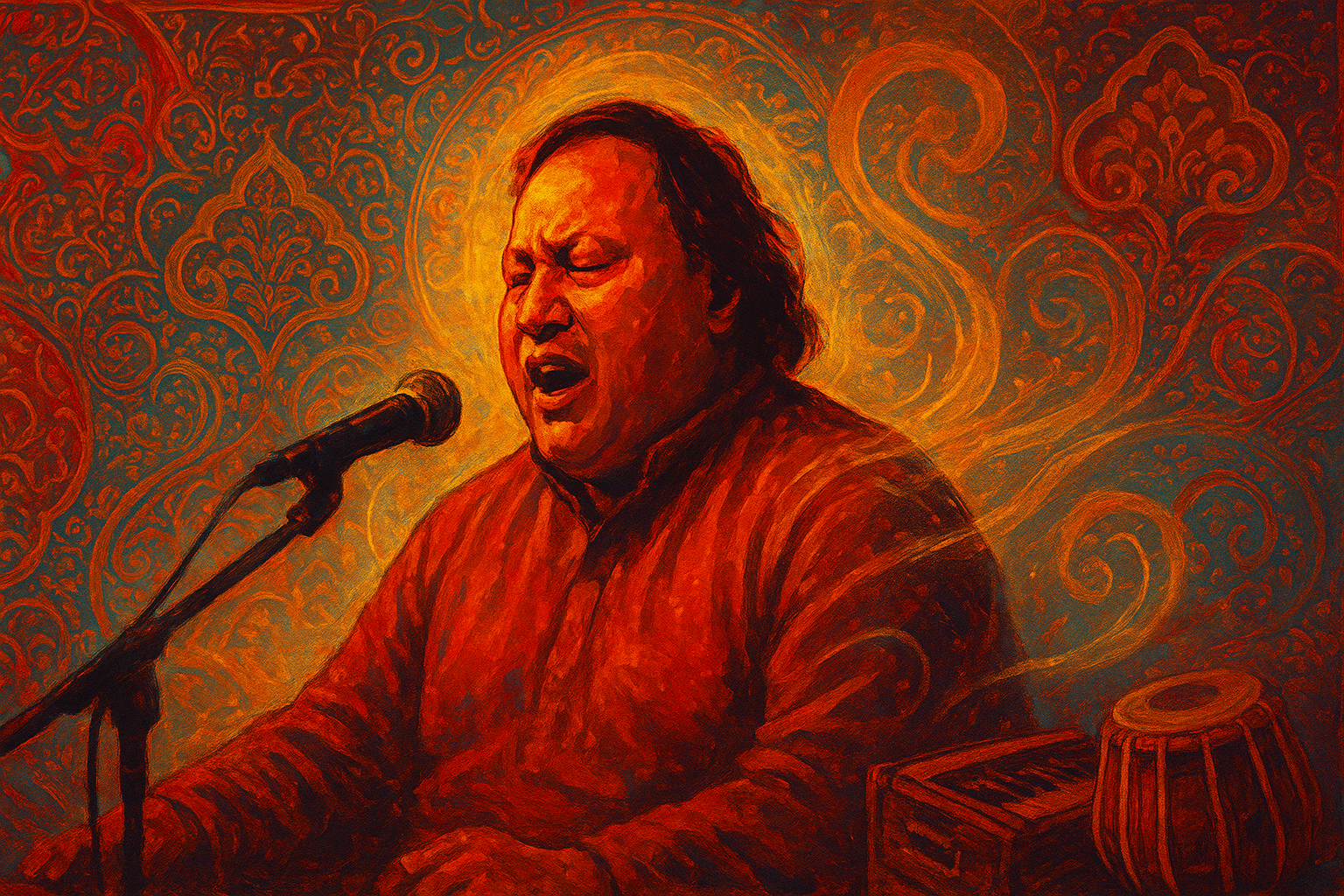
Early Life and Background:
Birth and Family
Nusrat Fateh Ali Khan was born on 13 October 1948 in Faisalabad, Pakistan (formerly known as Lyallpur). He was born into a family of Qawwals (traditional Sufi singers), tracing back over 600 years of musical heritage. His father, Ustad Fateh Ali Khan, and his uncles were renowned Qawwals, making Nusrat’s childhood deeply rooted in music.
Despite this musical environment, Nusrat’s early dream was to become a doctor. However, fate had other plans. His father recognized Nusrat’s incredible voice and began training him in classical and Qawwali singing at a young age.
Training and Musical Heritage
Nusrat received training in:
-
Classical raagas
-
Qawwali traditions (spiritual Sufi singing)
-
Voice control and improvisation
He learned not only from his father but also from his uncle Mubarak Ali Khan, who helped polish Nusrat’s raw talent. This rigorous training laid the foundation of his unmatched career.
Rise to Fame:
First Major Performance
Nusrat’s first major public performance came in 1971 at his father’s death anniversary, where he stunned audiences with his ability to control notes, pitch, and improvisation.
Soon after, he became the leader of his family’s Qawwali group and began performing regularly at shrines, festivals, and gatherings. His reputation spread quickly, and he was soon recognized as a rising star in Pakistan.
The Radio Pakistan Breakthrough
In the 1970s, Nusrat’s performances began airing on Radio Pakistan, giving him exposure across the nation. His deep voice and powerful style quickly set him apart from other Qawwals.
The Art of Qawwali:
What is Qawwali?
Qawwali is a form of Sufi devotional music that seeks to bring listeners closer to God. It combines poetry, rhythm, and melody to create a spiritual experience.
Nusrat’s Innovation in Qawwali
While Qawwali had existed for centuries, Nusrat brought innovation by:
-
Expanding its length (some performances lasted over an hour)
-
Adding improvisational flair
-
Blending traditional instruments with modern arrangements
-
Reaching global audiences
He preserved the soul of Qawwali while making it accessible to younger and international listeners.
Major Qawwalis and Songs:
Nusrat’s discography includes over 125 albums and thousands of performances. Some of his most famous works include:
-
Allah Hoo Allah Hoo
-
Tumhe Dillagi Bhool Jani Padegi
-
Afreen Afreen
-
Tajdar-e-Haram
-
Sanu Ek Pal Chain Na Aave
-
Ye Jo Halka Halka Suroor Hai
-
Mere Rashke Qamar
-
Kinna Sohna Tenu Rab Ne Banaya
-
Dum Mast Qalandar
These songs are not just music but experiences—each one carrying deep emotion and spirituality.
International Fame and Collaborations:
In the 1980s and 1990s, Nusrat’s fame crossed borders.
Collaborations with Western Artists
-
Worked with Peter Gabriel (soundtracks for The Last Temptation of Christ)
-
Collaborated with Eddie Vedder of Pearl Jam (Dead Man Walking)
-
Teamed with Michael Brook for the album Mustt Mustt, blending Qawwali with Western fusion
Global Performances
He performed in:
-
The UK, Europe, and USA
-
International music festivals
-
Universities and cultural programs
Nusrat became the face of Pakistan’s music on the global stage, admired by both Eastern and Western audiences.
Awards and Achievements:
Nusrat Fateh Ali Khan received numerous awards, including:
-
UNESCO Music Prize (1995)
-
Legion of Honour (France)
-
Time Magazine listed him among the Top 50 Voices Ever
-
Guinness World Record for most Qawwali recordings
These honors reflect his unparalleled influence in the world of music.
Vocal Style and Technique:
Nusrat’s voice was his greatest asset. His range extended over several octaves, and he could sustain notes for an extraordinary length of time.
Key features of his style:
-
High-pitched, soulful delivery
-
Powerful control over breathing
-
Ability to switch between classical and folk seamlessly
-
Spiritual intensity that captivated listenersInfluence on Sufi Music and Spirituality
Nusrat’s qawwalis often drew from the poetry of great Sufi saints like:
-
Rumi
-
Bulleh Shah
-
Amir Khusro
His performances were not just songs; they were spiritual journeys meant to elevate both performer and listener.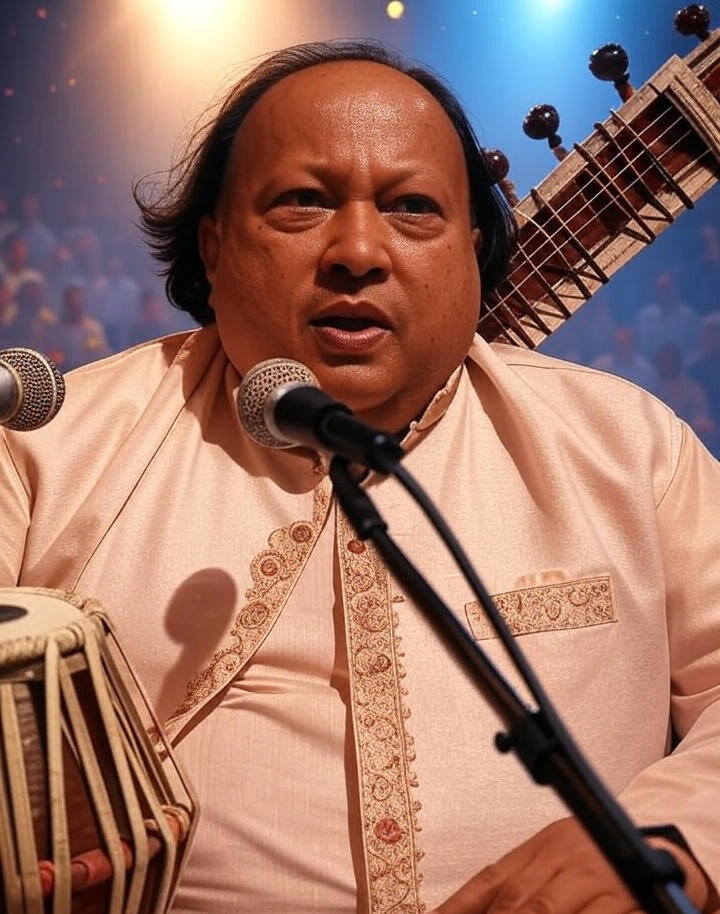
Illness and Death:
In the mid-1990s, Nusrat’s health began to decline due to kidney and liver problems. Despite his illness, he continued performing until his final days.
He passed away on 16 August 1997 in London at the age of 48. His death was mourned worldwide, with tributes pouring in from musicians, fans, and governments alike.
Legacy:
Even after his passing, Nusrat’s music continues to inspire. His nephew, Rahat Fateh Ali Khan, has carried forward his legacy. His qawwalis remain popular on platforms like YouTube, Spotify, and are frequently remixed in Bollywood and beyond.
Nusrat’s legacy lies in:
-
Keeping Sufi music alive
-
Inspiring global artists
-
Proving music is a universal language
Why Nusrat Fateh Ali Khan Still Matters Today:
In today’s digital world, Nusrat’s voice continues to trend. His songs have been remixed, modernized, and reintroduced to younger audiences, yet the original soul of his music remains unmatched.
From spiritual gatherings to modern concerts, Nusrat’s voice resonates across generations, proving his timelessness.
FAQs
1. Who was Nusrat Fateh Ali Khan?
He was a legendary Pakistani Qawwali singer, known as the King of Qawwali.
2. When was Nusrat Fateh Ali Khan born and when did he die?
Born in 1948, died in 1997.
3. Who continues his legacy?
Rahat Fateh Ali Khan, his nephew.
4. Why is Nusrat famous worldwide?
For bringing Qawwali to international audiences and collaborating with global musicians.
Conclusion:
Nusrat Fateh Ali Khan was not just a singer; he was a voice of spirituality, love, and humanity. His qawwalis transcend language and culture, touching hearts around the globe. Even today, decades after his passing, he remains an icon whose music continues to inspire and heal.
For Pakistan, Nusrat is a symbol of cultural pride. For the world, he is a universal voice of love and devotion. Truly, he is the immortal King of Qawwali.
📢 Follow Mehrublogs:
🌐 Website: www.mehrublogs.com
📘 Facebook: MehruBlogs
📸 Instagram: MehruBlogs.com_
✍️ Medium: MehruBlogs
📌 Pinterest: MehruBlogs
📧 Email: mehrublogs@gmail.com
Nusrat Fateh Ali KhanNusrat Fateh Ali KhanNusrat Fateh Ali KhanNusrat Fateh Ali KhanNusrat Fateh Ali KhanNusrat Fateh Ali Khan.
