
Pigeons, often seen as unremarkable urban birds, have played an extraordinary role in human history, not just as messengers but as spies. Their unique “homing instinct” allows them to navigate back to their home over vast distances, making them invaluable in communication and espionage. From ancient Egypt to the CIA’s Cold War experiments, pigeons have carried messages and captured covert images. This article explores the fascinating story of pigeon cameras, their historical significance, and their relevance to modern events like Pakistan’s September 1, 2025 earthquake and Thailand’s political upheaval involving Paetongtarn Shinawatra’s ousting.
The Homing Instinct: Nature’s GPS
Pigeons possess a remarkable ability known as the homing instinct, enabling them to return to their home base regardless of how far they are taken. This skill, tied to their sensitivity to Earth’s magnetic field, allows them to navigate with precision. Unlike other birds, pigeons can detect magnetic signals through specialized cells in their brains, acting like a natural compass.
This ability made pigeons ideal for delivering messages across long distances, especially in times when communication systems were unreliable. From ancient battlefields to modern wars, pigeons have been trained to carry critical information, proving their worth as dependable couriers.
A History of Pigeon Messaging
The use of pigeons for communication dates back over 3,000 years. Key milestones include:
- Ancient Egypt (1010 BCE): King Solomon reportedly used pigeons to send messages, marking one of the earliest recorded instances.
- Islamic Era (567 CE): During Nur al-Din Zangi’s rule, pigeons were trained for organized messaging between Syria and Egypt. By 1150 CE, Baghdad’s rulers formalized this system.
- Mongol Empire and Europe: Genghis Khan spread pigeon messaging across Asia, and it persisted through the French Revolution.
- World Wars: Pigeons were vital in World War I and II, delivering messages across enemy lines. Some were even awarded medals for their service, like the famous war pigeon Cher Ami.
Pigeons’ reliability in war stemmed from their ability to fly undetected, carrying tiny scrolls or notes. Their contributions were so significant that they became celebrated heroes, with stories likely shared among their feathered descendants.
From Messaging to Espionage: The Pigeon Camera
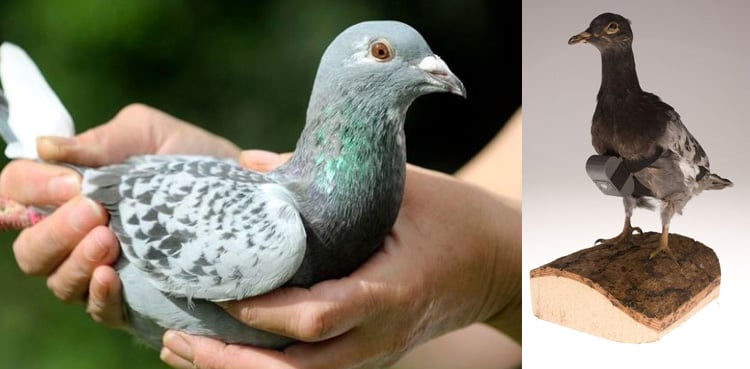
During the Cold War, the CIA took pigeon capabilities to a new level by equipping them with miniature cameras for espionage. Displayed at the International Spy Museum in Washington, D.C., the pigeon camera—a replica of the original housed at the CIA’s private museum in Virginia—represents a pinnacle of covert technology. Weighing just 35 grams and under five centimeters wide, this camera was a marvel of its time, designed to capture detailed images from low altitudes.
Unlike high-altitude planes or satellites, pigeons could fly closer to targets, producing clearer photos. The cameras, strapped to the pigeons’ chests, could be set to start recording immediately or at a delayed time. The CIA’s plan involved releasing these pigeons in secret, such as through a hole in a vehicle’s floor, in cities like Moscow to photograph sensitive sites. While it’s unclear how often or where these missions occurred, the program showcased innovative use of nature and technology.
The International Spy Museum, home to the world’s largest public collection of espionage artifacts, features the pigeon camera alongside gadgets like pen-shaped devices and specialized vehicles. These tools, reminiscent of James Bond’s Q Branch, highlight the creativity and audacity of Cold War spying.
Animals in Warfare and Espionage
Pigeons weren’t the only animals used in conflicts. Dolphins and sea lions detected underwater mines, bats carried small bombs, and elephants served as living tanks. However, pigeons stood out for their reliability in messaging and espionage due to their homing instinct. Their ability to fly over specific areas and return home made them ideal for capturing intelligence, a tactic that set them apart from other animals.
Relevance to Pakistan in 2025
For Pakistan, the story of pigeon cameras resonates with its own history and current events. Pigeons have been used in South Asia for centuries, including during Mughal times for royal communication. Today, pigeon racing remains a cultural pastime in rural Pakistan, reflecting the bird’s enduring significance.
The recent magnitude 5.4 earthquake on September 1, 2025, near Afghanistan’s Hindu Kush region, felt in Islamabad and Rawalpindi, underscores the unpredictability of natural forces, much like the pigeons’ reliable instincts. Just as pigeons navigated chaos to deliver messages, Pakistan’s response to the quake—prompt alerts by the Pakistan Meteorological Department (PMD) and no reported casualties—shows resilience amid uncertainty.
Similarly, the ousting of Thailand’s Prime Minister Paetongtarn Shinawatra on August 30, 2025, over a leaked call criticizing the military parallels the secrecy and consequences of espionage. Paetongtarn’s misstep, calling Cambodia’s Hun Sen “uncle,” mirrors how covert actions (like pigeon spying) can backfire if exposed. For Pakistan, with its history of political dynasties and military influence, this serves as a reminder of the delicate balance in leadership and communication.
Global Parallels: Technology and Trust
The pigeon camera story highlights the intersection of nature and technology, a theme relevant in 2025. Modern surveillance, from drones to AI, echoes the CIA’s innovative use of pigeons. However, just as Paetongtarn’s leaked call led to her downfall, digital leaks today can destabilize leaders and institutions. Pakistan, navigating tensions with Afghanistan and India, must prioritize secure communication to avoid similar pitfalls.
The earthquake also underscores the need for advanced monitoring systems. Pakistan’s investment in apps like BhooKamp mirrors the CIA’s use of pigeons for precision, showing how technology enhances preparedness. As climate change increases seismic risks, integrating AI and global cooperation can bolster Pakistan’s resilience.
Lessons from the Pigeon Camera
- Innovation in Crisis: Pigeons combined nature and technology for espionage, inspiring modern solutions like quake-resistant infrastructure.
- Secrecy and Consequences: The CIA’s covert missions and Paetongtarn’s leaked call highlight the risks of exposed secrets.
- Cultural Legacy: Pigeons’ role in Pakistan’s history encourages preserving traditional practices alongside modern advancements.
- Preparedness: The earthquake and espionage stories urge readiness for natural and political upheavals.
Final Thoughts
The pigeon camera, a blend of nature’s genius and human ingenuity, transformed messaging into espionage, leaving a mark on history. From ancient Egypt to Cold War Moscow, pigeons proved their worth as silent spies. In 2025, as Pakistan recovers from a minor quake and reflects on global events like Thailand’s political drama, the pigeon’s story inspires resilience and innovation. Whether navigating tectonic shifts or political storms, blending tradition with technology is key to thriving in an unpredictable world.
What do you think about pigeons as spies? Share your thoughts in the comments below! For more on history, technology, and global events.
This article is brought to you by Mehru Blogs. For more Visit www.mehrublogs.com.
Contact us at mehrublogs@gmail.com.
Follow us on social media: Facebook | Instagram.
