

Saadat Hasan Manto Life Story: Navigating Nokri and Shadi Amid Bombay’s Chaos
Saadat Hasan Manto, the unflinching voice of Partition-era India, remains one of Urdu literature’s most provocative figures. Born in 1912 in Samrala, Punjab, his life was a tapestry of rebellion, resilience, and raw honesty—qualities that infused his short stories, plays, and screenplays with unyielding truth. Yet, behind the bold narratives of “Toba Tek Singh” and “Khol Do” lay personal battles: chronic financial instability from erratic jobs (nokri) in Bombay’s film world and a marriage (shadi) forged in the fires of poverty.
In 1939, as Europe teetered on the brink of war, Manto’s union with Safia Rahman marked a turning point, blending domestic tenderness with existential dread. This Saadat Hasan Manto life story delves into those turbulent years, drawing from his own sketches and historical accounts to reveal how nokri struggles shaped his worldview and shadi became his anchor.

Manto’s journey wasn’t one of glamour; it was gritty, marked by tuberculosis, alcoholism, and accusations of obscenity. From Aligarh’s hallowed halls to Bombay’s bustling studios, his path illuminated the human condition—flawed, fierce, and forever questioning. As we revisit his nokri aur shadi era in 2025, amid renewed interest in progressive writers, Manto’s tale reminds us: Great art often blooms from personal thorns. In this exploration of Manto’s Bombay chapter, we’ll uncover his early hardships, film career fluctuations, the poignant circumstances of his 1939 marriage, and the family life that grounded his genius.
Early Years: Seeds of Struggle in Punjab and Aligarh
Saadat Hasan Manto’s life story begins in a modest Punjabi household, where loss cast a long shadow. Orphaned young after his father’s death, Manto shouldered responsibilities early, fostering the independence that defined his writing. In Amritsar, he dabbled in journalism, but higher education beckoned at Aligarh Muslim University in 1930. There, amid intellectual ferment, Manto devoured Urdu classics by Premchand and Russian masters like Chekhov and Hugo—translations that ignited his passion for stark realism.
Tragedy struck swiftly: Tuberculosis gripped him, forcing a withdrawal from studies and a lonely sanatorium stay in Lahore. This brush with mortality, at just 18, scarred him physically and emotionally, planting seeds of cynicism toward fate. Expelled from Aligarh, Manto returned to Amritsar penniless, his nokri dreams deferred. Anecdotes from his sketches reveal a young man of sharp wit, penning satirical pieces for local papers to scrape by. “I was a wanderer even then,” he later reflected, hinting at the rootlessness that permeated his tales of displaced souls.
These formative years honed Manto’s voice: Unafraid to dissect societal hypocrisies, from caste to colonialism. By 1934, at 22, he published his first collection, Atish-e-China, but literary acclaim couldn’t pay bills. Bombay called in 1936—a glittering hub of Urdu cinema and theater—promising stability. Little did he know, it would test his resolve like never before.
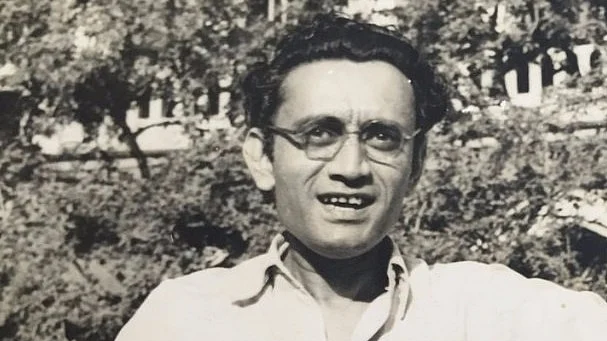
Bombay Beckons: Nokri Struggles in the Film Frenzy
Bombay in the 1930s was a cauldron of creativity and chaos, where Urdu writers rubbed shoulders with Bollywood pioneers. Manto arrived with stars in his eyes, securing an editorship at the weekly Mussawar for a modest 40 rupees monthly—a fortune then, but fleeting. The magazine’s owner, spotting his talent, soon shifted him to the Imperial Film Company as a dialogue writer. Salary halved to 20 rupees, Manto plunged into scripting for stars like Ashok Kumar, crafting lines for hits like Kangan (1939). (Saadat Hasan Manto)
Yet, nokri in tinsel town was treacherous. Studios teetered on financial edges, salaries delayed for months. Manto’s sketches paint vivid vignettes: Begging advances for evening beers, his vice amid stress; renting a dingy kholi for 9 rupees, walls echoing with unwritten stories. “Money came in trickles, left in floods,” he quipped, alluding to his drinking bouts that fueled creativity but frayed health.
A pivotal shift came in 1938: Rejoining Imperial at 80 rupees, Manto penned over 20 films, blending satire with social commentary. But instability loomed—strikes, producer whims, and his own defiance against censorship. Accused of “obscenity” for bold themes, he navigated blacklists, once pawning his typewriter for rent. These nokri struggles weren’t mere footnotes; they birthed Manto’s empathy for the marginalized, echoing in stories like “Sau Patraon Ka Ek Patra,” where bureaucracy crushes dreams.
By 1939, at 27, Manto’s life teetered: Talented but broke, acclaimed yet adrift. Enter his mother—a beacon of practicality—who visited his cramped Bombay abode, stirring talks of marriage. “A man needs roots,” she urged, igniting a chain of events that would redefine his world.
The Road to Shadi: Reluctance, Arrangements, and a Fateful Nikah
Marriage for Manto wasn’t romance; it was reckoning. In 1939, amid nokri woes, his mother’s insistence pierced his bachelor armor. “Who would marry a pauper like me?” he lamented in sketches, tallying his 40-rupee salary against wedding costs. Yet, familial pressure prevailed; his mother scouted a bride from a respectable African-origin family in Bombay, seeking a Kashmiri match for their daughter, Safia Rahman.
Safia’s father, a fingerprint expert earning modestly, hosted Manto warmly despite revelations of his beer habit and film world’s volatility. Anecdotes sparkle here: The father, unperturbed, quipped, “As long as he writes truth, let him sip.” Proposal accepted, Manto panicked—funds for nikah? He approached boss Seth Ardeshir, who, amid company woes, offered sarees and jewelry on credit, not cash. “Marry first, pay later,” was the wry advice.
The nikah day, May 1939, was farce and fiasco. Rushing to the venue, Manto slipped on rain-slicked stairs, smashing his knee and blacking out. Revived by cushions, he endured the imaan and maan amid throbbing pain, signing with a trembling hand. “I married on one leg,” he later jested, masking the dread of impending fatherhood. Delays plagued the rukhsati—nearly a year later—due to Manto’s hesitations and finances. He scraped a 35-rupee flat, leaving 5 rupees for survival, a symbol of his sacrificial start.
Safia, 18 and serene, entered a life of leanings. Their union, born of practicality, blossomed into profound partnership. Manto’s sketches brim with tenderness: Watching her hang laundry on the balcony, he felt “a quiet victory over chaos.” Yet, shadows lingered—his strained ties with in-laws, avoidance of his sister’s home post a brother-in-law spat. Through it all, Safia steadied him, her quiet strength mirroring the resilient women in his stories.
Family Life: Joys, Losses, and Literary Fuel
Post-shadi, Manto’s world expanded—and contracted. Their first child, a son, arrived in 1941 but succumbed young, a grief Manto channeled into poignant prose. Three daughters followed—Nighat, Nusrat, and Farida—filling their Bombay flat with laughter amid lean times. “Children are life’s plot twists,” he wrote, capturing the duality of joy and jeopardy.
Nokri evolved: By 1941, Manto freelanced for BBC Urdu and Lahore’s Lahore Daily, salary rising to 200 rupees. But Partition’s shadow loomed; migrating to Pakistan in 1948, he faced fresh struggles—Lahore’s literati snubbed him as “Bombay returnee.” Safia, ever supportive, managed households through blackouts and black markets. (Saadat Hasan Manto)
Anecdotes abound: Manto pawning watches for daughters’ toys; Safia mending his alcohol-torn shirts. His 1954 autobiography sketches reveal vulnerability: “Marriage tamed my wild pen, gave it purpose.” Tuberculosis relapsed, claiming him at 42 in 1955, but Safia outlived, preserving his legacy. (Saadat Hasan Manto)
Manto’s family wasn’t backdrop; it was muse. Stories like “Bitter Harvest” echo spousal bonds; “The Return” mirrors paternal loss. In Urdu writer biography lore, Manto’s shadi humanizes the iconoclast, proving even rebels need harbors. (Saadat Hasan Manto)
Manto’s Legacy: From Personal Pain to Literary Fire
Saadat Hasan Manto’s life story transcends nokri aur shadi—it’s a manifesto against conformity. Over 200 stories, 12 films, and plays like Aao challenged obscenity trials, earning “progressive writer” tags. Posthumously, his works fuel debates on feminism, Partition trauma, and free speech. (Saadat Hasan Manto)
In 2025, amid global censorship waves, Manto resonates: Netflix’s Manto (2018) revives interest; Pakistani syllabi mandate his tales. His nokri struggles birthed authenticity; shadi, depth. As he wrote, “Truth offends, but silence kills.” (Saadat Hasan Manto)
Conclusion: Manto’s Enduring Echo (Saadat Hasan Manto)
From Aligarh’s expulsion to Bombay’s nikah slip, Saadat Hasan Manto life story weaves nokri hardships and shadi serenity into literary gold. His 1939 marriage to Safia wasn’t fairy tale but fortitude—a pauper’s vow that birthed a bolder voice. In celebrating Manto’s nokri aur shadi, we honor the man who dared truth. For more on Urdu icons, visit www.mehrublogs.com or email mehrublogs@gmail.com.
Follow us on social media:
