
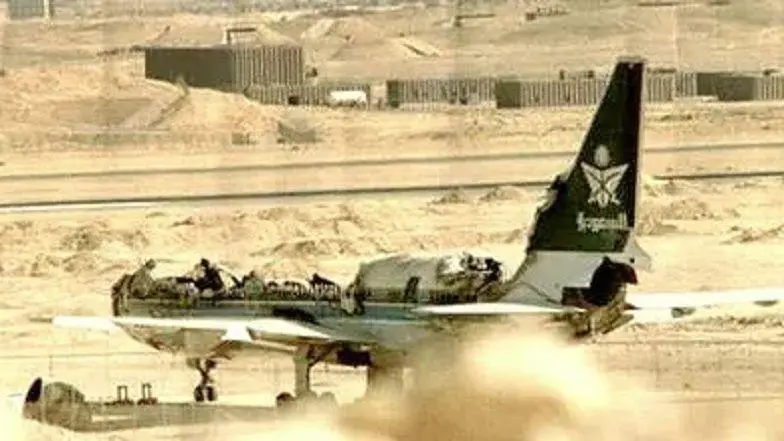
On August 19, 1980, Saudi Arabian Airlines saudi Flight 163 took off from Karachi, bound for Jeddah via a brief stop in Riyadh. What began as a routine journey turned into one of aviation’s most heartbreaking disasters. Despite a successful emergency landing back at Riyadh’s King Khalid International Airport, all 301 people onboard—passengers and crew—perished in a raging fire. This incident, where the plane landed safely but no one survived, remains a stark reminder of the critical importance of quick decision-making and robust safety protocols in aviation.
Drawing from the official investigation and historical accounts, this article delves into the events, causes, and lasting lessons from this tragedy, shedding light on how it reshaped global flight safety standards. (saudi Flight 163)
The Flight’s Beginnings: A Routine Departure from Karachi
Flight 163 was operated by a state-of-the-art Lockheed L-1011 TriStar, a wide-body aircraft renowned in the 1980s for its advanced technology and reliability. Saudi Arabian Airlines, bolstered by the Kingdom’s oil wealth, was among the world’s top carriers at the time, investing heavily in modern fleets for both domestic and international routes.
The flight departed Karachi International Airport on a Tuesday afternoon with 82 passengers and 14 crew members. The passengers hailed from diverse backgrounds: 82 Saudis, 80 Pakistanis, 32 Iranians, 23 Yemenis, and one each from the US, Canada, and the UK, along with others from various nationalities. Many were pilgrims heading to perform Umrah, carrying personal items that would later play a role in the unfolding disaster.
The leg from Karachi to Riyadh lasted about two hours and 34 minutes without incident. In Riyadh, 205 more passengers boarded, bringing the total to 301 souls. At exactly 6:08 PM local time, the plane lifted off for Jeddah, a flight expected to take just over an hour. Captain Muhammad Ali Khowaiter, a 38-year-old veteran, was at the controls, assisted by First Officer Sami Hasanain and American Flight Engineer Bradley Curtis.
The Onset of Disaster: Smoke and Fire Mid-Flight
Seven minutes into the Riyadh-Jeddah leg, alarms blared in the cockpit: smoke detected in the rear cargo compartment C-3. The crew initially treated it as a false alarm, a common occurrence in aviation. However, as smoke intensified and seeped into the passenger cabin, panic ensued. Passengers reported a burning smell, and flight attendants struggled to calm the crowd while distributing oxygen masks. (saudi Flight 163)
The investigation report by American aviation expert Edward Douglas Dreyfus, submitted on January 16, 1982, to Saudi civil aviation authorities, revealed critical details. The fire’s exact origin couldn’t be pinpointed, but evidence pointed to smuggled butane stoves and cooking oil—items banned but possibly hidden in luggage by pilgrims. Dreyfus noted that security checks at Karachi and Riyadh failed to detect these, highlighting lapses in screening procedures.
The TriStar’s cargo compartments were classified into four types (A, B, C, D), with C-3 being a Class D compartment designed to self-extinguish fires due to limited oxygen. However, the design flaw became apparent: the compartment had more oxygen than anticipated, and the fire-resistant liner failed, allowing flames to spread rapidly.
Critical Errors: Delayed Decisions and Evacuation Failures
As smoke filled the cabin, the crew declared an emergency and turned back to Riyadh. The captain communicated with air traffic control, but delays plagued the response. The cockpit voice recorder captured moments of confusion: the crew debated the fire’s severity, and the captain hesitated to shut down engines or initiate immediate evacuation procedures.
The plane landed safely at 6:29 PM, just 21 minutes after takeoff. However, the engines weren’t immediately shut off, preventing ground crews from approaching due to the risk of being sucked into the turbines. Firefighters arrived within minutes, but the doors remained sealed for nearly 25 minutes as the crew struggled with internal pressure and smoke.
Inside, toxic fumes—likely from burning plastics and insulation—caused passengers to suffocate. Many rushed to the front of the cabin seeking cleaner air, but the fire’s heat and gases proved fatal. When doors finally opened, rescuers found no signs of life; bodies were clustered at the front, charred or asphyxiated.
A “flashover” fire erupted shortly after, forcing firefighters to retreat. The report criticized the crew’s training: despite the plane being “survivable,” poor emergency protocols and hesitation led to the catastrophe.
The Investigation: Design Flaws and Human Factors
Dreyfus’s report absolved the TriStar’s overall design but pinpointed flaws in the fire suppression system. Class D compartments relied on oxygen deprivation, but in practice, leaks allowed fires to thrive. Smuggled flammables exacerbated the issue.
Human errors were central: the captain’s delay in evacuating, failure to depressurize the cabin promptly, and inadequate crew coordination. Ground response was also slow, with firefighters unable to access the plane immediately.
Eyewitness accounts, including from a fire truck driver, described thick white smoke pouring from the rear. Retired Pakistan Air Force Air Commodore Jamal Hussain reflected that the incident combined technical and human failures, emphasizing the need for better emergency training.
Aftermath: Changes in Aviation Safety
The Flight 163 tragedy prompted sweeping reforms in global aviation:
- Improved Fire Detection: Airlines upgraded smoke detectors and fire suppression systems in cargo holds, moving away from passive Class D designs to active halon-based extinguishers.
- Crew Training: Enhanced simulations for fire emergencies, emphasizing rapid evacuation and engine shutdown.
- Passenger Safety: Better cabin materials resistant to fire and toxic fumes, plus stricter bans on hazardous items like stoves.
- Security Protocols: Rigorous luggage screening to prevent smuggling of flammables, especially on pilgrim flights.
- Evacuation Procedures: Mandated quicker door openings and improved coordination between air and ground crews.
Today, this incident is a core case study in aviation academies worldwide, teaching that technology alone isn’t enough—timely decisions and teamwork are vital.
Cultural and Human Impact
For Pakistan, the loss of 80 nationals was profound, many en route to sacred sites. The tragedy highlighted risks for Umrah pilgrims, who often carry cooking gear despite bans. It also underscored cultural practices clashing with safety rules.
Globally, Flight 163 remains aviation’s deadliest non-crash incident, where survival seemed possible but wasn’t achieved. It parallels other fire disasters, like the 1996 ValuJet Flight 592, reinforcing the need for vigilance.
Lessons for Modern Aviation
In 2025, as air travel booms post-pandemic, Flight 163’s lessons endure. With advanced aircraft like the Boeing 787 and Airbus A350 featuring composite materials, fire risks persist. Airlines must prioritize training and technology to prevent repeats.
Pakistan’s aviation sector, with growing pilgrim traffic to Saudi Arabia, can learn from this: stricter checks at Karachi and Lahore airports, and collaboration with Saudi authorities.
The tragedy of Flight 163 isn’t just history—it’s a cautionary tale. As we fly today, remember the 301 lives lost, urging safer skies for all.
What do you think could have prevented this disaster? Share your thoughts in the comments below! For more stories on aviation history and global events.
This article is brought to you by Mehru Blogs. For more Visit www.mehrublogs.com.
Contact us at mehrublogs@gmail.com.
Follow us on social media: Facebook | Instagram.
Saudi Flight 163 Saudi Flight 163 Saudi Flight 163 Saudi Flight 163 Saudi Flight 163 Saudi Flight 163 Saudi Flight 163 Saudi Flight 163 Saudi Flight 163 Saudi Flight 163 Saudi Flight 163 Saudi Flight 163 Saudi Flight 163
