

“If you want peace, prepare for war.” This philosophy also guides Switzerland’s national defense strategy.
Deep in the Swiss Alps lies an extensive network of nuclear bunkers designed to shield civilians and the military from the devastating effects of nuclear weapons. These bunkers are hidden beneath hills, tucked behind dense forest bushes, or even under ordinary-looking houses—structures that offer no visual clue that they sit atop nuclear-proof sanctuaries. But in reality, these bunkers are fortified with two-meter-thick concrete walls and gun slits.
With a population of 8.8 million, Switzerland has the highest number of nuclear shelters per capita—over 370,000. In fact, the latest data shows that there are more bunker spaces than people.
A 1963 law guarantees that every citizen—whether Swiss, foreigner, or refugee—has a secure place in case of armed conflict or nuclear disaster, ensuring access to shelters that protect against harmful radiation.
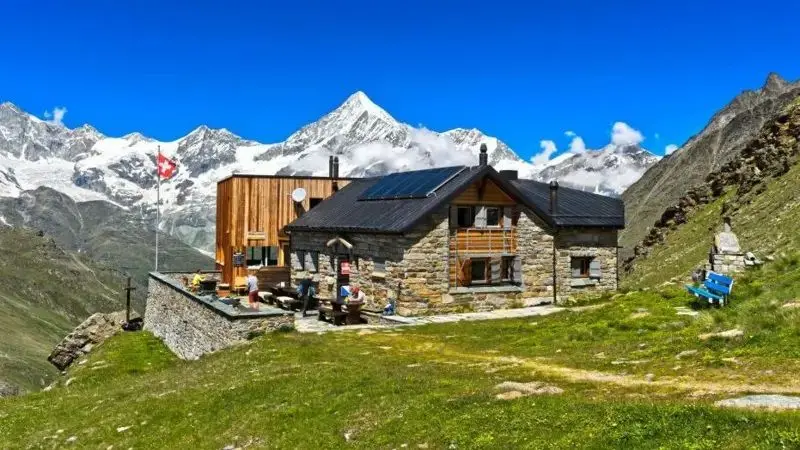
Each shelter must offer at least 1 square meter per person and be located within 30 minutes walking distance in cities or 60 minutes in mountainous regions.
According to the Federal Office for Civil Protection, most people live in buildings that have their own shelters. If a residential building doesn’t include a shelter, public facilities are available.
The bunkers are designed to resist the effects of modern weaponry, including nuclear, biological, and chemical attacks, as well as traditional explosives. They can withstand external pressure of up to 10 tons per square meter, allowing them to survive even if a building collapses on top.
Some shelters can even be used as emergency housing after earthquakes. They are equipped with filtration systems that clean contaminated air from chemical and biological weapons.
“Better to Be Prepared”
“I feel safer knowing that, in the event of a nuclear attack, there’s a shelter for everyone,” says Nicholas Städdler from the border city of Basel. “I don’t think a war is likely in Switzerland or neighboring countries, but it’s good to be prepared.”
However, he admits that he doesn’t know where his assigned shelter is.
Daniel Jordi, Deputy Director of the Federal Office for Civil Protection, says it’s essential to know this ahead of time. “The bunker you’ll use is likely near your home. But when families move, this can become a minor concern. Some people might not even know if their bunker is old or new. We believe people should only be concerned when the need arises.”
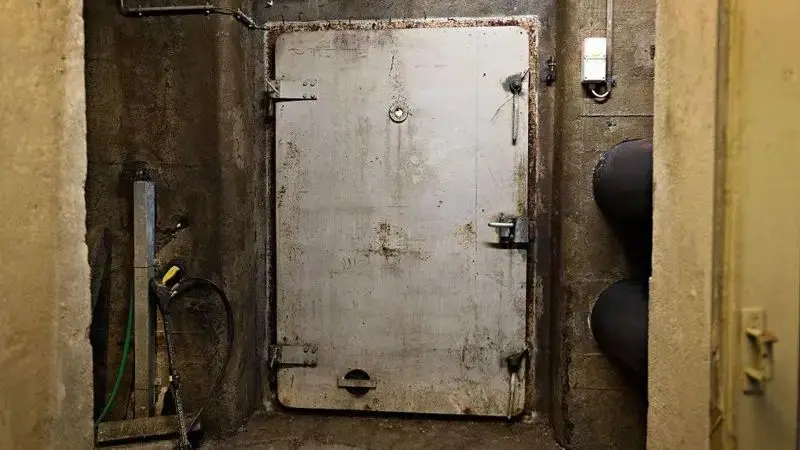
Switzerland’s bunker system dates back to World War II, when the country was caught between Hitler’s Nazi Germany, Mussolini’s Fascist Italy, and its own desire to remain neutral.
The Cold War era further encouraged the construction of both public and private shelters. These bunkers must undergo inspection every 10 years and receive a certificate of readiness.
Today, many of these bunkers are used as storage rooms, wine cellars, museums, restaurants, or hotels.
According to Daniel Jordi, the idea was to reuse the space without altering its core structure so that it could revert to its original purpose—civilian protection—when needed.
Concerns About Modern Warfare
Eugenio Garrido, a lawyer from the Dominican Republic who has lived in Zurich for years, said, “I don’t feel particularly safe. Modern weapons have evolved to the point where they could cause mass casualties even in Switzerland.”
He added, “I’m not convinced that shelters built 50 or 60 years ago could withstand today’s weapons.”
Now Investing in Modernization
Given the “changing global security landscape,” Switzerland now plans to invest $500 million in upgrading and modernizing its vast bunker network to ensure they remain operational in emergencies.
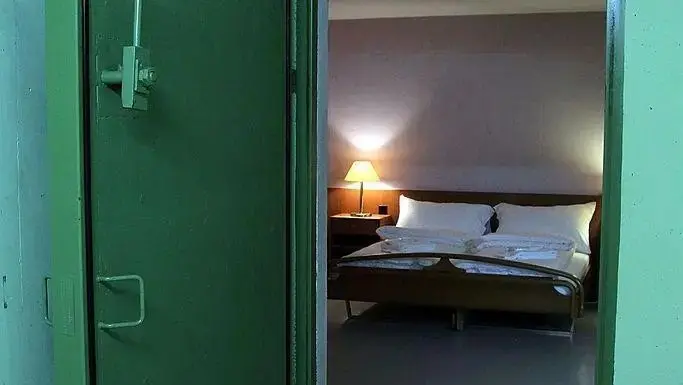
Officials emphasize that this is not preparation for war, but an investment in public safety.
Isabelle, who lives in Zurich, also doesn’t know where her assigned shelter is. Yet she told BBC Mundo that just knowing these shelters exist gives her peace of mind. “I think it’s a big step toward protecting the population from nuclear disasters or conflicts. I feel comforted knowing my family has a place to stay safe.”
She also praised Switzerland’s long-standing neutrality and humanitarian values, expressing hope that the country will remain a refuge for those in need, just as it welcomed thousands of Jews fleeing Nazi Germany during World War II.
Changing Neutrality?
However, Switzerland’s decision to adopt EU sanctions against Russia marks a significant shift from its traditional stance of non-alignment.
Local media report that Swiss companies specializing in bunker construction have experienced a surge in inquiries and orders since the war in Ukraine began. For instance, luxury shelter builder Oppidum Bunkers has seen a steady increase in interest in recent months.
Other companies like Mengeo AG and Lunor have been flooded with requests to renovate or certify existing bunkers—many dating from the 1960s to 1980s—that now require urgent upgrades.
Daniel Jordi confirmed this trend, stating: “Yes, since the war in Ukraine, we’ve received many more inquiries from both citizens and cantons to ensure shelters are accessible and ready.”
A common question? “Where is my bunker?”
Relying Too Long on the ‘Peace Dividend’
For years, Switzerland relied on the so-called “peace dividend”—the assumption that security spending could be reduced in peaceful times.
Professor Juan Moscoso del Prado, a senior fellow at the Elcano Royal Institute, explains: “This refers to the reduced security expenditures in recent decades because after the Cold War, people no longer considered war or mass threats a possibility.”
He recalls how the attack on Ukraine threatened critical nuclear infrastructure, such as the Zaporizhzhia nuclear plant, which—if attacked—could release radiation clouds across central Europe, as seen in Chernobyl.
With the U.S. pulling some troops out of Europe and Western defense alliances in flux, Switzerland can no longer ignore potential threats.
Caught Between Global Conflicts
For much of history, Switzerland has found itself geographically wedged between rival powers—France, Prussia, Germany, the Austro-Hungarian Empire, and Russia.
Professor Moscoso says that after the Cold War, Switzerland felt like an island of peace in a stable continent. But the war in Ukraine has shattered that illusion.
As other countries like the Baltic States, Finland, Norway, and Sweden increase defense spending, Switzerland is reactivating an old system—one that helped it stay neutral and safe during the last century.
📢 Connect With Mehrublogs:
📧 Email: mehrublogs@gmail.com
🌐 Website: www.mehrublogs.com
👍 Facebook: facebook.com/MehruBlogs
📸 Instagram: instagram.com/Mehrublogs.com_
📌 Pinterest: pinterest.com/mit1651
