
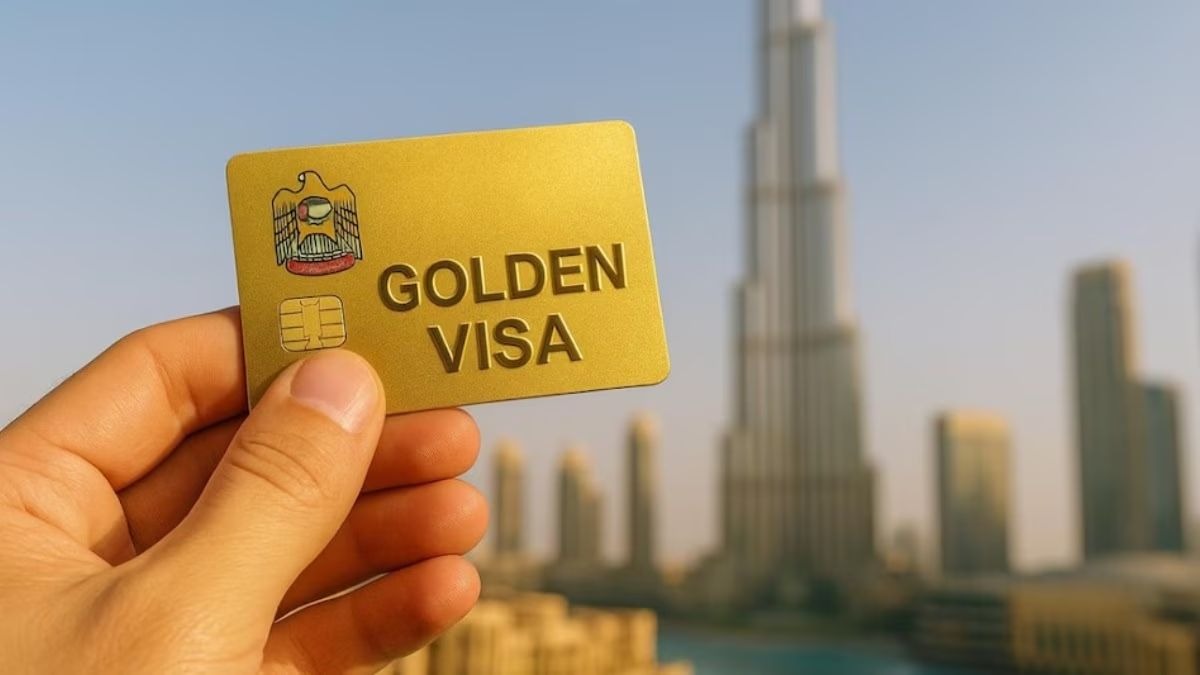
UAE Offers Golden Visas to Waqf Donors: A Landmark Step Toward Faith, Generosity, and Progress
The United Arab Emirates has once again taken a visionary leap toward strengthening its image as a nation built on compassion, generosity, and sustainable development. In a groundbreaking announcement, the UAE declared that individuals who contribute to waqf (Islamic charitable endowments) will now be eligible for the prestigious Golden Visa — a long-term residency permit that recognizes exceptional contributors to society. (UAE Golden Visa 2025)
This remarkable initiative was jointly introduced by the General Directorate of Residency and Foreigners Affairs – Dubai (GDRFA-Dubai) and the Endowments and Minors Affairs Foundation (Awqaf Dubai). It not only encourages philanthropic giving but also reflects the UAE’s firm belief in building a society that honors humanitarian values as much as it celebrates economic achievements.
By connecting religious charity with modern governance, the UAE is redefining the essence of philanthropy in the Muslim world — making it both spiritually rewarding and socially empowering.

Understanding Waqf: The Heart of Islamic Charity
To understand the depth of this policy, one must first grasp the concept of waqf. The Arabic word “waqf” literally means “to hold” or “to stop.” In Islamic law, it refers to the dedication of assets or property for charitable purposes, ensuring that the benefits continue indefinitely.
A waqf can take many forms — land for a mosque, funds for education, buildings for housing the needy, or revenue-generating properties that finance welfare projects. What makes waqf unique is that once an asset is dedicated, it cannot be sold or inherited; it is preserved solely for serving the public good.
Historically, waqf has been central to Muslim civilizations, supporting schools, hospitals, libraries, orphanages, and even public kitchens. In modern times, the UAE has revived this concept through an innovative, transparent framework, ensuring that faith-based charity thrives in a structured, accountable way.
The UAE’s Commitment to Philanthropy
Over the last two decades, the UAE has emerged as a global leader in humanitarian efforts. It consistently ranks among the world’s top countries in international aid relative to its GDP.
From initiatives like the “Year of Giving” and “Zayed Humanitarian Day” to the “100 Million Meals Campaign,” the UAE has transformed charity into a national identity. Philanthropy here is not a side effort — it’s part of the country’s social DNA.
This new policy linking waqf donations to the Golden Visa reflects that same humanitarian vision. It recognizes donors not only as contributors to social projects but as long-term partners in nation-building.
The Golden Visa: Beyond Wealth and Business
Introduced in 2019, the UAE Golden Visa program provides long-term residency — often 5 or 10 years — to exceptional individuals who contribute to the nation’s growth. Initially designed for investors, scientists, doctors, and skilled professionals, the program has now expanded to include philanthropists and endowment donors.
This move sends a powerful message: that contribution to humanity is just as valuable as investment in capital. It shows that generosity and compassion are core pillars of national progress.
The Golden Visa gives recipients:
-
The right to live, work, and study in the UAE without the need for a sponsor.
-
100% business ownership on the mainland.
-
Stability for families with renewable residency.
-
Access to advanced healthcare and education.
Now, with waqf donors eligible, the UAE has turned the Golden Visa into a symbol of moral and spiritual achievement as well as social recognition.

How the Golden Visa for Waqf Donors Works
The mechanism behind this initiative is both transparent and strategic.
-
Awqaf Dubai identifies and verifies eligible donors who contribute to approved endowment projects — whether for education, healthcare, sustainability, or housing.
-
The names of these donors are then submitted to GDRFA-Dubai, which processes their Golden Visa applications.
-
Once approved, the donor and their family can receive long-term residency privileges.
This system ensures that every recipient is both genuine and impactful — aligning personal generosity with public benefit.
A Vision Rooted in Faith and Progress
The UAE’s leadership has long emphasized that economic success must go hand in hand with ethical responsibility. The late Sheikh Zayed bin Sultan Al Nahyan, the nation’s founding father, often stated that “wealth is not truly ours unless we share it with others.”
Today, this principle continues to guide national policy. By tying the Golden Visa to waqf, the UAE encourages its residents and global partners to practice sustainable giving — donations that continue to benefit society for generations.
This aligns perfectly with the UAE Centennial 2071 Vision and Vision 2031 frameworks, which aim to position the country as a beacon of compassion, innovation, and coexistence.
Strengthening the Waqf Ecosystem
The inclusion of waqf donors in the Golden Visa program is more than just a reward — it’s a strategic investment in the growth of the Islamic social finance system.
It will help:
-
Increase the number of registered endowments.
-
Encourage corporate waqf — where businesses allocate profits to social causes.
-
Promote public-private partnerships for development projects.
-
Enhance accountability and governance in charitable giving.
Through this, the UAE is building a sustainable financial framework that integrates spirituality, economics, and ethics — setting an example for the Muslim world.
Global Response and Recognition
This announcement has sparked positive responses globally. Experts from Islamic finance, humanitarian organizations, and development agencies have praised the UAE for merging faith-based values with modern governance.
Many see this as a global model that can inspire similar programs in other countries — particularly in regions where philanthropy is abundant but often lacks official recognition or structure.
The UAE’s initiative transforms generosity into a measurable, respected form of social contribution — one that benefits both the giver and society.
The Social and Economic Ripple Effect
The impact of this initiative extends beyond individual donors. It strengthens the UAE’s overall social fabric by:
-
Encouraging ethical wealth distribution.
-
Building stronger communities through endowment-based projects.
-
Fostering cultural coexistence and inclusivity.
-
Empowering non-profit organizations to scale their operations.
-
Attracting global philanthropists to invest in UAE-based social ventures.
Every waqf donation becomes a seed of hope — one that grows into education for children, shelter for the poor, or medical care for the sick.
Empowering International Donors
The UAE has also opened this opportunity to non-resident and international donors. Foreign contributors who make significant donations to approved endowment projects are now eligible for the Golden Visa.
This inclusion transforms the UAE into a global hub for philanthropic collaboration. It welcomes donors from every part of the world — regardless of nationality — who wish to contribute to humanity’s collective well-being.
The Role of Awqaf Dubai
Awqaf Dubai, a pioneering institution managing endowments and charitable funds, plays a central role in ensuring trust, transparency, and impact.
It handles:
-
Evaluation of endowment projects.
-
Allocation of funds to genuine causes.
-
Monitoring of outcomes and social benefit.
The foundation ensures that each contribution directly benefits society — whether through education, health, housing, or youth empowerment programs.
The UAE’s Humanitarian Identity
The UAE’s humanitarian vision is not limited to its borders. It has supported hundreds of global causes — from rebuilding schools in Africa to sending humanitarian aid to war-torn regions.
By introducing the Golden Visa for waqf donors, the UAE reinforces its position as a leader in compassion-based diplomacy — showing that real progress lies in generosity, not just GDP.
Moral and Spiritual Significance
In Islam, charitable giving holds deep spiritual rewards. Waqf is a form of sadaqah jariyah — a continuous charity that benefits others even after the donor passes away.
The UAE’s policy therefore carries not only worldly rewards like residency and stability but also eternal ones, encouraging believers to combine faith with action.
Benefits for Donors
Those who receive the Golden Visa through waqf donations enjoy:
-
10-year renewable residency in the UAE.
-
Business ownership and investment freedom.
-
Family sponsorship rights.
-
Access to world-class healthcare and education.
-
Recognition as a philanthropic partner in UAE’s growth story.
This blend of personal security and social purpose makes the UAE a uniquely rewarding place for those who wish to give back meaningfully.

Inspiring a New Era of Ethical Investment
The world today faces immense inequality — and initiatives like this provide a pathway to balance wealth and welfare. By institutionalizing generosity, the UAE shows that prosperity is not defined by accumulation but by distribution and compassion.
In the coming years, experts expect a rise in impact-based philanthropy — where charitable giving is not just about donations but measurable, long-term change. The UAE’s waqf-linked Golden Visa program is a perfect example of this forward-thinking model.
The Road Ahead
The introduction of the Golden Visa for waqf donors is just the beginning. The UAE is exploring digital innovations to make endowment participation easier — such as online donation portals, blockchain-based waqf tracking, and AI-driven social impact monitoring.
This blend of technology, transparency, and tradition ensures that every act of charity contributes to a smarter, more sustainable future.
Final Thoughts
The UAE’s decision to extend the Golden Visa to waqf donors is a historic milestone — one that unites faith, generosity, and governance. It acknowledges that the greatest citizens are not only those who build wealth but those who build lives.
By rewarding acts of giving with stability and respect, the UAE cements its role as a nation guided by humanity, vision, and hope.
It is a message to the world that in the UAE, charity is not just an act — it’s a legacy.
FAQs on UAE Golden Visa for Waqf Donors
Q1: What is the UAE Golden Visa for waqf donors?
It’s a long-term residency visa offered to individuals who make significant donations to Islamic charitable endowments (waqf) managed and verified by Awqaf Dubai and GDRFA-Dubai.
Q2: Who can apply for it?
Any resident or international donor who contributes to approved waqf projects in education, healthcare, sustainability, or housing.
Q3: How long is the visa valid?
The Golden Visa for waqf donors is typically valid for up to 10 years and can be renewed.
Q4: Does it include family members?
Yes, the donor’s spouse, children, and dependents can be included under the same residency.
Q5: What types of donations qualify?
Donations supporting education, healthcare, environmental, and social welfare sectors usually qualify.
Q6: Is there a minimum donation amount?
The threshold depends on the project’s size and impact. Awqaf Dubai evaluates each donation individually.
Q7: Can international donors participate?
Yes. Global philanthropists can contribute to UAE-based waqf projects and be nominated for the Golden Visa.
Q8: How does this initiative benefit the UAE?
It strengthens the culture of giving, enhances social welfare programs, and promotes sustainable community development.
Q9: How to apply?
Donors can approach Awqaf Dubai, which verifies contributions and forwards nominations to GDRFA-Dubai for visa approval.
Q10: Why is this initiative unique globally?
It’s one of the few government-led programs that directly reward faith-based charity with long-term residency rights — merging spirituality and state policy.
Broader Impact on the Muslim Philanthropic Community
The UAE’s decision to link Golden Visas with Waqf donations has sparked deep discussions across the Muslim world. Many scholars and community leaders see it as a groundbreaking step in recognizing the importance of waqf as a cornerstone of Islamic social welfare. For centuries, waqf properties have funded schools, hospitals, mosques, and orphanages, ensuring that charitable acts benefit future generations. By rewarding such donors with long-term residency, the UAE is reviving this noble tradition in a modern context — aligning faith with future opportunities.
The move also strengthens the UAE’s reputation as a global hub for Islamic finance and charitable innovation. Countries such as Saudi Arabia, Qatar, and Malaysia have robust waqf systems, but the UAE’s approach uniquely merges economic incentives with spiritual fulfillment. It sends a message that generosity is not only spiritually rewarding but also socially recognized at the highest levels of governance.
Encouraging Long-Term Investment and Social Stability
A long-term visa offers more than just residency — it represents trust, security, and belonging. For many expatriates who have lived in the UAE for years, this new pathway provides a sense of permanence. It allows donors to continue contributing to the economy, supporting their families, and engaging in community development without the constant uncertainty of visa renewals.
Economists note that policies like this have a multiplier effect. When philanthropists feel valued, they tend to reinvest more — not just in charitable projects but in businesses, property, and education. This strengthens the UAE’s local economy and enhances its global image as a country that integrates moral values into public policy.
Golden Visa Policy as a Model for Other Nations
Analysts predict that the UAE’s innovative linkage of social service with visa incentives could inspire similar models worldwide. In particular, countries with significant expatriate populations may explore new ways to reward community contributors, including teachers, healthcare workers, or social entrepreneurs.
This initiative could serve as a template for “moral-based immigration,” where governments assess value not just through capital investment but through positive societal impact. The Waqf Golden Visa framework proves that generosity and patriotism can coexist — a sentiment increasingly relevant in a globalized yet fragmented world.
Voices from the Community
Interviews and public reactions have shown immense appreciation for this visionary move. Many donors have expressed that such recognition reinforces their commitment to long-term social investment. For instance, one UAE-based businesswoman who donated to an educational waqf project shared that receiving eligibility for a Golden Visa made her feel “truly part of the UAE family.”
Another donor, involved in health-related charitable projects, noted that the decision reflects the UAE’s understanding of how philanthropy builds nations. These personal stories highlight how policy decisions can translate into genuine emotional and societal bonds.
Religious Significance and Modern Interpretation
From an Islamic perspective, waqf represents perpetual charity (sadaqah jariyah) — a deed that continues to reward the giver long after their lifetime. By institutionalizing this act within modern governance, the UAE blends spiritual principles with administrative foresight. Religious scholars have praised this integration, noting that it brings the timeless concept of charity into alignment with 21st-century socio-economic realities.
Furthermore, the initiative encourages transparency and accountability. Since official waqf donations are registered and monitored, donors ensure their contributions are used ethically and effectively. This modernized system strengthens public trust and encourages others to participate confidently.
Contribution to Social Welfare and Sustainable Development
In alignment with the UAE Vision 2031, the Waqf Golden Visa program supports the country’s goal of building a cohesive, compassionate society. Funds from waqf contributions can help tackle issues such as education inequality, healthcare accessibility, and youth development. The UAE has already announced several national endowment initiatives focusing on sustainable food programs, renewable energy projects, and educational scholarships — all aligned with the UN Sustainable Development Goals (SDGs).
By tying long-term residency to these efforts, the government ensures that contributors remain engaged with the nation’s progress. This creates a feedback loop: the more donors invest in society, the more stable and prosperous the community becomes.
Long-Term Vision: Building a Legacy of Generosity
For the UAE, this policy is not a one-time announcement but a long-term vision. It symbolizes the nation’s intent to promote humanitarian values while rewarding those who embody them. The idea that generosity can be both spiritual and state-supported reshapes traditional perceptions of giving. It redefines success — not just by wealth accumulation, but by meaningful impact.
Future generations of residents and citizens may look back on this moment as a turning point — where the UAE transformed charity from a private act of faith into a celebrated public value. (UAE Golden Visa 2025)
Global Reactions and Diplomatic Echo
Internationally, this initiative has been viewed positively. Islamic scholars, financial analysts, and human rights advocates have commended the UAE’s balanced approach to modern governance. Several other countries are reportedly studying the UAE’s model to see how such incentives could align with their own community development programs.
The UAE’s role as a thought leader in combining philanthropy with policy underscores its growing influence beyond economics — into moral and ethical leadership.
FAQs about UAE’s Golden Visa for Waqf Donors
Q1. What is the UAE Golden Visa for Waqf Donors?
It is a special long-term residency program that rewards individuals who make significant endowment (waqf) donations supporting charitable and social causes in the UAE.
Q2. Who is eligible for this Golden Visa?
Eligibility extends to major donors, philanthropists, and contributors to officially recognized waqf projects under the UAE General Authority of Islamic Affairs and Endowments.
Q3. How long does the Golden Visa last?
Typically, Golden Visas in the UAE are issued for 5 or 10 years, depending on the level of contribution and category.
Q4. What benefits does it offer?
It provides long-term residency without the need for a local sponsor, allowing holders to live, work, and invest freely while enjoying greater stability.
Q5. Can organizations or companies apply through charitable donations?
Yes, registered organizations contributing significantly to social or educational waqf projects may also be considered under the new guidelines.
Q6. How does this initiative align with Islamic teachings?
It reflects the Islamic principle of sadaqah jariyah (ongoing charity), promoting continuous benefits to society and spiritual rewards for the donor.
Q7. Will other countries adopt similar programs?
Experts believe that other Muslim-majority nations may follow suit, using the UAE model to encourage faith-based philanthropy through policy incentives.
Q8. How can one apply or learn more?
Interested individuals can visit the UAE’s official Waqf authority or government visa platforms for updated information and eligibility criteria.
Final Thoughts
The UAE’s decision to offer Golden Visas to Waqf donors demonstrates that national growth isn’t just measured in skyscrapers or GDP — it’s measured in compassion, unity, and generosity. This policy reaffirms that faith and progress can coexist beautifully when guided by vision and values.
By transforming generosity into an enduring privilege, the UAE has proven once again that true prosperity comes not only from wealth, but from the will to share it.
For updates and insights, visit: www.mehrublogs.com
Email: mehrublogs@gmail.com
Follow us:
