

“US-INDIA RELATIONS”
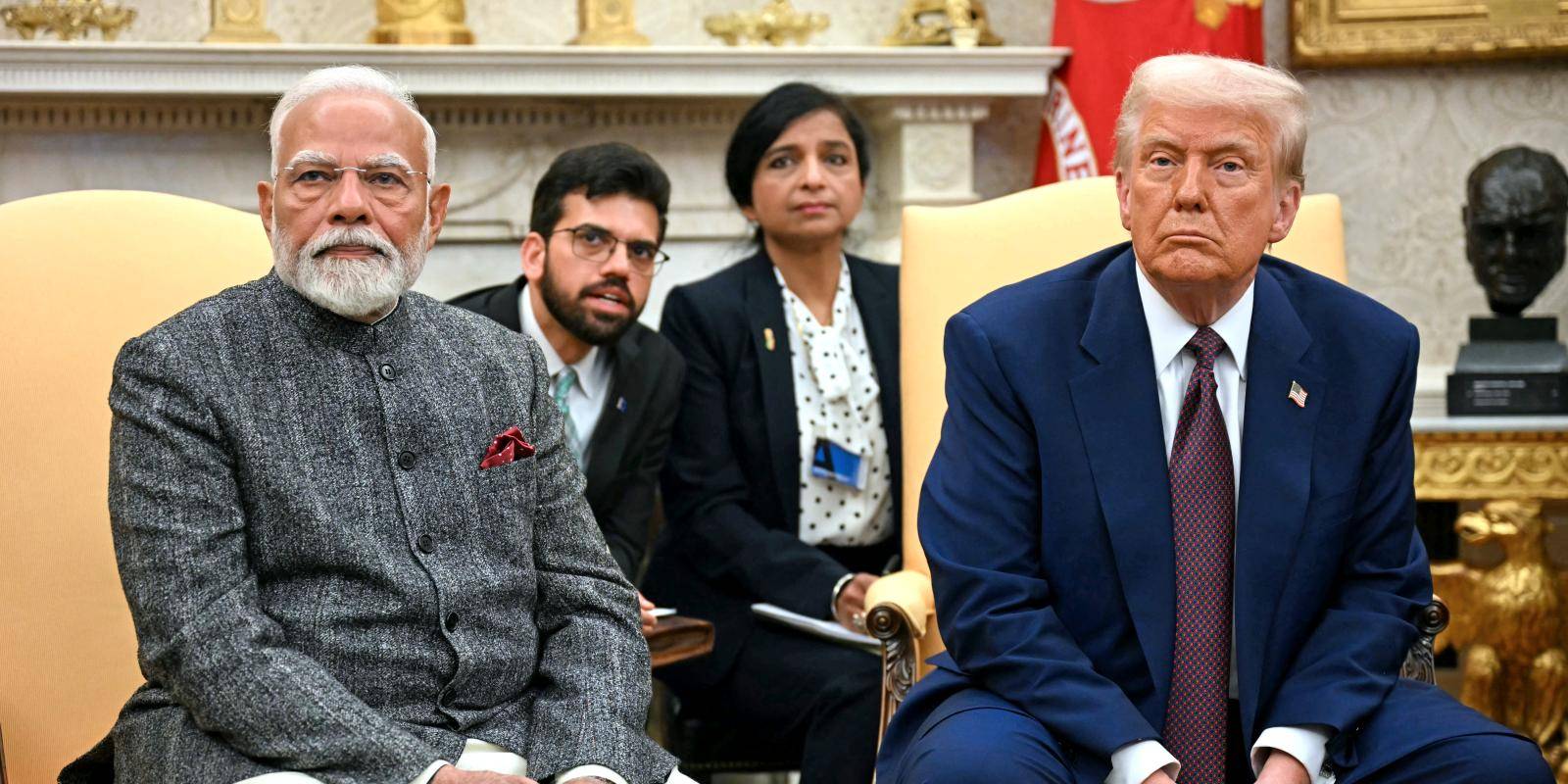

In the ever-evolving landscape of international relations, statements from high-ranking U.S. officials often send ripples across global geopolitics. Recently, a comment attributed to a top U.S. general has sparked intense debate: “India’s pride has pushed the U.S. closer to Pakistan.” This phrase captures the essence of shifting alliances in South Asia, where U.S. strategic interests are increasingly balancing between two nuclear-armed neighbors. As tensions simmer in the region, understanding this dynamic is crucial for grasping the broader implications for global security, counter-terrorism efforts, and economic partnerships.
This article delves deep into the context behind this sentiment, exploring the historical backdrop, current events, and future prospects of U.S.-India and U.S.-Pakistan relations. We’ll examine how India’s assertive foreign policy—often described as a form of national pride—has influenced U.S. decisions, potentially drawing Washington closer to Islamabad. With keywords like “US-India relations,” “US-Pakistan alliance,” and “South Asia geopolitics” in mind, this comprehensive analysis aims to provide valuable insights for readers interested in international affairs.
The Origin of the Statement: General Kurilla’s Testimony
The sentiment encapsulated in the title stems from a June 2025 congressional hearing where General Michael Kurilla, commander of the U.S. Central Command (CENTCOM), emphasized the need for strong ties with both India and Pakistan. During his testimony before the House Armed Services Committee, Kurilla described Pakistan as a “phenomenal partner” in counter-terrorism, particularly against the Islamic State-Khorasan (ISIS-K), a militant group operating from Afghanistan. He stressed that U.S. relations in the region cannot be “binary,” meaning America must engage with both nations independently based on their merits.
Kurilla’s remarks highlighted Pakistan’s active role in combating terrorism. Since early 2024, Pakistan has faced over 1,000 terrorist attacks in its western regions, resulting in approximately 700 deaths among security personnel and civilians, and more than 2,500 injuries. With limited U.S. intelligence support, Pakistani forces have captured at least five high-value ISIS-K targets and extradited key figures, such as Mohammad Sharifullah (alias Jafar), linked to the 2021 Kabul airport bombing that killed 13 U.S. service members. Pakistani Army Chief General Asim Munir personally informed Kurilla of Jafar’s capture, offering immediate extradition—a gesture that underscored the deepening counter-terrorism cooperation.
While Kurilla did not explicitly mention “India’s pride,” the implication is clear from the broader context. India’s growing assertiveness in foreign policy, including its refusal to fully align with U.S. strategies against China and Russia, has created friction. For instance, India’s continued economic ties with Russia amid the Ukraine conflict and its participation in forums like BRICS have raised eyebrows in Washington. This “pride” in maintaining strategic autonomy may have prompted the U.S. to bolster ties with Pakistan as a counterbalance, especially in areas like Afghanistan where Islamabad’s influence remains critical.
From an SEO perspective, searches for “General Kurilla Pakistan praise” or “US CENTCOM India Pakistan” have surged since the hearing, reflecting public interest in how these statements affect regional stability.
Historical Context: A Triangle of Alliances and Rivalries
To fully appreciate the current dynamics, it’s essential to revisit the history of U.S. engagements with India and Pakistan. Post-independence in 1947, the U.S. initially tilted toward Pakistan during the Cold War, viewing it as a bulwark against Soviet influence in Asia. Pakistan joined U.S.-led alliances like SEATO and CENTO in the 1950s, receiving substantial military aid. In contrast, India pursued a non-aligned policy under Prime Minister Jawaharlal Nehru, prioritizing sovereignty and avoiding entanglement in superpower rivalries—a stance rooted in national pride following centuries of colonial rule.
The 1971 Indo-Pak War marked a turning point. The U.S., under President Richard Nixon, supported Pakistan, even deploying the USS Enterprise to the Bay of Bengal as a show of force against India. This episode deepened India’s distrust of U.S. intentions and reinforced its commitment to strategic independence. Fast-forward to the post-9/11 era: The U.S. designated Pakistan a “major non-NATO ally” in 2004, funneling billions in aid for counter-terrorism operations in Afghanistan. However, revelations about Osama bin Laden’s hideout in Abbottabad in 2011 exposed Pakistan’s duplicitous role, straining ties.
Meanwhile, U.S.-India relations blossomed in the 2000s with the civil nuclear deal in 2008, symbolizing a strategic pivot toward New Delhi to counter China’s rise. India became a key partner in the Quadrilateral Security Dialogue (Quad) with the U.S., Japan, and Australia. Yet, this partnership has not been without hurdles. India’s purchase of Russian S-400 missile systems in 2018 triggered U.S. sanctions threats under CAATSA, highlighting tensions over New Delhi’s diversified alliances.
Pakistan, often criticized as the “motherlode of terrorism” for harboring groups like the Taliban and Lashkar-e-Taiba, has nonetheless proven indispensable in certain U.S. operations. The U.S. withdrawal from Afghanistan in 2021 further underscored this, as Pakistan’s intelligence networks provided crucial overflight rights and logistical support.
Current Geopolitical Shifts: Afghanistan, ISIS-K, and Beyond
The resurgence of terrorism in Afghanistan post-U.S. withdrawal has been a key driver in recent U.S.-Pakistan rapprochement. ISIS-K, an affiliate of the Islamic State, has expanded its operations, plotting attacks globally, including against U.S. interests. In 2024 alone, the group was linked to plots in New York and other cities, prompting heightened cooperation. Pakistan’s military has conducted operations along the Afghan border, pushing ISIS-K fighters into tribal areas and collaborating with the U.S. on intelligence sharing.
General Kurilla’s praise comes amid this backdrop. He noted that the Afghan Taliban and ISIS-K are in direct conflict, benefiting U.S. interests indirectly through Pakistani interventions. However, from India’s viewpoint, this overlooks Pakistan’s support for anti-India militants. Groups like Jaish-e-Mohammed, responsible for the 2019 Pulwama attack that killed 40 Indian soldiers, operate with alleged impunity in Pakistan.
India’s “pride” manifests in its robust response to such threats. Under Prime Minister Narendra Modi, India has adopted a more muscular foreign policy, conducting surgical strikes in 2016 and airstrikes in 2019 against terrorist camps in Pakistan. This assertiveness, while bolstering national morale, has complicated U.S. diplomacy. Earlier in 2025, escalating tensions between India and Pakistan over Kashmir led to cross-border fire, with the U.S. pushing for de-escalation. A ceasefire brokered with U.S. involvement held, but accusations of violations persisted.
Moreover, economic factors play a role. In August 2025, the U.S. imposed 25% tariffs on Indian goods, straining ties amid India’s growing trade surplus with America. Modi’s visit to China in the same month signaled India’s diversification away from over-reliance on the U.S., further illustrating its strategic pride. In contrast, Pakistan’s economic woes have made it more amenable to U.S. influence, including IMF bailouts backed by Washington.
For SEO optimization, terms like “ISIS-K US Pakistan cooperation” and “India Pakistan ceasefire 2025” are highly relevant, as they tie into trending searches on regional security.
India’s Perspective: Pride as a Double-Edged Sword
India’s national pride, often celebrated as “Atmanirbhar Bharat” (Self-Reliant India), has propelled it to become the world’s fifth-largest economy and a space power with missions like Chandrayaan-3. However, in geopolitics, this pride translates to a multi-aligned approach: Strengthening ties with the U.S. through defense deals like the $3 billion Predator drone purchase in 2023, while maintaining relations with Russia for oil and arms.
Critics in India argue that U.S. praise for Pakistan ignores Islamabad’s role in cross-border terrorism. An Indian parliamentary delegation visiting the U.S. in 2025 expressed frustration over this selective cooperation, noting that terrorists targeting America are often captured in Pakistan, yet those attacking India face no repercussions. This perceived hypocrisy has fueled debates in Indian media, with outlets labeling Pakistan the “motherlode of terrorism” due to its history of sheltering figures like bin Laden.
From a strategic standpoint, India’s pride in its sovereignty has prevented it from becoming a full U.S. proxy against China. While the U.S. views India as a counterweight in the Indo-Pacific, New Delhi’s participation in the Shanghai Cooperation Organization (SCO) alongside China and Pakistan shows its balancing act. This independence may have inadvertently pushed the U.S. toward Pakistan for immediate counter-terrorism gains, as seen in Kurilla’s testimony.
Public opinion in India reflects this: Polls in 2025 show over 70% of Indians viewing the U.S. favorably, but with caveats about Washington’s Pakistan policy. Social media discussions under hashtags like #USIndiaAlliance often highlight these tensions, making this topic ripe for SEO with keywords such as “India’s foreign policy pride” and “US double standards Pakistan.”
Implications for South Asia and Global Security
The perceived U.S. shift closer to Pakistan could have far-reaching consequences. For South Asia, it risks emboldening Pakistan’s military establishment, potentially escalating proxy conflicts in Kashmir. Nuclear risks loom large; both nations possess arsenals, and past crises like the 2019 standoff brought the region to the brink. U.S. intelligence has long warned of scenarios involving Indian strikes on Pakistani nuclear sites.
Globally, this dynamic affects the U.S.-China rivalry. Pakistan’s close ties with China through the China-Pakistan Economic Corridor (CPEC) make it a pivotal player. If the U.S. deepens engagement with Islamabad, it could gain leverage in Afghanistan but alienate India, weakening the Quad.
Economically, India’s pride-driven push for self-reliance has led to initiatives like Make in India, attracting foreign investment. However, U.S. tariffs could slow this, prompting New Delhi to explore alternatives like deeper EU ties or enhanced BRICS cooperation.
For Pakistan, U.S. support bolsters its military but does little for civilian governance. Internal instability, including the ousting of former PM Imran Khan in 2022 amid allegations of U.S. interference, underscores the fragility.
In terms of water security, India’s suspension of the Indus Waters Treaty in 2025 amid disputes heightens tensions, with tribal communities in the Himalayas fearing environmental impacts. The U.S. could play a mediating role, but its closer ties to Pakistan might bias outcomes.
Analysis: Why the U.S. Might Be Leaning Toward Pakistan
Several factors explain this perceived pivot. First, pragmatic counter-terrorism needs: Pakistan’s geography and intelligence capabilities are unmatched for dealing with Afghan-based threats. Second, India’s independent streak—its “pride”—has frustrated U.S. policymakers. Refusals to sanction Russia fully or join anti-China coalitions have led to warnings that Pakistan could be “Plan B.”
Third, domestic U.S. politics: Under President Trump in 2025, there’s a focus on transactional diplomacy. Hosting Pakistani Army Chief Asim Munir at the White House signaled a thaw, contrasting with cooler India-U.S. interactions amid trade disputes.
Finally, broader realignments: As India courts alternatives like China for economic stability, the U.S. seeks to prevent a complete drift by maintaining options with Pakistan.
This analysis suggests that while India’s pride strengthens its global standing, it requires careful navigation to avoid isolating key partners.
Conclusion: Navigating a Complex Future
The statement “India’s pride has pushed the U.S. closer to Pakistan” encapsulates a pivotal moment in South Asian geopolitics. While General Kurilla’s words emphasize balance, they highlight underlying frictions. For India, maintaining pride in sovereignty is vital, but it must be paired with pragmatic diplomacy to sustain U.S. partnerships. For the U.S., a non-binary approach risks alienating allies, while for Pakistan, renewed ties offer opportunities but demand genuine reforms.
As the world watches, the key lies in dialogue. Initiatives like backchannel talks or U.S.-mediated confidence-building measures could mitigate risks. Ultimately, stable relations benefit global peace, countering threats from terrorism to climate change.
For more insights on international relations and geopolitics, visit our website at www.mehrublogs.com. Contact us at mehrublogs@gmail.com for collaborations or feedback.
Follow us on social media:
https://www.facebook.com/MehruBlogs/
https://www.instagram.com/Mehrublogs.com_/
- US-India Relations in 2025: Strategic Partnerships and Challenges
- US-Pakistan Alliance: Shifting Dynamics in South Asia
- South Asia Geopolitics Explained: US, India, and Pakistan’s Balancing Act
- General Kurilla’s Role in Counterterrorism and Regional Stability
- ISIS-K Threat in Afghanistan: Impact on South Asian Security
- India-Pakistan Tensions: Historical Roots and Future Scenarios
- Strategic Autonomy: India’s Quest in US-China Rivalry
- US-India Defense Cooperation: Strengthening Military Ties
- US-Pakistan Relations After Afghanistan Withdrawal
- South Asia Geopolitical Trends: What to Expect in 2025
- General Kurilla and CENTCOM: Countering Terror in South Asia
- ISIS-K Expansion: Implications for India, Pakistan, and the US
- India-Pakistan Border Conflicts: A Geopolitical Analysis
- Strategic Autonomy vs. Alliances: India’s Foreign Policy Dilemma
- US-India Trade Relations: Economic Power and Diplomacy
- US-Pakistan Alliance in Counterterrorism: Myths and Realities
- Geopolitics of South Asia: China’s Role in the US-India Equation
- General Kurilla’s Strategy on ISIS-K in Afghanistan
- ISIS-K Threat to Pakistan and Regional Security
- India-Pakistan Kashmir Dispute: Geopolitical Flashpoint
- Strategic Autonomy in South Asia: Balancing East and West
- US-India Strategic Dialogue: Security and Defense Priorities
- US-Pakistan Alliance in Flux: Military and Political Shifts
- South Asia Geopolitics: Energy, Security, and Alliances
- General Kurilla and US Counterinsurgency in the Region
- ISIS-K and Taliban Rivalry: Regional Fallout
- India-Pakistan Proxy Conflicts in Afghanistan
- Strategic Autonomy for Pakistan: Myth or Reality?
- US-India Technology Partnership and Regional Leadership
- US-Pakistan Cooperation Against Terrorism: Past and Future
- South Asia Geopolitics in the Shadow of US-China Rivalry
- General Kurilla on Counterterrorism Partnerships with India
- ISIS-K Attacks: Threats Beyond Afghanistan
- India-Pakistan Nuclear Tensions: Risks for Global Security
- Strategic Autonomy in Defense: India’s Make-in-India Approach
- US-India Space Cooperation and Strategic Interests
- US-Pakistan Relations: Security Assistance and Trust Deficit
- Geopolitics of South Asia’s Water Conflicts
- General Kurilla and CENTCOM’s Coordination with Pakistan
- ISIS-K: A Threat to US and South Asia Security Architecture
- India-Pakistan Tensions and Their Impact on Global Diplomacy
- Strategic Autonomy: South Asia’s Middle Path in Global Politics
