
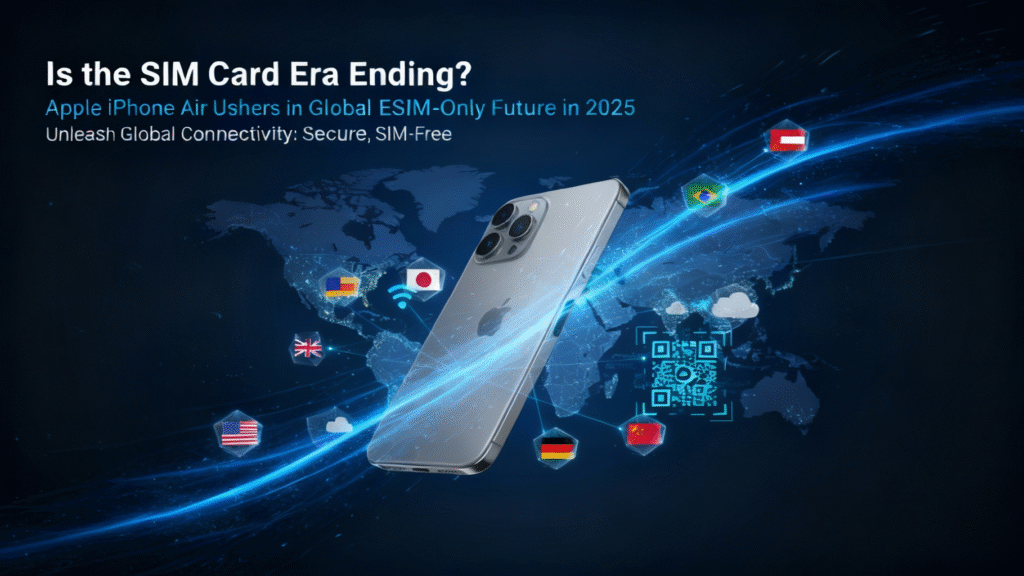

The Dawn of eSIM Era: How Apple’s iPhone Air Signals the End of Physical SIM Cards
Apple’s recent unveiling of the iPhone Air has ignited a global conversation: Is the traditional physical SIM card finally on its way out? This ultra-thin, eSIM-only smartphone, launched worldwide in September 2025, marks the first time Apple has ditched the SIM tray entirely across all markets. No more fumbling with tiny trays or plastic cards—eSIM technology 2025 is here, embedded digitally in the device for seamless connectivity.
While the iPhone 17 series retains physical slots in some regions, the Air’s design choice frees up space for a larger battery and underscores a seismic shift in mobile tech. As adoption skyrockets from 1.3 billion eSIM smartphones in 2024 to a projected 3 billion by 2030, this isn’t just hype—it’s the future of how we stay connected.
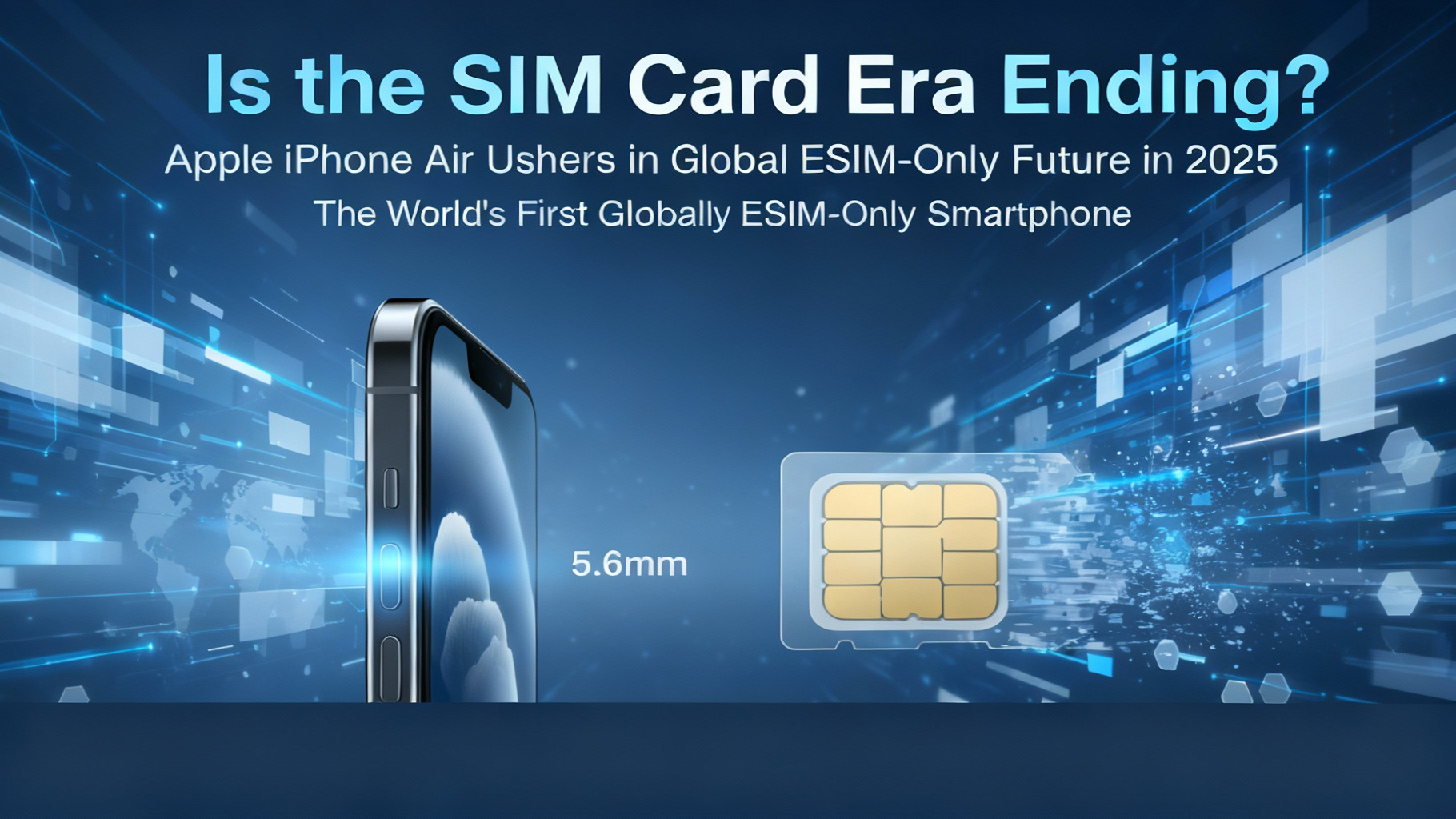
For three decades, the SIM card has been our gateway to mobile networks, a small plastic chip enabling calls, texts, and data. But eSIM changes everything: It’s a digital version built into the phone, eliminating swaps and enhancing security. In this article, we’ll explore the iPhone Air’s role in accelerating the end of physical SIM cards, the benefits of eSIM vs SIM card tech, and what this means for consumers and carriers in 2025 and beyond. Whether you’re upgrading your phone or curious about tech trends, understanding Apple eSIM adoption is key to staying ahead.
The iPhone Air: A Game-Changer in Smartphone Design
Announced on September 22, 2025, the iPhone Air is Apple’s thinnest iPhone yet at just 5.5mm, prioritizing sleekness and performance. Unlike previous models, it supports only eSIM worldwide, a bold move that started in the U.S. with the iPhone 14 in 2022 but now goes global. This iPhone Air eSIM only design isn’t a gimmick—removing the SIM tray allows for a bigger battery, better security, and easier travel setups via QR code scans.
Apple’s CEO Tim Cook highlighted during the keynote: “eSIM is easier to use, more secure, and saves precious space—perfect for travel.” The device supports up to eight eSIMs, letting users store multiple plans without physical swaps. However, challenges arise in markets like China, where regulatory delays pushed the launch to after September 19, pending eSIM approvals from carriers like China Mobile. This global push cements Apple’s vision: eSIM as the industry standard, supported by over 500 carriers.
For users, this means no more lost SIMs or store visits. Activation is instant via iOS 26’s streamlined setup, making the iPhone Air ideal for frequent travelers. As one analyst noted, it’s “the beginning of the end for physical SIM cards.” But is the entire industry following suit?
What is eSIM Technology? A Digital Leap from Physical SIMs
At its core, eSIM (embedded SIM) is a programmable chip soldered into the phone, replacing the removable plastic card we’ve known since the 1990s. Unlike traditional SIMs, which require ejection tools and precise insertion, eSIMs are activated remotely by scanning a carrier’s QR code or using apps—no hardware needed.
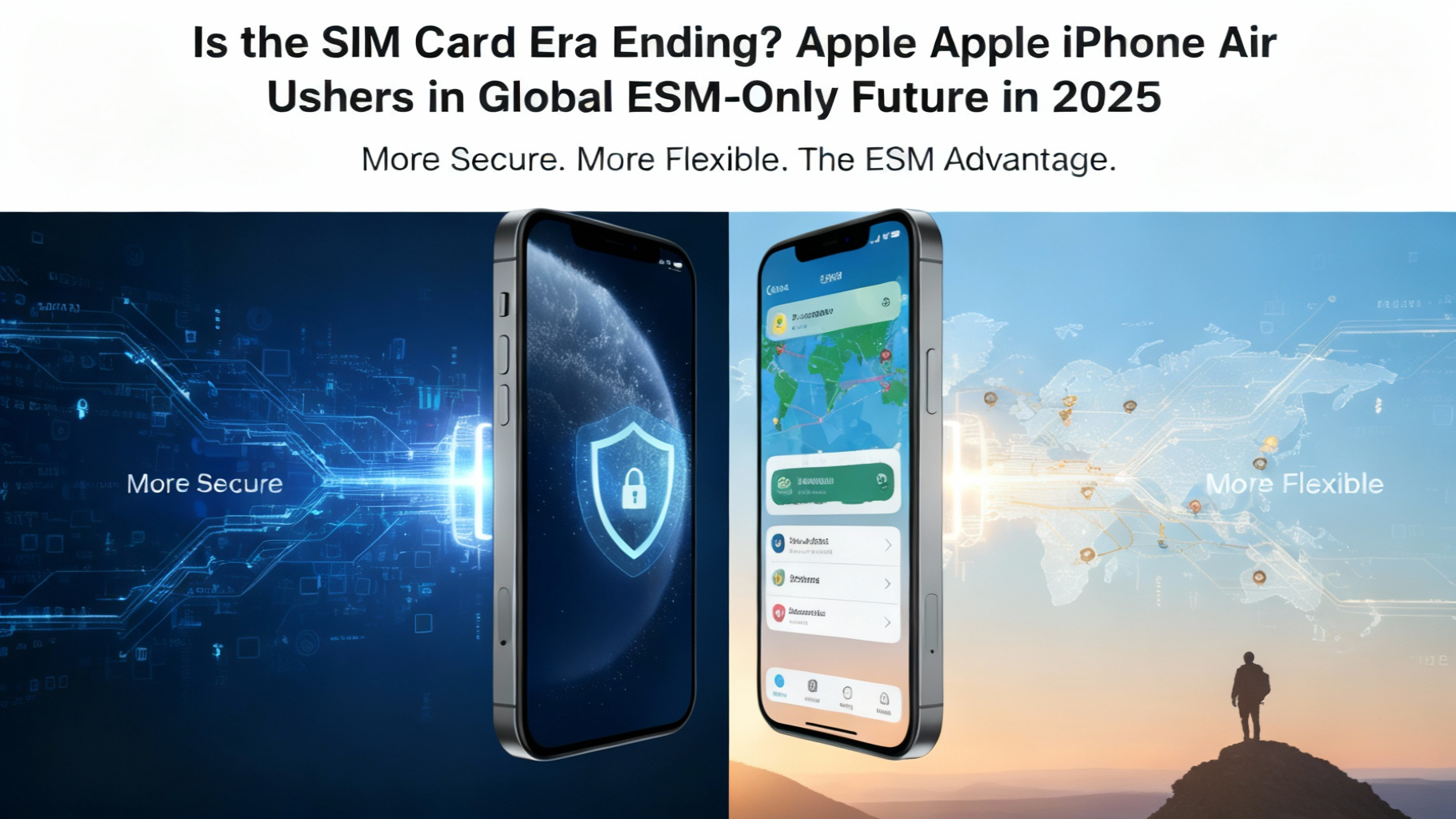
The eSIM vs SIM card debate boils down to convenience and security. Physical SIMs are prone to loss, damage, or theft—eSIMs can’t be popped out if your phone is stolen, thwarting SIM-swapping scams. They also support multiple profiles, perfect for dual-SIM setups without clutter. Environmentally, ditching plastic reduces waste, aligning with Apple’s sustainability goals.
Drawbacks? Not all carriers support eSIM yet, and rural areas with spotty internet may struggle with initial setups. In China, for instance, only the iPhone Air supports eSIM due to regulations, while others stick to nano-SIMs. Still, with iOS 26 and Android 15 enhancing eSIM management, adoption is inevitable.
Explosive Growth: eSIM Adoption Stats and Projections
eSIM technology 2025 is exploding, driven by flagships like the iPhone Air. CCS Insight reports 1.3 billion eSIM-enabled smartphones in use by late 2024, up from 150 million in 2023—a 150% surge. By 2030, that’s projected to hit 3 billion, with travel eSIMs alone quadrupling to 280 million. GSMA forecasts 77% of global smartphone connections will be eSIM-based by 2030, led by North America at 98%.
| Year | eSIM Smartphone Connections (Billions) | Key Driver |
|---|---|---|
| 2024 | 1.3 | iPhone 14/15 U.S. rollout |
| 2025 | ~1.8 (est.) | Global iPhone 17/Air launch |
| 2030 | 3.0 | 5G/IoT integration |
North America leads with 41% of international trips using travel eSIMs by 2030, thanks to eSIM-only iPhones since 2022. Trusted Connectivity Alliance notes over 500 million eSIM shipments in 2024, doubling consumer adoption. By 2028, half of all smartphones could be eSIM-only. Pinterest
This growth isn’t just consumer-driven—IoT devices like connected cars will push the market to $31.82 billion by 2030. Challenges remain, like operator investments in remote provisioning, but the trajectory is clear: Physical SIMs are fading.
Industry Shift: Who’s Following Apple’s Lead?
Apple isn’t alone in embracing eSIM. Samsung’s Galaxy S24 series added built-in support in 2024, while Google’s Pixel 10 ditched trays in the U.S. However, most still offer hybrid options—physical plus eSIM—for regions lagging in carrier support.
The iPhone 17 series expands eSIM-only to more countries (e.g., Europe, Australia), but retains trays elsewhere. Experts like Paolo Pescatore predict: “The SIM tray will disappear altogether in time.” For carriers, this means rethinking stores—fewer SIM sales, more digital activations. Consumers win with flexibility, but must ensure eSIM compatibility when traveling.
In emerging markets, adoption lags due to infrastructure, but Africa’s 20 new eSIM countries in 2023 signal momentum. By 2030, 76% of smartphones globally could be eSIM-based.
Benefits and Challenges: Navigating the eSIM Transition
Switching to eSIM technology 2025 offers clear perks: Enhanced security against theft, multiple profiles for work/personal use, and eco-friendly design. Travel becomes hassle-free—activate local plans instantly without airport kiosks. Battery life improves too, as seen in eSIM-only models with extra capacity.
Yet, hurdles persist. Not all older phones support eSIM, and carrier lock-ins can complicate switches. In China, regulatory snags delayed the iPhone Air, showing policy can slow progress. Users in remote areas may face activation issues without strong signals.
For businesses, eSIM streamlines IoT fleets, but requires upfront tech investments. Overall, the pros outweigh cons, paving the way for a SIM-less world. Pinterest
The Future: A World Without Physical SIM Cards?
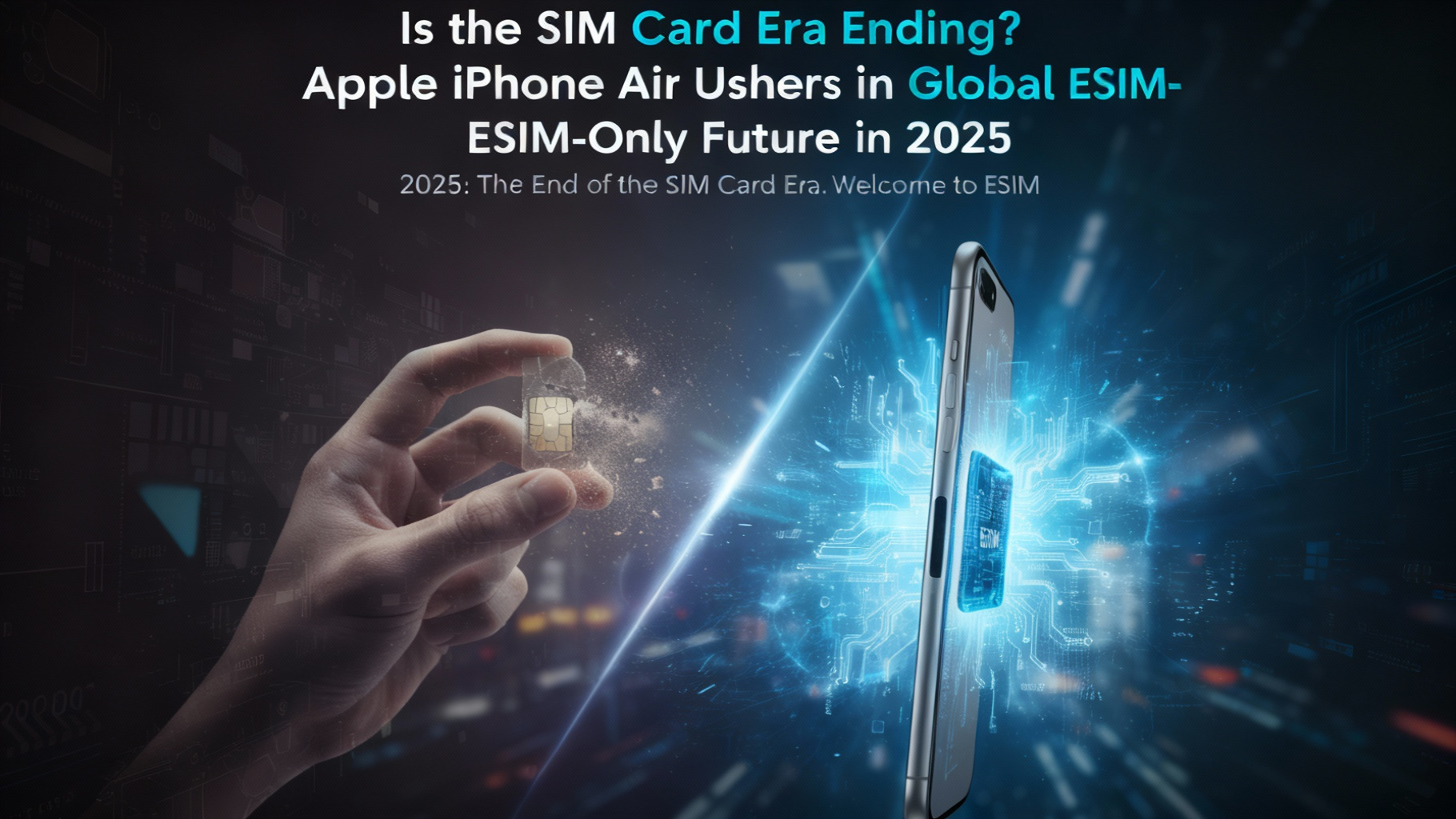
As Apple eSIM adoption accelerates with the iPhone Air, the end of physical SIM cards feels imminent—but gradual. By 2030, with 3 billion devices online via eSIM, carriers must adapt or risk obsolescence. This shift promises a more connected, secure future, but demands global infrastructure upgrades.
For now, hybrid models bridge the gap, but the iPhone Air proves: The plastic era is ending. Ready to go digital? Check your carrier’s eSIM support today.
Stay tuned for more tech insights at www.mehrublogs.com or email mehrublogs@gmail.com.
Follow us on social media:


