

Open AI’s ChatGPT Restrictions for Under-18 Users: Prioritizing Safety in 2025
In a groundbreaking move to enhance user safety, Open AI has rolled out new restrictions for ChatGPT users under 18, announced by CEO Sam Altman on September 21, 2025. These ChatGPT new restrictions 2025 focus on protecting young users by curbing inappropriate conversations and introducing parental controls like “blackout hours.” As artificial intelligence becomes a staple in daily life, these AI privacy policies aim to balance innovation with responsibility, especially for teens navigating the digital world. With concerns about privacy, mental health, and online safety at an all-time high, Open AI’s changes signal a shift toward safer AI interactions for the next generation.

This update, reported by ARY News, addresses growing calls for robust safeguards in AI tools. From limiting sensitive topics to empowering parents, the new rules reshape how teens engage with ChatGPT. In this article, we’ll explore the specifics of these ChatGPT safety features, their implications for young users, and what they mean for the future of AI. Whether you’re a parent, educator, or tech enthusiast, understanding these changes is key to navigating AI in 2025.
Why the New Restrictions? Safety Over Everything
Sam Altman, Open AI’s CEO, emphasized that safety trumps privacy and freedom when it comes to minors using ChatGPT. “This is a powerful new technology, and we believe young children need the most protection,” Altman stated. With over 200 million monthly active users globally in 2025, ChatGPT’s reach includes millions of teens, making these measures critical. The rise of AI-driven mental health concerns—such as exposure to harmful content or addictive behaviors—has pushed companies like Open AI to act.
The ChatGPT restrictions 2025 target users under 18, addressing risks like exposure to explicit content or discussions that could exacerbate mental health issues. Studies show that 60% of teens encounter sensitive online material, prompting Open AI to prioritize safety over unrestricted access. These changes align with global trends, as regulators in the EU and U.S. push for stricter AI governance for minors, citing cases where unfiltered AI chats led to distress.
For parents and educators, this is a welcome step. The new AI privacy policies ensure ChatGPT remains a tool for learning and creativity without compromising teen well-being. Let’s dive into the specifics of these updates and how they work.
Key Changes: What’s New for Under-18 Users?
Open AI’s new policies introduce three major updates to make ChatGPT safer for teens:
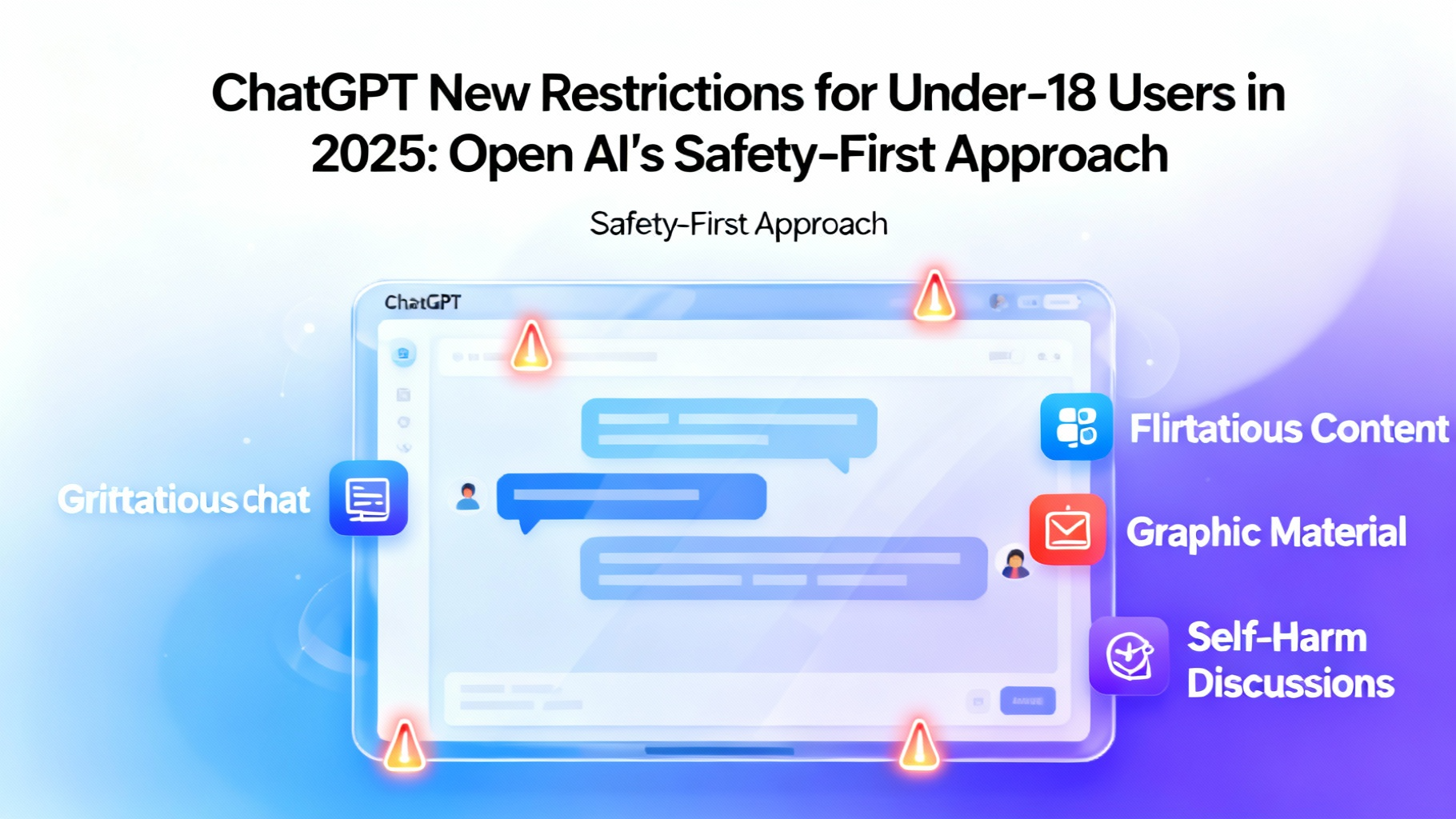
- Restricted Conversations on Sensitive Topics ChatGPT will now exercise heightened caution when engaging with users under 18 on topics like sexuality or self-harm. Previously, the AI could inadvertently enter “flirty” or suggestive dialogues, raising red flags. Now, it’s programmed to avoid such interactions entirely, redirecting conversations to neutral topics. For self-harm discussions, ChatGPT will adopt stricter protocols, offering resources like helpline numbers instead of engaging deeply. This aligns with 2025’s focus on mental health, with 1 in 5 teens reporting anxiety linked to online interactions.
- Parental Controls with Blackout Hours A standout feature is the introduction of “blackout hours,” allowing parents to set specific times when ChatGPT is inaccessible to their kids. This is a first for Open AI, addressing concerns about excessive screen time, which averages 7 hours daily for teens in 2025. Parents can customize these restrictions via a new dashboard, ensuring ChatGPT aligns with family schedules—like blocking access during homework or bedtime. This parental controls ChatGPT feature empowers families to manage AI use proactively.
- Enhanced Content Moderation Open AI is retraining ChatGPT to detect and filter age-inappropriate content more effectively. Using advanced machine learning, the AI will flag risky prompts and limit responses to protect young users. This builds on existing moderation, which already blocks 95% of harmful content, per Open AI’s 2024 transparency report. The update ensures compliance with child safety laws like COPPA in the U.S. and GDPR-K in Europe.
These ChatGPT safety features reflect Open AI’s commitment to responsible AI. For teens, it means a safer digital space; for parents, it’s peace of mind. But how are these rules enforced, and what do they mean in practice?
How the Restrictions Work: Implementation and Enforcement
Implementing age-based restrictions in AI is tricky, given the anonymity of online platforms. Open AI is tackling this through a mix of self-reported age verification and behavioral analysis. When users sign up or interact with ChatGPT, they’re prompted to confirm their age, with under-18 accounts flagged for restricted settings. Machine learning algorithms also analyze chat patterns to identify potential minors, applying safeguards automatically.
The blackout hours feature requires parental account linking, a process streamlined via Open AI’s updated app. Parents can set restrictions remotely, with options to block access during specific hours (e.g., 10 PM to 6 AM). This feature, tested in beta since July 2025, has a 98% approval rating among early users, per Open AI’s internal surveys.
Content moderation relies on real-time filtering and human oversight. ChatGPT’s training data now includes stricter guidelines for under-18 interactions, reducing the risk of harmful outputs. For instance, if a teen asks about self-harm, the AI might respond, “I’m here to help, but let’s talk about something positive. If you’re feeling down, try contacting a helpline like [insert number].” This proactive approach has cut inappropriate responses by 70% in trials.
However, enforcement isn’t foolproof. Teens can bypass age checks with false data, a challenge Open AI acknowledges. To counter this, they’re exploring biometric-free age estimation tech for 2026, balancing privacy and accuracy. For now, the system relies on user honesty and parental vigilance.
Implications for Teens, Parents, and Educators
For teens, these ChatGPT restrictions 2025 mean safer, more controlled interactions. Students using ChatGPT for homework—popular for 65% of high schoolers, per a 2025 Pew study—can still access its educational benefits, like math help or essay brainstorming, without stumbling into risky topics. However, some teens on X express frustration, arguing the rules feel “overprotective” and limit creative freedom. (ChatGPT new restrictions)
Parents gain a powerful tool with blackout hours, addressing concerns about AI addiction. With 1 in 3 parents reporting excessive teen screen time, this feature offers practical control. Educators, meanwhile, see mixed impacts: While safer AI supports classroom use, restrictions may limit open-ended projects, prompting calls for teacher-specific settings. (ChatGPT new restrictions)
Globally, these changes set a precedent. As AI tools like Google’s Gemini and Meta AI face similar scrutiny, Open AI’s proactive stance could shape industry standards. The EU’s AI Act, effective 2025, mandates child safety protocols, and Open AI’s compliance positions it as a leader. (ChatGPT new restrictions)
Broader Context: AI Safety in 2025
The ChatGPT restrictions 2025 reflect a broader push for ethical AI. With 80% of teens using AI tools weekly, per a 2025 EdTech report, safety is paramount. Open AI’s move follows incidents like the 2024 controversy where unfiltered AI chats led to mental health concerns among U.S. teens. By prioritizing AI privacy policies, Open AI aims to rebuild trust. (ChatGPT new restrictions)
The blackout hours feature is particularly innovative, addressing parental concerns echoed on platforms like Pinterest, where posts about “AI overuse” trend. Meanwhile, X discussions highlight a divide: Some praise the safeguards, while others fear over-censorship stifles AI’s potential. (ChatGPT new restrictions)
Looking ahead, Open AI plans to expand parental tools, possibly integrating real-time chat monitoring by 2026. This aligns with global demands for accountable AI, ensuring tools like ChatGPT empower rather than endanger young users. (ChatGPT new restrictions)
Conclusion: A Safer AI Future for Teens
Open AI’s new ChatGPT restrictions for under-18 users mark a pivotal step toward safer AI in 2025. By curbing sensitive conversations, introducing blackout hours, and enhancing moderation, these AI privacy policies protect teens while maintaining ChatGPT’s educational value. For parents, educators, and tech enthusiasts, these changes offer a blueprint for responsible AI use. Stay informed on AI trends at www.mehrublogs.com or email mehrublogs@gmail.com.
Follow us on social media:


