

On August 30, 2025, Israel announced the killing of Abu Obeida, the prominent spokesman for Hamas’s military wing, the Izz ad-Din al-Qassam Brigades, in a targeted airstrike in Gaza City’s al-Rimal neighborhood. The operation, executed by the Israel Defense Forces (IDF) and Shin Bet, marks a significant blow to Hamas’s propaganda machine. Israel’s Defense Minister Israel Katz hailed the “flawless execution,” while Hamas has not confirmed the death, accusing Israel of psychological warfare.
This event, set against the backdrop of escalating Gaza tensions, parallels recent political upheaval in Thailand, where Prime Minister Paetongtarn Shinawatra was ousted over a leaked call. Both incidents highlight the power of words and actions in shaping leadership and legacy, with profound implications for Pakistan and the global stage.

The Airstrike: Targeting a Symbol of Hamas
Abu Obeida, whose real name was Hudayfa Samir Abdallah al-Kahlout, was a key figure in Hamas since 2004, rising to prominence in 2006 by announcing the kidnapping of Israeli soldier Gilad Shalit. Known for his masked appearances in a red keffiyeh, he delivered fiery diatribes against Israel, becoming an icon for Hamas supporters across the Middle East. His final speech on August 29 warned that Israeli hostages in Gaza would face the same risks as Hamas fighters if Israel invaded Gaza City.
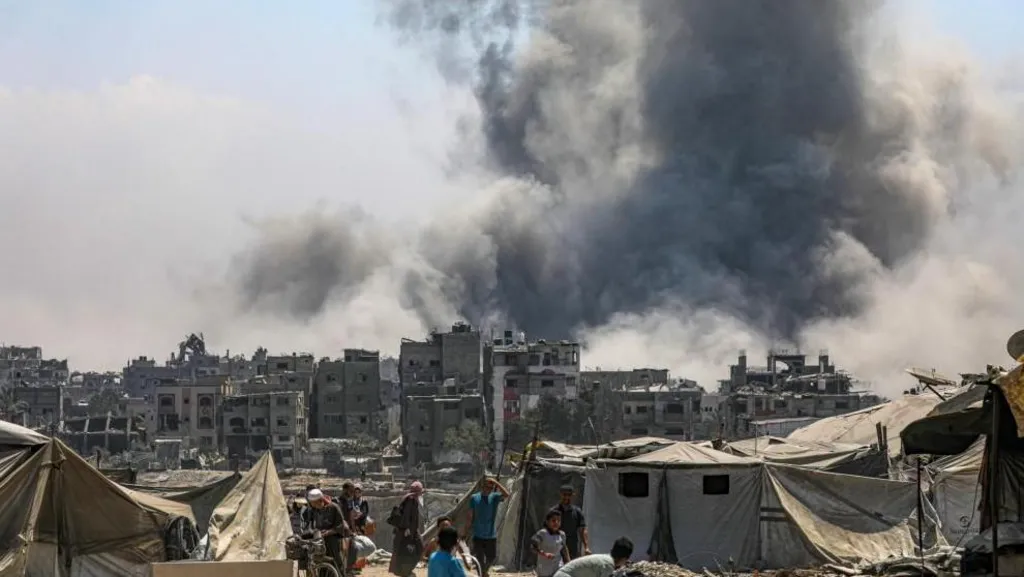
The IDF’s strike targeted a six-story apartment building used as a dentist’s surgery, with five missiles hitting the second and third floors simultaneously. The operation relied on precise intelligence from Shin Bet and the IDF’s Intelligence Directorate to locate Obeida’s hiding place. Witnesses reported cash flying into the air post-strike, some of which was stolen and later recovered by Hamas members. Local reports claim at least seven people, including children, were killed, and 20 injured, though the IDF stated it used precision weapons and surveillance to minimize civilian casualties. These claims remain unverified by independent sources.
Hamas denounced the strike as part of Israel’s “psychological warfare,” urging Palestinians not to spread rumors of Obeida’s death, which they argued could undermine unity. The group’s silence on confirming his fate contrasts with Israel’s firm assertion, backed by Defense Minister Katz’s statement on X: “Abu Obeida can no longer spread his lies, propaganda, and terror.”
Context: Israel’s Campaign and Gaza’s Crisis
The strike comes amid Israel’s plan to seize Gaza City, approved in early August 2025, to end the 22-month war sparked by Hamas’s October 7, 2023, attack, which killed 1,200 people and took 251 hostages. Since then, over 63,000 Palestinians have been killed, per Gaza’s Hamas-run health ministry, with 90% of Gaza City’s homes damaged or destroyed. Famine conditions were confirmed in the area last week, exacerbating the humanitarian crisis.
Israel’s military aims to evacuate Gaza City’s nearly one million residents to southern shelters before a full offensive, a move the UN warns could have “catastrophic consequences” for civilians and the 47 remaining hostages (20 believed alive). The UK’s ambassador to Israel called it “a huge mistake.” Prime Minister Benjamin Netanyahu remains defiant, vowing to defeat Hamas despite international criticism.
Obeida’s killing, if confirmed, weakens Hamas’s propaganda efforts, as he was among the few pre-2023 senior members left. His role in spreading videos of the October 7 attack and hostage footage made him a high-value target. IDF Chief of Staff Lt. Gen. Eyal Zamir emphasized that Hamas leaders abroad are next, signaling an aggressive escalation.
Parallel with Thailand: Paetongtarn Shinawatra’s Fall
The ousting of Abu Obeida resonates with another recent event: the dismissal of Thailand’s Prime Minister Paetongtarn Shinawatra on August 30, 2025, by the Constitutional Court. Paetongtarn, Thailand’s youngest and second female PM, was removed over a leaked June 2025 phone call where she called Cambodia’s former leader Hun Sen “uncle” and criticized Thai military generals. The court deemed her remarks an ethical violation, undermining national interests amid Thailand-Cambodia border clashes that killed several in July. (from provided Thailand document)
Both cases highlight the fragility of leadership under scrutiny. Obeida’s propaganda fueled Hamas’s narrative, much as Paetongtarn’s words were seen as weakening Thailand’s military. Their removals—Obeida by airstrike, Paetongtarn by judicial ruling—reflect how powerful institutions (Israel’s military, Thailand’s judiciary) can swiftly alter trajectories. The Shinawatra family, like Hamas, faces repeated setbacks yet persists, with Paetongtarn’s ousting echoing the coups against her father Thaksin and aunt Yingluck.
Implications for Pakistan and the Global Stage
For Pakistan, these events carry significant lessons. The Israel-Hamas conflict underscores the volatility of regional power dynamics, relevant as Pakistan navigates its own tensions with India and Afghanistan. The Gaza crisis, with its humanitarian toll, resonates with Pakistan’s advocacy for Palestinian rights, a stance rooted in Islamic solidarity. Obeida’s death may embolden Israel’s campaign, potentially escalating Middle East tensions, which could affect Pakistan’s foreign policy and energy markets.
The Thailand parallel offers a cautionary tale for Pakistan’s political landscape, where dynasties like the Bhuttos and Sharifs face judicial and military pressures. Paetongtarn’s leaked call mirrors incidents like Nawaz Sharif’s ousting in 2017, highlighting the risks of public or private missteps in polarized systems. Pakistan’s leaders must tread carefully in balancing military relations and public rhetoric, especially in an era of digital leaks.
Globally, these incidents reflect 2025’s interconnected challenges: from Gaza’s humanitarian crisis to Thailand’s democratic struggles. The power of words—whether Obeida’s propaganda or Paetongtarn’s call—shapes narratives and topples leaders, urging vigilance in communication.
Lessons and Reflections
- Impact of Symbolism: Obeida’s masked persona amplified Hamas’s message, just as Paetongtarn’s “uncle” remark symbolized disloyalty to critics. Leaders must weigh the symbolic weight of their actions.
- Institutional Power: Israel’s military and Thailand’s judiciary wield immense influence, akin to Pakistan’s own power dynamics. Balancing these forces is key to stability.
- Humanitarian Stakes: Gaza’s crisis, with famine and displacement, demands global attention, urging Pakistan to amplify its diplomatic voice.
- Legacy Challenges: Both Hamas and the Shinawatras show resilience despite setbacks, a lesson for Pakistan’s dynastic politics to adapt strategically.
Final Thoughts
The killing of Abu Obeida marks a tactical win for Israel but risks escalating Gaza’s humanitarian and military crises. Similarly, Paetongtarn Shinawatra’s ousting underscores the fragility of leadership in politically charged environments. For Pakistan, these stories highlight the need for ethical leadership and careful navigation of institutional and regional tensions. As words and actions ripple globally, from Gaza’s streets to Bangkok’s courts, 2025 demands wisdom to shape a stable future.
What are your thoughts on these events? Share in the comments below! For more on global conflicts and politics.
This article is brought to you by Mehru Blogs. For more Visit www.mehrublogs.com.
Contact us at mehrublogs@gmail.com.


