
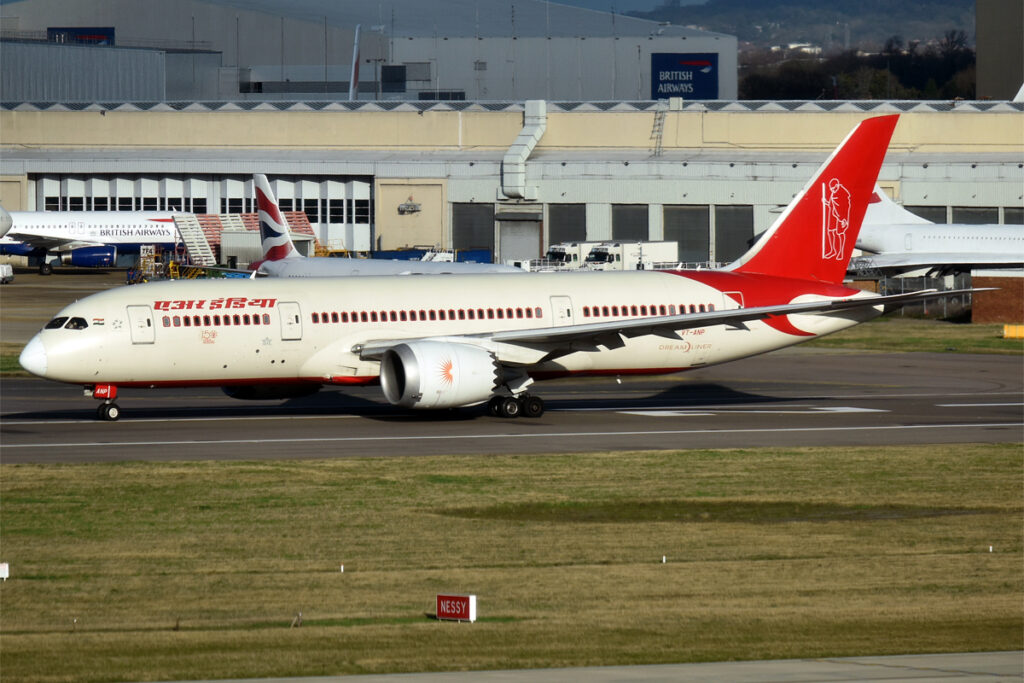

India’s national airline, Air India, has come under intense scrutiny after being accused of multiple safety failures. The Directorate General of Civil Aviation (DGCA) has issued four official notices highlighting 29 major violations that risked the safety of passengers and crew.

Tragedy Before the Alarms: The Ahmedabad Crash
Just days after Air India voluntarily reported internal safety concerns, a Boeing 787 Dreamliner operated by the airline crashed in Ahmedabad, killing 260 people on board. The crash is now being called India’s deadliest aviation disaster in a decade.
According to initial reports, the fuel control switches were turned off incorrectly right after takeoff, leading to miscommunication between the pilots. The result was a catastrophic failure that claimed hundreds of lives.
Read more: Air India crash – Pilot was under mental stress and suffering from depression
The DGCA’s Official Response: Four Notices, Grave Concerns
On July 23, the DGCA issued four separate notices to Air India, citing repeated and dangerous lapses in flight operations. These notices focused on the following areas:
1. Crew Fatigue and Lack of Rest
The airline was found guilty of forcing pilots and cabin crew to work without proper rest periods, which can lead to poor judgment and slower reaction times in critical situations.
2. Outdated Training Systems
Pilots were being trained on old, ineffective flight simulators, which did not accurately reflect modern flight scenarios or aircraft behavior.
3. Poor Preparation for High-Altitude Airports
Air India was operating flights to challenging high-altitude airports without adequate preparation or special training, posing serious risks during landing and takeoff.
4. Understaffed International Flights
The airline operated long-haul international flights with fewer cabin crew members than required by law, which severely affects emergency response and passenger care.
29 Safety Violations: A Breakdown of System Failure
The DGCA classified these violations as part of a systemic collapse within the airline’s internal safety and training protocols. The 29 violations cover a wide range of concerns, including:
-
Lack of real-time supervision
-
Failure to update safety checklists
-
Delayed responses to technical alerts
-
Poor communication between ground and air crew
-
Ignoring mandatory medical checks for pilots
-
Delayed aircraft maintenance
-
Incomplete record-keeping of flight data
-
Lax auditing of safety procedures
Repeated Warnings Ignored
The DGCA stated that despite repeated alerts and advisories, Air India has not improved its safety practices. This ongoing neglect shows that the airline has no effective system in place for managing crew, flight operations, or training quality.
Read more: Air India crash – Cockpit voice recorder recovered
Consequences If No Action is Taken
The notices come with a strong warning. If Air India fails to address these issues immediately, it may face:
-
Heavy financial penalties
-
Suspension of operating licenses
-
Removal of senior management and technical officers
This is one of the most serious actions taken by Indian aviation regulators in recent years.
Air India’s Response: Voluntary Disclosure and Commitment
In a public statement, Air India acknowledged that the notices relate to violations that the airline had itself voluntarily reported to the DGCA.
“We are fully committed to the safety of our crew and passengers,” the airline said.
“We are cooperating with authorities and taking steps to address all issues.”
However, experts argue that voluntary disclosure does not reduce the gravity of the violations or the impact of the crash.
Ahmedabad Crash: What Really Happened?
The preliminary crash investigation report reveals the most critical error: the fuel control switches were shut off incorrectly within minutes of takeoff.
This mistake led to confusion in the cockpit, with both pilots unsure how to respond. With no fuel supply, the engines lost power, and the aircraft failed to maintain altitude, leading to a tragic crash that ended 260 lives.
Aviation experts suggest that better training and alert systems could have prevented the disaster.
Conclusion: A Wake-Up Call for Indian Aviation
The shocking crash, combined with 29 reported violations, has shaken public confidence in Air India. This incident is not just a black mark on one airline, but a warning sign for the entire Indian aviation sector to reevaluate its safety culture.
If urgent action is not taken, more lives could be at risk.
📢 Connect With Mehrublogs:
📧 Email: mehrublogs@gmail.com
🌐 Website: www.mehrublogs.com
👍 Facebook: facebook.com/MehruBlogs
📸 Instagram: instagram.com/Mehrublogs.com_
📌 Pinterest: pinterest.com/mit1651


