
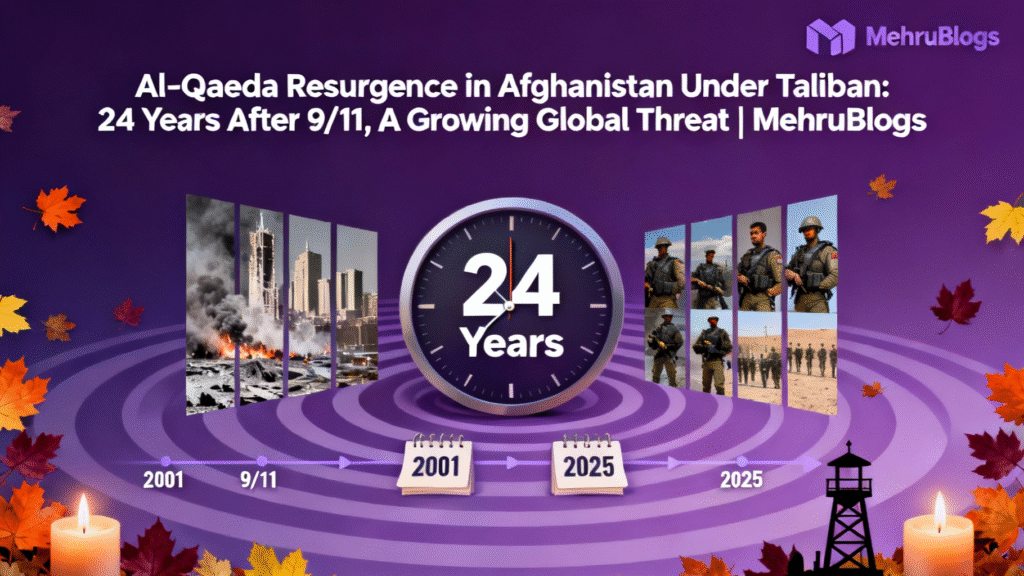

Nearly 24 years after the devastating 9/11 attacks that shook the world, Al-Qaeda is making a alarming comeback in Afghanistan, this time under the protective umbrella of the Taliban regime. According to a recent analysis by The Jerusalem Post, the terrorist group has reorganized its networks since the U.S. withdrawal in 2021, posing a renewed threat to global security, particularly for the United States, Pakistan, and regional stability. This Al-Qaeda resurgence in Afghanistan isn’t just a historical echo—it’s a modern evolution, fueled by advanced tactics like drone technology, online recruitment, and battle-hardened fighters.
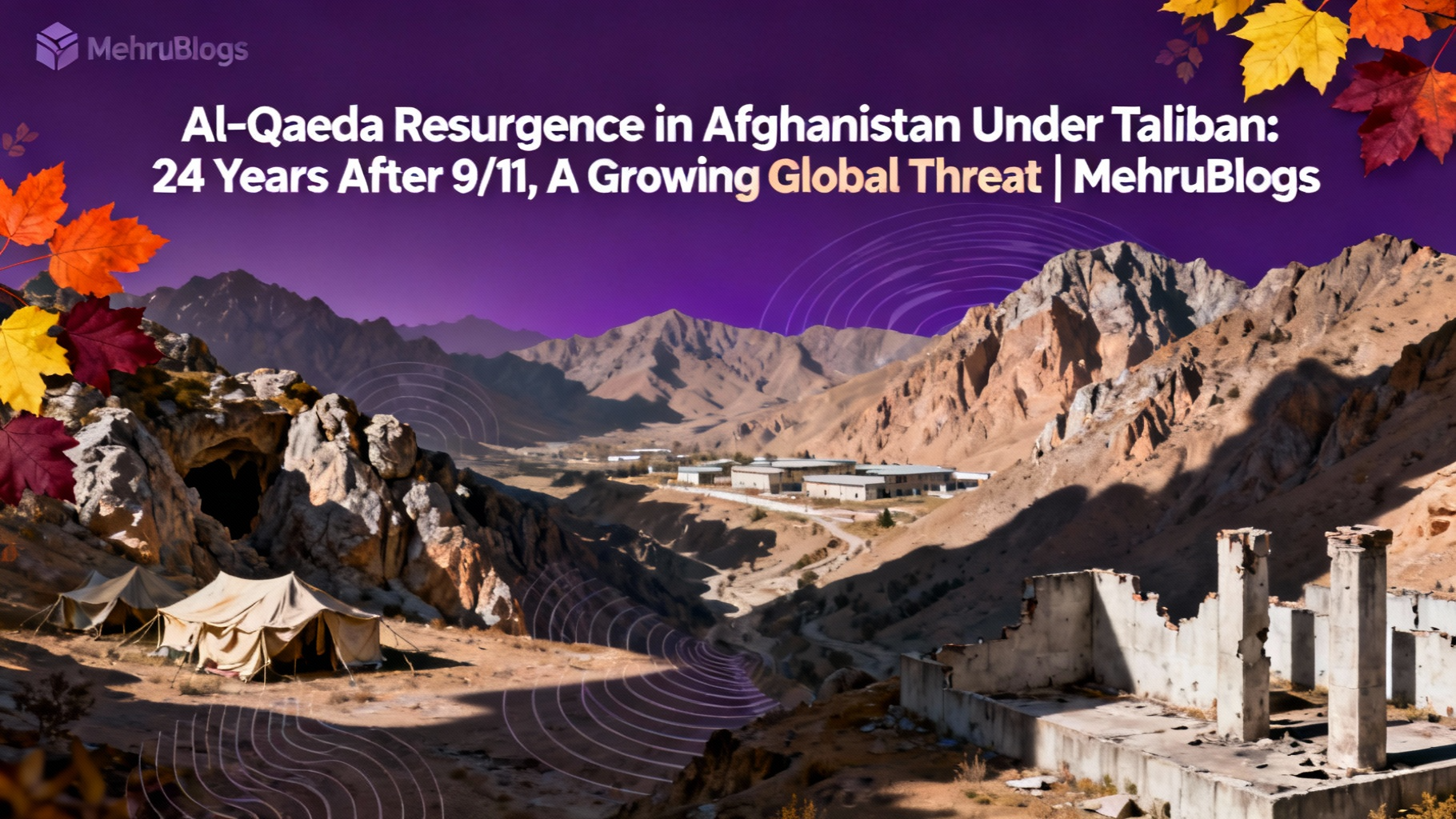
As Afghanistan once again becomes a safe haven for international terrorist organizations, the Taliban-Al-Qaeda alliance raises urgent questions about counterterrorism efforts and the fragility of peace in South Asia.
This development, highlighted in reports from credible sources like the UN Security Council and intelligence assessments, underscores the dangers of unchecked extremism. While a large-scale attack like 9/11 may not be imminent, experts warn of smaller, yet lethal operations that could destabilize nations. In this comprehensive article, we’ll delve into the roots of this resurgence, key figures like Saif al-Adel and Hamza bin Laden, the intertwined roles of groups like TTP and ISIS-Khorasan, and the broader implications for international security. Drawing from The Jerusalem Post’s insights and other verified analyses, we’ll explore how this alliance is reshaping the terrorism landscape in 2025.
The Historical Context: From 9/11 to Taliban Takeover
The story of Al-Qaeda’s resurgence in Afghanistan is deeply intertwined with the events of September 11, 2001. Back then, under Taliban protection, Osama bin Laden’s network orchestrated the attacks that killed nearly 3,000 people, leading to the U.S.-led invasion that toppled the regime. For two decades, Afghanistan was a battleground against terrorism, with Al-Qaeda scattered and diminished. However, the chaotic U.S. withdrawal in August 2021 handed control back to the Taliban, creating a vacuum that extremists quickly filled.
Since then, Afghanistan has reverted to being a sanctuary for global jihadist groups. UN reports from 2023 and 2024 confirm that Al-Qaeda has quietly rebuilt, establishing training camps across provinces like Kunar, Nangarhar, and Kandahar. The Jerusalem Post article, published around September 14, 2025, emphasizes that this isn’t a spontaneous revival but a strategic reorganization. With Taliban factions providing shelter and logistics, Al-Qaeda’s networks have expanded, drawing in foreign fighters and leveraging the country’s porous borders. This Taliban-Al-Qaeda alliance, once denied by Kabul, is now evident through intelligence shared by member states, highlighting how past promises of non-interference have been broken.
Experts like Azim Shinwari, a former Afghan counterterrorism specialist, note that after the fall of Kabul, Al-Qaeda began rebuilding while closely coordinating with the Taliban. This partnership echoes the pre-9/11 era but with modern twists: digital propaganda to recruit globally and alliances with regional militants. As we mark 24 years since 9/11, this resurgence serves as a stark reminder that without sustained international pressure, history can repeat itself in more dangerous ways.
Key Leaders Driving the Resurgence: Saif al-Adel and Hamza bin Laden
At the helm of Al-Qaeda’s revival are figures with deep roots in the organization’s history. Saif al-Adel, an Egyptian militant born around 1960-1963, is widely regarded as the de facto leader following Ayman al-Zawahiri’s death in a 2022 U.S. drone strike in Kabul. A former Egyptian commando and close associate of Osama bin Laden, al-Adel is Al-Qaeda’s most experienced military strategist. He oversaw operations like the 1998 U.S. embassy bombings in East Africa and has been based in Iran under semi-house arrest, coordinating with branches in Yemen, Somalia, and Syria.
UN reports from February 2023 confirm al-Adel’s ascension, though not formally announced due to political sensitivities with the Taliban and his location in Shia-majority Iran. From Iran, he manages Al-Qaeda’s transnational activities through the Hittin Committee, providing guidance on tactics and funding. His expertise in explosives and guerrilla warfare has been pivotal in reestablishing camps in Afghanistan, where he directs fighters via encrypted channels. The FBI offers a $10 million reward for information leading to his capture, underscoring his threat level.
Complementing al-Adel is Hamza bin Laden, son of the 9/11 mastermind, who is reportedly co-leading efforts. Presumed dead in 2019 U.S. strikes, recent intelligence suggests Hamza survived and has taken a more operational role in Afghanistan. The Jerusalem Post cites sources indicating his involvement in rebuilding networks, using his father’s legacy to inspire recruits. Together, these leaders blend strategic acumen with ideological appeal, transforming Al-Qaeda from a fragmented group into a coordinated force under Taliban protection.
Ties to TTP and ISIS-Khorasan: A Web of Alliances and Rivalries
Al-Qaeda’s resurgence isn’t isolated; it’s bolstered by alliances with Tehrik-i-Taliban Pakistan (TTP) and the Islamic State Khorasan Province (ISIS-K). The TTP, or Pakistani Taliban, has found safe haven in Afghanistan post-2021, using border areas to launch cross-border attacks into Pakistan. With 6,000-6,500 fighters, TTP has intensified operations, claiming responsibility for 482 attacks in 2024 alone—a 91% increase in fatalities since 2023, per the Global Terrorism Index 2025. UN reports highlight Taliban support, including weapons and training, turning TTP into an international threat.
TTP commanders, experienced in asymmetric warfare, collaborate with Al-Qaeda on planning, particularly against Pakistan. This partnership exploits the Durand Line border, enabling incursions that killed dozens of Pakistani soldiers in 2025 raids. The Jerusalem Post warns that TTP’s transformation into a global entity endangers regional stability, with Al-Qaeda providing ideological and logistical backing.
Meanwhile, ISIS-Khorasan, formed in 2015 from Taliban and TTP defectors, adds complexity. Though ideologically at odds with the Taliban—labeling them “apostates”—reports suggest strategic overlaps. The Jerusalem Post claims ISIS-K is used to mask the Taliban-Al-Qaeda alliance, creating confusion about attack sources. UN and U.S. intelligence note ISIS-K’s growth, with nine new camps in 2024 and plots against Europe and the U.S. in 2025. Despite Taliban crackdowns, which reduced ISIS-K attacks in 2023-2024, the group recruits from Central Asia and uses social media for propaganda. This rivalry-alliance dynamic allows extremists to operate freely, with Al-Qaeda and TTP benefiting from ISIS-K’s diversions.
Training camps in eastern Afghanistan host joint sessions, where fighters learn drone usage and IED fabrication. Regional actors like Pakistan accuse the Taliban of harboring TTP, leading to border clashes in January 2025. This web strengthens the overall jihadist ecosystem, amplifying threats beyond Afghanistan.
Training Camps and Operational Capabilities: The New Face of Jihad
Central to Al-Qaeda’s resurgence are the training camps scattered across Afghanistan’s rugged terrain. UN monitors report at least nine new facilities in 2024, focusing on advanced skills like drone strikes and cyber recruitment. These camps, protected by Taliban factions, train fighters from Pakistan, Central Asia, and beyond, rebuilding Al-Qaeda’s depleted ranks.
The Jerusalem Post details how these sites in provinces like Panjshir and Badakhshan serve as hubs for TTP and Al-Qaeda collaboration. Fighters, many with combat experience from Syria and Iraq, undergo rigorous programs emphasizing small-scale, high-impact attacks. Online recruitment via platforms like Telegram targets disillusioned youth, promising a “caliphate” revival.
While a 9/11-scale plot seems unlikely in the short term, experts like those from the U.S. Institute of Peace warn of “daily threats” from these capabilities. Drones, acquired through smuggling, enable surveillance and strikes, while encrypted apps coordinate global operations. This evolution makes Al-Qaeda more resilient and harder to dismantle.
This article is brought to you by Mehru Blogs. For more Visit www.mehrublogs.com.
Contact us at mehrublogs@gmail.com.
Follow us on social media: Facebook | Instagram.
Implications for Global and Regional Security
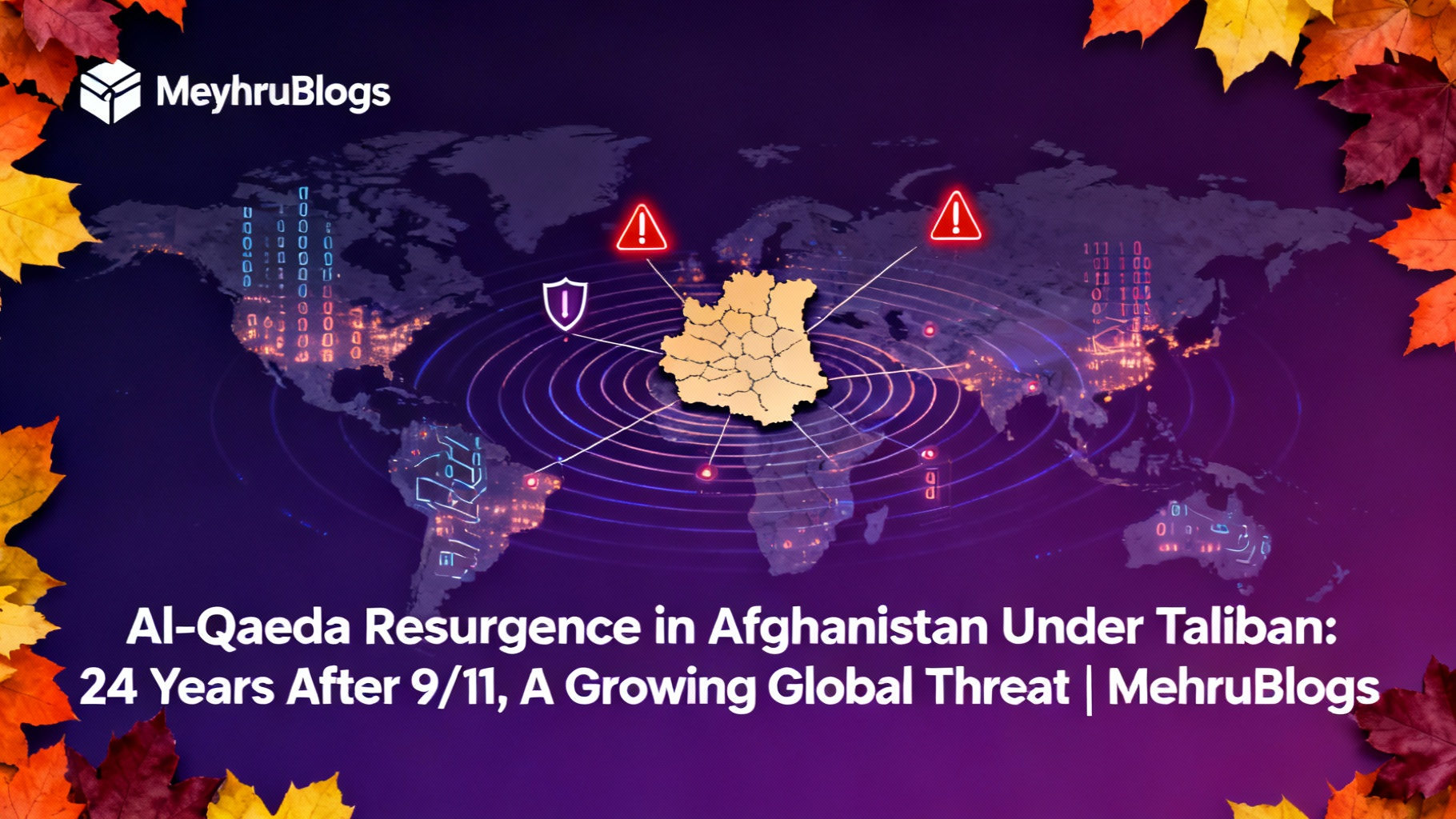
The Taliban-Al-Qaeda alliance has profound ramifications. For the U.S., it’s a “very real possibility” of transnational attacks, as noted by Gen. Kenneth McKenzie in 2021 testimony—concerns echoed in 2025 amid ISIS-K plots. Pakistan faces direct threats from TTP incursions, with 558 fatalities in 2024 straining bilateral ties and prompting military responses. (Al-Qaeda resurgence)
Regionally, Central Asian states like Tajikistan worry about spillover, while Iran’s harboring of al-Adel complicates dynamics. Globally, the resurgence undermines counterterrorism gains, with UN calls for coordinated action. As The Jerusalem Post concludes, intelligence gaps and regional instability demand vigilance. Failure to act could allow these networks to thrive, endangering peace worldwide.
Conclusion: The Need for Renewed Counterterrorism Efforts
Twenty-four years after 9/11, Al-Qaeda’s resurgence in Afghanistan under Taliban protection is a wake-up call. With leaders like Saif al-Adel steering the ship, alliances with TTP and ISIS-K, and expanding capabilities, the threat is evolving rapidly. International cooperation—through sanctions, intelligence sharing, and pressure on the Taliban—is essential to prevent history’s repetition.
For more on global security and regional conflicts.
This article is brought to you by Mehru Blogs. For more Visit www.mehrublogs.com.
Contact us at mehrublogs@gmail.com.
Follow us on social media: Facebook | Instagram.
Al-Qaeda resurgence Al-Qaeda resurgence Al-Qaeda resurgence Al-Qaeda resurgence Al-Qaeda resurgence Al-Qaeda resurgence Al-Qaeda resurgence Al-Qaeda resurgence Al-Qaeda resurgence Al-Qaeda resurgence Al-Qaeda resurgence Al-Qaeda resurgence Al-Qaeda resurgence Al-Qaeda resurgence Al-Qaeda resurgence Al-Qaeda resurgence Al-Qaeda resurgence
This article is brought to you by Mehru Blogs. For more Visit www.mehrublogs.com.
Contact us at mehrublogs@gmail.com.


